Skip to content
ScienceBlog.com
  • Featured Blogs
    • EU Horizon Blog
    • ESA Tracker
    • Experimental Frontiers
    • Josh Mitteldorf’s Aging Matters
    • Dr. Lu Zhang’s Gondwanaland
    • NeuroEdge
    • NIAAA
    • SciChi
    • The Poetry of Science
    • Wild Science
  • Topics
    • Brain & Behavior
    • Earth, Energy & Environment
    • Health
    • Life & Non-humans
    • Physics & Mathematics
    • Social Sciences
    • Space
    • Technology
  • Our Substack
  • Follow Us!
    • Bluesky
    • Threads
    • FaceBook
    • Google News
    • Twitter/X
  • Contribute/Contact

sensing

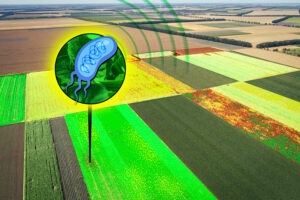
MIT engineers engineered bacteria to produce hyperspectral signals that can be detected as far as 90 meters away. Their work could lead to the development of bacterial sensors for agricultural to monitor crop health, for example. Credits:Image: Jose-Luis Olivares, MIT; iStock

Engineered bacteria emit signals that can be spotted from a distance

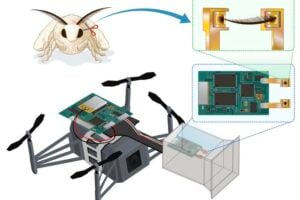
Researchers from Shinshu University and Chiba University develop a novel bio-hybrid drone using odor-sensing antennae from silkworm moths. Incorporation of an electroantennography (EAG) sensor to detect odorants and optimization of the electrode and enclosure structure in the robot enhanced the odor search range, detection precision, and system performance of the drone, thus, improving its application in diverse environments.

Bio-hybrid drone uses silkworm moth antennae to navigate using smell

Substack subscription form sign up

Comments

  • Dax on The Silent Frequency That Makes Old Buildings Feel Haunted
  • Karoly Mirnics on Common Prescription Drugs May Disrupt Cholesterol Pathways in the Womb and Raise Autism Risk
  • Aizen on Laziness helped lead to extinction of Homo erectus
  • Norwood johnson on Electrons in New Crystals Behave as If They Live in Four Dimensions
  • ScienceBlog.com on Hidden Geometry Could Finally Fix Quantum Computers
© 2026 ScienceBlog.com | Follow our RSS / XML feed