Skip to content
ScienceBlog.com
  • Featured Blogs
    • EU Horizon Blog
    • ESA Tracker
    • Experimental Frontiers
    • Josh Mitteldorf’s Aging Matters
    • Dr. Lu Zhang’s Gondwanaland
    • NeuroEdge
    • NIAAA
    • SciChi
    • The Poetry of Science
    • Wild Science
  • Topics
    • Brain & Behavior
    • Earth, Energy & Environment
    • Health
    • Life & Non-humans
    • Physics & Mathematics
    • Social Sciences
    • Space
    • Technology
  • Our Substack
  • Follow Us!
    • Bluesky
    • Threads
    • FaceBook
    • Google News
    • Twitter/X
  • Contribute/Contact

social interactions

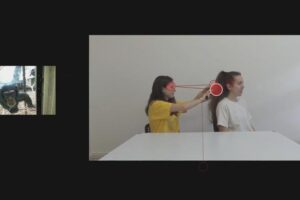
A chimpanzee watching a video of an agent (left) brushing the hair of a patient (right). Red circles indicate her gaze fixations, and red lines indicate attentional switching between agent and patient.

Great Apes Watch Events Like Humans Do

A griffon vulture — besties not pictured — in flight.

Like people, vultures have fewer friends as they age

two women chatting

Venting to Friends: The Hidden Social Benefits and Potential Pitfalls

woman with a big smile

Facially expressive people shown to be more likeable and socially successful

Credit Pixabay

Cannabis appears to increase empathy

Image created with generative AI (Michael S. Helfenbein)

Zoom suppresses thought

Two figures in chairs having a conversation. Pixabay

MDMA and Meth both increase feelings of connection during conversation

Substack subscription form sign up

Comments

  • Karoly Mirnics on Common Prescription Drugs May Disrupt Cholesterol Pathways in the Womb and Raise Autism Risk
  • Aizen on Laziness helped lead to extinction of Homo erectus
  • Norwood johnson on Electrons in New Crystals Behave as If They Live in Four Dimensions
  • ScienceBlog.com on Hidden Geometry Could Finally Fix Quantum Computers
  • Theo Prinse on America Is Going Back to the Moon. This Time, It Plans to Stay
© 2026 ScienceBlog.com | Follow our RSS / XML feed