Skip to content
ScienceBlog.com
  • Featured Blogs
    • EU Horizon Blog
    • ESA Tracker
    • Experimental Frontiers
    • Josh Mitteldorf’s Aging Matters
    • Dr. Lu Zhang’s Gondwanaland
    • NeuroEdge
    • NIAAA
    • SciChi
    • The Poetry of Science
    • Wild Science
  • Topics
    • Brain & Behavior
    • Earth, Energy & Environment
    • Health
    • Life & Non-humans
    • Physics & Mathematics
    • Social Sciences
    • Space
    • Technology
  • Our Substack
  • Follow Us!
    • Bluesky
    • Threads
    • FaceBook
    • Google News
    • Twitter/X
  • Contribute/Contact

songbirds

UTSW researchers used a technique called optogenetic circuit mapping in which they inserted a gene into targeted neurons, allowing their activity to be controlled by light. By stimulating neurons that deliver inputs to the HVC, an area of the avian brain involved in birdsongs, then measuring the electrical activity of outputting neurons, the team could see which neurons communicated with one another.

Researchers Create ‘Wiring Diagram’ for Key Songbird Brain Region

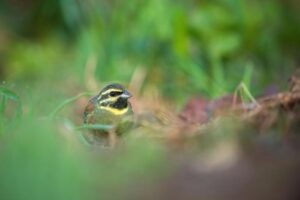
A new study explored how Cirl buntings relocated as part of conservation programmes can successfully learn the song repertoires they need to communicate – and ultimately survive – in the wild

Relocated songbirds can successfully learn the diversity of song they need to survive

Substack subscription form sign up

Comments

  • Brunette Keller on How New Herpes Drugs Jam a Virus’s Replication Engine
  • Aizen on Laziness helped lead to extinction of Homo erectus
  • Norwood johnson on Electrons in New Crystals Behave as If They Live in Four Dimensions
  • ScienceBlog.com on Hidden Geometry Could Finally Fix Quantum Computers
  • Theo Prinse on America Is Going Back to the Moon. This Time, It Plans to Stay
© 2026 ScienceBlog.com | Follow our RSS / XML feed