Skip to content
ScienceBlog.com
  • Featured Blogs
    • EU Horizon Blog
    • ESA Tracker
    • Experimental Frontiers
    • Josh Mitteldorf’s Aging Matters
    • Dr. Lu Zhang’s Gondwanaland
    • NeuroEdge
    • NIAAA
    • SciChi
    • The Poetry of Science
    • Wild Science
  • Topics
    • Brain & Behavior
    • Earth, Energy & Environment
    • Health
    • Life & Non-humans
    • Physics & Mathematics
    • Social Sciences
    • Space
    • Technology
  • Our Substack
  • Follow Us!
    • Bluesky
    • Threads
    • FaceBook
    • Google News
    • Twitter/X
  • Contribute/Contact

space technology

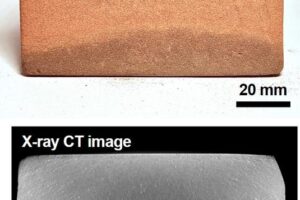
Photograph and X-ray CT Image of KLS-1 Sintered Block Manufactured Using an Optimized Process Credit: Korea Institute of Civil Engineering and Building Technology

Scientists Cook Up Lunar Bricks From Moon Dust

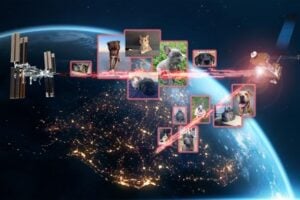
A collage of the pet photos sent over laser links from Earth to LCRD (Laser Communications Relay Demonstration) to ILLUMA-T (Integrated LCRD Low Earth Orbit User Modem and Amplifier Terminal) on the space station. Animals submitted include cats, dogs, birds, chickens, cows, snakes, pigs, and more.

NASA’s Laser Relay System Transmits Pet Photos at Lightning Speed

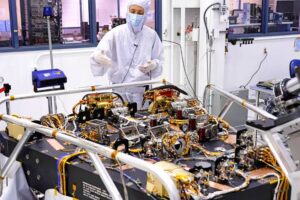
JPL scientist Vanessa Bailey stands behind the Nancy Grace Roman Coronagraph, which has been undergoing testing at JPL. About the size of a baby grand piano, the Coronagraph is designed to block starlight and allow scientists to see the faint light from planets outside our solar system. Credit: NASA/JPL-Caltech

NASA Puts Next-Gen Exoplanet-Imaging Technology to the Test

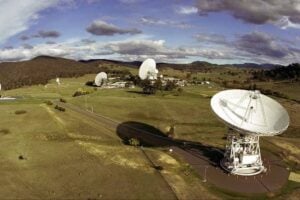
The radio antennas of the NASA’s Canberra Deep Space Communications Complex are located near the Australian capital. It’s one of three Deep Space Network complexes around the world that keep the agency in contact with over 40 space missions. The DSN m... Credit: NASA/JPL-Caltech

NASA’s Deep Space Network Turns 60 and Prepares for the Future

Preventing outer space from becoming a hazardous junkyard

Gallium oxide-based devices can operate in extreme environments, such as outer space, where it can withstand high temperatures and radiation without serious degradation. © 2023 KAUST; Eliza Mkhitaryan.

Tough memory device aims for space missions

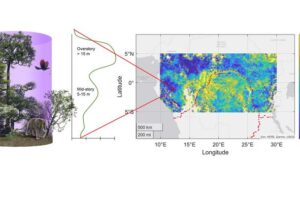
Graph depicting canopy information obtained from GEDI.

NASA space laser provides answers to a rainforest canopy mystery

In booming satellite market, micro-rockets are the next big thing

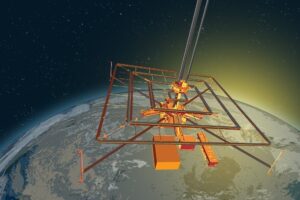
Illustration of demo in orbit

Caltech to Launch Space Solar Power Tech Demo into Orbit

Substack subscription form sign up

Comments

  • Karoly Mirnics on Common Prescription Drugs May Disrupt Cholesterol Pathways in the Womb and Raise Autism Risk
  • Aizen on Laziness helped lead to extinction of Homo erectus
  • Norwood johnson on Electrons in New Crystals Behave as If They Live in Four Dimensions
  • ScienceBlog.com on Hidden Geometry Could Finally Fix Quantum Computers
  • Theo Prinse on America Is Going Back to the Moon. This Time, It Plans to Stay
© 2026 ScienceBlog.com | Follow our RSS / XML feed