Skip to content
ScienceBlog.com
  • Featured Blogs
    • EU Horizon Blog
    • ESA Tracker
    • Experimental Frontiers
    • Josh Mitteldorf’s Aging Matters
    • Dr. Lu Zhang’s Gondwanaland
    • NeuroEdge
    • NIAAA
    • SciChi
    • The Poetry of Science
    • Wild Science
  • Topics
    • Brain & Behavior
    • Earth, Energy & Environment
    • Health
    • Life & Non-humans
    • Physics & Mathematics
    • Social Sciences
    • Space
    • Technology
  • Our Substack
  • Follow Us!
    • Bluesky
    • Threads
    • FaceBook
    • Google News
    • Twitter/X
  • Contribute/Contact

Stanford University,

Researchers discovered a novel metabolic compound that regulates appetite and body weight through interactions with neurons in the brain.

Scientists Uncover New Metabolic Compound That Controls Appetite and Weight

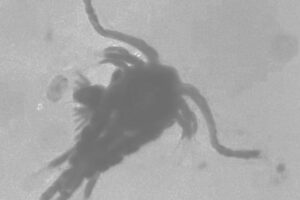
Scientists were recently surprised to find that the natural community of zooplankton — tiny, aquatic animals known to graze on bacteria — present in freshwater and saltwater do not clean water that is contaminated with fecal microorganisms. Pictured: One of the zooplankton found in the water samples is the adult copepod, a miniature crustacean that is about the size of the period at the end of this sentence.

Zooplankton go “Eew!” to cleaning feces-contaminated water

Illustration of AI

There’s a faster, cheaper way to train large language models

darts hitting a target

AI continues to surpass human performance; it’s time to reevaluate our tests

illustration of a puppet on a string

AI’s Powers of Political Persuasion

Substack subscription form sign up

Comments

  • Sparty on How the Age You First Had Sex Could Shape How You Age Decades Later
  • Josh Mitteldorf on A Single TV Segment Sent Leucovorin Prescriptions for Autistic Children Soaring 2,000 Percent
  • Josh Mitteldorf on A Single TV Segment Sent Leucovorin Prescriptions for Autistic Children Soaring 2,000 Percent
  • Josh Mitteldorf on A Pill That Keeps Your Throat Awake Could Transform Sleep Apnea Treatment
  • Josh Mitteldorf on How the Age You First Had Sex Could Shape How You Age Decades Later
© 2026 ScienceBlog.com | Follow our RSS / XML feed