Skip to content
ScienceBlog.com
  • Featured Blogs
    • EU Horizon Blog
    • ESA Tracker
    • Experimental Frontiers
    • Josh Mitteldorf’s Aging Matters
    • Dr. Lu Zhang’s Gondwanaland
    • NeuroEdge
    • NIAAA
    • SciChi
    • The Poetry of Science
    • Wild Science
  • Topics
    • Brain & Behavior
    • Earth, Energy & Environment
    • Health
    • Life & Non-humans
    • Physics & Mathematics
    • Social Sciences
    • Space
    • Technology
  • Our Substack
  • Follow Us!
    • Bluesky
    • Threads
    • FaceBook
    • Google News
    • Twitter/X
  • Contribute/Contact

Stellar Population

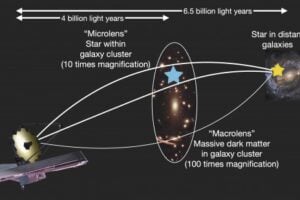
The massive, yet invisible halo of dark matter of a galaxy cluster works as a "macrolens,", while lone, unbound stars drifting through the cluster act as additional "microlenses, multiplying the factor of magnification.

Webb Telescope Discovers Over 40 Ancient Stars in Distant “Dragon Arc” Galaxy

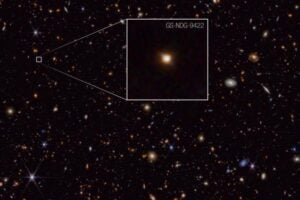
This image of galaxy GS-NDG-9422, captured by the James Webb Space Telescope's NIRCam (Near-Infrared Camera) instrument, is presented with compass arrows, scale bar, and colour key for reference.

Webb Telescope Unveils Unprecedented ‘Weird’ Galaxy from Early Universe

Substack subscription form sign up

Comments

  • Karoly Mirnics on Common Prescription Drugs May Disrupt Cholesterol Pathways in the Womb and Raise Autism Risk
  • Aizen on Laziness helped lead to extinction of Homo erectus
  • Norwood johnson on Electrons in New Crystals Behave as If They Live in Four Dimensions
  • ScienceBlog.com on Hidden Geometry Could Finally Fix Quantum Computers
  • Theo Prinse on America Is Going Back to the Moon. This Time, It Plans to Stay
© 2026 ScienceBlog.com | Follow our RSS / XML feed