Skip to content
ScienceBlog.com
  • Featured Blogs
    • EU Horizon Blog
    • ESA Tracker
    • Experimental Frontiers
    • Josh Mitteldorf’s Aging Matters
    • Dr. Lu Zhang’s Gondwanaland
    • NeuroEdge
    • NIAAA
    • SciChi
    • The Poetry of Science
    • Wild Science
  • Topics
    • Brain & Behavior
    • Earth, Energy & Environment
    • Health
    • Life & Non-humans
    • Physics & Mathematics
    • Social Sciences
    • Space
    • Technology
  • Our Substack
  • Follow Us!
    • Bluesky
    • Threads
    • FaceBook
    • Google News
    • Twitter/X
  • Contribute/Contact

synthetic materials

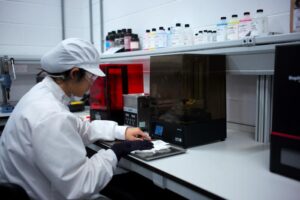
Logan Zhang, a PhD student at Swansea University's Faculty of Science and Engineering, printing materials in a lab.

Coral-Inspired Material Could Transform Bone Repair

University of Illinois evolution, ecology and behavior professor Philip Anderson, pictured, and his colleague Bingying Zhang found that thin animal skin significantly dissipates the energy of a puncturing projectile. In their experiments, skin worked better than a thicker synthetic gel designed to mimic skin.

Thin skin significantly blunts injury from puncture

A pencil sketch illustration depicting a futuristic wireless device, such as an earbud or smartphone, with a stylized representation of the phononics-based technology inside.

Phononics Advance Could Revolutionize Wireless Tech, Making Devices Smaller and More Efficient

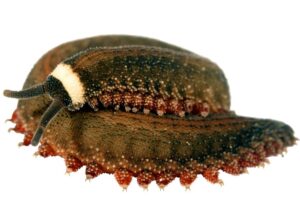
Velvet worm

Velvet Worm slime could inspire sustainable synthetic materials

Seaweed molecules used to improve outcomes for bypass surgery

Substack subscription form sign up

Comments

  • Norwood johnson on Electrons in New Crystals Behave as If They Live in Four Dimensions
  • ScienceBlog.com on Hidden Geometry Could Finally Fix Quantum Computers
  • Theo Prinse on America Is Going Back to the Moon. This Time, It Plans to Stay
  • george w on Hidden Geometry Could Finally Fix Quantum Computers
  • Tom Hughes on Years of Exercise, Blood Pressure Drugs Failed to Slow Cognitive Decline in Seniors at Dementia Risk
© 2026 ScienceBlog.com | Follow our RSS / XML feed