Skip to content
ScienceBlog.com
  • Featured Blogs
    • EU Horizon Blog
    • ESA Tracker
    • Experimental Frontiers
    • Josh Mitteldorf’s Aging Matters
    • Dr. Lu Zhang’s Gondwanaland
    • NeuroEdge
    • NIAAA
    • SciChi
    • The Poetry of Science
    • Wild Science
  • Topics
    • Brain & Behavior
    • Earth, Energy & Environment
    • Health
    • Life & Non-humans
    • Physics & Mathematics
    • Social Sciences
    • Space
    • Technology
  • Our Substack
  • Follow Us!
    • Bluesky
    • Threads
    • FaceBook
    • Google News
    • Twitter/X
  • Contribute/Contact

Systems

Optical tweezers, shown here trapping a nanoparticle, are among the systems impacted by a type of uncertainty that physicists have long missed. (image: Steven Hoekstra/Wikipedia CC BY-SA 4.0)

Physicists identify overlooked uncertainty in real-world experiments

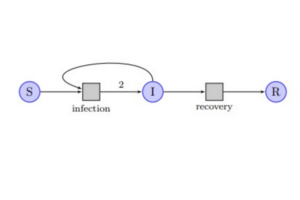
A simple version of a Petri net for COVID infection. The starting point is a non-infected person. “S” denotes “susceptible”. Contact with an infected person (“I”) is an event which leads to two persons being infected. Later another event will happen, removing a person from the group of infected. Here, “R” denotes “recovered” which in this context could be either cured or dead. Either outcome would remove the person from the infected group.

COVID calculations spur solution to vexing computer science problem

Substack subscription form sign up

Comments

  • Brunette Keller on How New Herpes Drugs Jam a Virus’s Replication Engine
  • Aizen on Laziness helped lead to extinction of Homo erectus
  • Norwood johnson on Electrons in New Crystals Behave as If They Live in Four Dimensions
  • ScienceBlog.com on Hidden Geometry Could Finally Fix Quantum Computers
  • Theo Prinse on America Is Going Back to the Moon. This Time, It Plans to Stay
© 2026 ScienceBlog.com | Follow our RSS / XML feed