Skip to content
ScienceBlog.com
  • Featured Blogs
    • EU Horizon Blog
    • ESA Tracker
    • Experimental Frontiers
    • Josh Mitteldorf’s Aging Matters
    • Dr. Lu Zhang’s Gondwanaland
    • NeuroEdge
    • NIAAA
    • SciChi
    • The Poetry of Science
    • Wild Science
  • Topics
    • Brain & Behavior
    • Earth, Energy & Environment
    • Health
    • Life & Non-humans
    • Physics & Mathematics
    • Social Sciences
    • Space
    • Technology
  • Our Substack
  • Follow Us!
    • Bluesky
    • Threads
    • FaceBook
    • Google News
    • Twitter/X
  • Contribute/Contact

Tool use

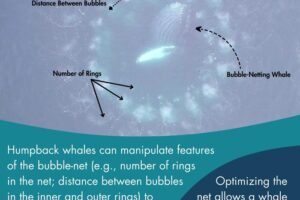
Infographic showing features of the bubble-net. Humpback whales can manipulate these features: number of rings in the net, distance between bubbles in teh inner and outer rings) to effectively concentrate prey and keep them from escaping.

Humpback Whales: The Ocean’s Skilled Tool Users

A southern sea otter preys on a marine animal.

Otters, especially females, use tools to survive a changing world

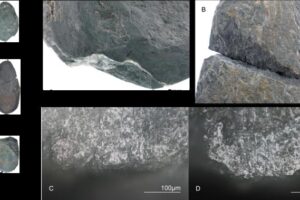
Characteristic macroscopic (top) and microscopic (bottom) traces might be used to determine how stone edges were used.

Scientists try out stone age tools to understand how they were used

chimp termite fishing

Fishing chimpanzees found to enjoy termites as a seasonal treat

Substack subscription form sign up

Comments

  • Curtis Webber on The GPS-Killer? This Quantum Device ‘Feels’ Motion Like a Brain—Down to the Atomic Level
  • Ran on How the Age You First Had Sex Could Shape How You Age Decades Later
  • Sparty on How the Age You First Had Sex Could Shape How You Age Decades Later
  • Josh Mitteldorf on A Single TV Segment Sent Leucovorin Prescriptions for Autistic Children Soaring 2,000 Percent
  • Josh Mitteldorf on A Single TV Segment Sent Leucovorin Prescriptions for Autistic Children Soaring 2,000 Percent
© 2026 ScienceBlog.com | Follow our RSS / XML feed