Skip to content
ScienceBlog.com
  • Featured Blogs
    • EU Horizon Blog
    • ESA Tracker
    • Experimental Frontiers
    • Josh Mitteldorf’s Aging Matters
    • Dr. Lu Zhang’s Gondwanaland
    • NeuroEdge
    • NIAAA
    • SciChi
    • The Poetry of Science
    • Wild Science
  • Topics
    • Brain & Behavior
    • Earth, Energy & Environment
    • Health
    • Life & Non-humans
    • Physics & Mathematics
    • Social Sciences
    • Space
    • Technology
  • Our Substack
  • Follow Us!
    • Bluesky
    • Threads
    • FaceBook
    • Google News
    • Twitter/X
  • Contribute/Contact

Transcription factors

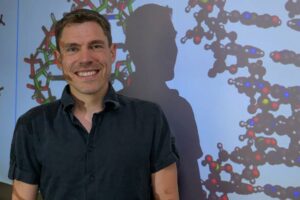
Sascha Duttke, an assistant professor in the School of Molecular Biosciences in Washington State University's College of Veterinary Medicine, poses for a photo with a projected image of DNA strands (photo by College of Veterinary Medicine/Ted S. Warren).

Hidden DNA ‘Spatial Grammar’ Reshapes Understanding of Gene Regulation

Ohio State logo

How an essential class of proteins can access blocked genes

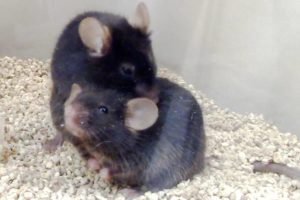
Mice engage in grooming behavior, experiencing a phenomenon researchers call pleasant touch. Researchers from the Washington University Center for the Study of Itch and Sensory Disorders have identified a specific neuropeptide and a neural circuit that transmit pleasant touch from the skin to the brain. The findings eventually may help scientists better understand and treat disorders characterized by touch avoidance and impaired social development.

Drug alleviates autism-associated behavior in mice

Substack subscription form sign up

Comments

  • Karoly Mirnics on Common Prescription Drugs May Disrupt Cholesterol Pathways in the Womb and Raise Autism Risk
  • Aizen on Laziness helped lead to extinction of Homo erectus
  • Norwood johnson on Electrons in New Crystals Behave as If They Live in Four Dimensions
  • ScienceBlog.com on Hidden Geometry Could Finally Fix Quantum Computers
  • Theo Prinse on America Is Going Back to the Moon. This Time, It Plans to Stay
© 2026 ScienceBlog.com | Follow our RSS / XML feed