Skip to content
ScienceBlog.com
  • Featured Blogs
    • EU Horizon Blog
    • ESA Tracker
    • Experimental Frontiers
    • Josh Mitteldorf’s Aging Matters
    • Dr. Lu Zhang’s Gondwanaland
    • NeuroEdge
    • NIAAA
    • SciChi
    • The Poetry of Science
    • Wild Science
  • Topics
    • Brain & Behavior
    • Earth, Energy & Environment
    • Health
    • Life & Non-humans
    • Physics & Mathematics
    • Social Sciences
    • Space
    • Technology
  • Our Substack
  • Follow Us!
    • Bluesky
    • Threads
    • FaceBook
    • Google News
    • Twitter/X
  • Contribute/Contact

Transmission

Ohio State logo

Pigs may be transmission route of rat hepatitis E to humans

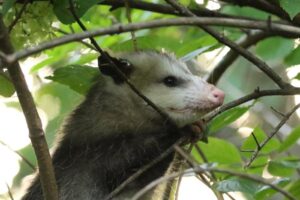
A Virginia Tech study of wildlife common in Virginia found that SARS-CoV-2, the virus responsible for COVID-19, is widespread in animals, particularly around areas of high human activity. The researchers identified variants consistent with those circulating in humans at the time, and one opossum with previously unreported viral mutations, underscoring the potential for changes that can potentially impact humans and their immune response.

Virus that causes COVID-19 is widespread in wildlife

Ohio State logo

COVID-19 virus is evolving rapidly in white-tailed deer

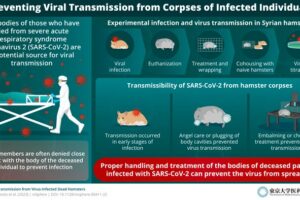
SARS-CoV-2-infected dead hamsters had high virus titers. Angel care or embalming could prevent transmission from infected hamsters' dead bodies. Proper treatment of SARS-CoV-2-infected corpses is critical to prevent the spread of COVID-19 infection.

Guidelines to prevent Covid transmission from the dead

Substack subscription form sign up

Comments

  • Simon on A New Theory Says DMT Entities Might Be Real, and Proposes How to Test It
  • Sue Ann Hayes on Hidden Nuclear Protein Fuels Pancreatic Cancer’s Deadly Aggression
  • Curtis Webber on The GPS-Killer? This Quantum Device ‘Feels’ Motion Like a Brain—Down to the Atomic Level
  • Ran on How the Age You First Had Sex Could Shape How You Age Decades Later
  • Sparty on How the Age You First Had Sex Could Shape How You Age Decades Later
© 2026 ScienceBlog.com | Follow our RSS / XML feed