Skip to content
ScienceBlog.com
  • Featured Blogs
    • EU Horizon Blog
    • ESA Tracker
    • Experimental Frontiers
    • Josh Mitteldorf’s Aging Matters
    • Dr. Lu Zhang’s Gondwanaland
    • NeuroEdge
    • NIAAA
    • SciChi
    • The Poetry of Science
    • Wild Science
  • Topics
    • Brain & Behavior
    • Earth, Energy & Environment
    • Health
    • Life & Non-humans
    • Physics & Mathematics
    • Social Sciences
    • Space
    • Technology
  • Our Substack
  • Follow Us!
    • Bluesky
    • Threads
    • FaceBook
    • Google News
    • Twitter/X
  • Contribute/Contact

transportation

Suburban traffic

Study Finds Bicycle Rolling-Stop Laws Don’t Compromise Safety for Riders or Motorists

Ohio State logo

How big events can disrupt public transit over an entire city

This is what The Line, Saudi Arabia's superlative construction project, is supposed to look like.

Why Saudi Arabia’s “The Line” isn’t a revolution in urban living

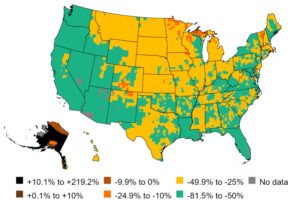
Map of percentage change in transportation energy burden from current on-road vehicle stock to a new battery-electric vehicle. Negative percentages indicate energy cost savings for EVs compared to gasoline powered vehicles. Areas with the greatest savings, shown in green, include the West Coast states and parts of the East and South. Transportation energy burden is the percentage of household income spent on fueling with gasoline or charging with electricity. Adapted from Vega-Perkins et al. in Environmental Research Letters, January 2023.

EV transition will benefit most US vehicle owners, but lowest-income Americans could get left behind


Substack subscription form sign up

Comments

  • Marie Feret on The Silent Frequency That Makes Old Buildings Feel Haunted
  • Dax on The Silent Frequency That Makes Old Buildings Feel Haunted
  • Karoly Mirnics on Common Prescription Drugs May Disrupt Cholesterol Pathways in the Womb and Raise Autism Risk
  • Aizen on Laziness helped lead to extinction of Homo erectus
  • Norwood johnson on Electrons in New Crystals Behave as If They Live in Four Dimensions
© 2026 ScienceBlog.com | Follow our RSS / XML feed