Skip to content
ScienceBlog.com
  • Featured Blogs
    • EU Horizon Blog
    • ESA Tracker
    • Experimental Frontiers
    • Josh Mitteldorf’s Aging Matters
    • Dr. Lu Zhang’s Gondwanaland
    • NeuroEdge
    • NIAAA
    • SciChi
    • The Poetry of Science
    • Wild Science
  • Topics
    • Brain & Behavior
    • Earth, Energy & Environment
    • Health
    • Life & Non-humans
    • Physics & Mathematics
    • Social Sciences
    • Space
    • Technology
  • Our Substack
  • Follow Us!
    • Bluesky
    • Threads
    • FaceBook
    • Google News
    • Twitter/X
  • Contribute/Contact

virus

alzheimers illustration

Study strengthens link between shingles vaccine and lower dementia risk

Professor Luis Martinez-Sobrido, Ph.D., (left) and Staff Scientist Ahmed Mostafa Elsayed, Ph.D., (right) review test results for the presence of bird flu while wearing protective equipment required for biosafety level-3 laboratories.

Bird Flu Shows Concerning Mutations, But Treatments Still Work

A Cause of Hyperinflammatory Response in Lethal COVID-19 Identified

Cracking the Code of Cytokine Storm: Researchers Uncover Key Genetic Trigger

Ohio State logo

New findings on animal viruses with potential to infect humans

Ohio State logo

Pigs may be transmission route of rat hepatitis E to humans

Ohio State logo

Study details a common bacterial defense against viral infection

man getting vaccinated

Scientists Develop Universal Vaccine Strategy to Protect Against All Virus Strains

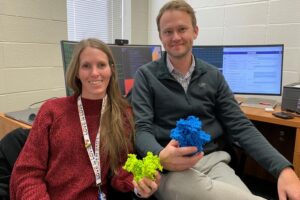
Postdoctoral researcher Ashley Bennett (left) and Associate Professor Rory Henderson of the Duke Human Vaccine Institute with 3D printed models of HIV surface proteins.

Scientists see an ultra-fast movement on surface of HIV virus

gene illustration

Prime Editing Rescues Genetic Disorders in Living Animals Using Engineered, Virus-like Particles

Willow tree. Pixabay

Willow bark provide our next life-saving antiviral medicine

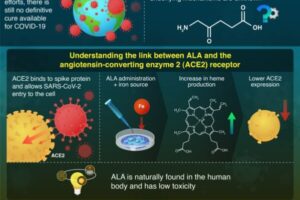
Infographic of how ALA could fight Covid

A naturally occurring amino acid could lead us to a cure for COVID-19

A SARS-CoV-2 strain called XBB.1.5 (nicknamed “Kraken”), a descendent of the Omicron variant, has been described as the most transmissible strain of the virus so far. Yale Medicine doctors tell you what you need to know.

Omicron XBB.1.5 “Kraken” Subvariant Is on the Rise: What We Know So Far

A three-dimensional image of a cancer cell's nucleus obtained by Dr. Faltas and his team shows the APOBEC3G protein (green) inside the nucleus (blue).

Enzyme That Protects Against Viruses Could Fuel Cancer Evolution

Senate Roundtable, Part II

Substack subscription form sign up

Comments

  • Karoly Mirnics on Common Prescription Drugs May Disrupt Cholesterol Pathways in the Womb and Raise Autism Risk
  • Aizen on Laziness helped lead to extinction of Homo erectus
  • Norwood johnson on Electrons in New Crystals Behave as If They Live in Four Dimensions
  • ScienceBlog.com on Hidden Geometry Could Finally Fix Quantum Computers
  • Theo Prinse on America Is Going Back to the Moon. This Time, It Plans to Stay
© 2026 ScienceBlog.com | Follow our RSS / XML feed