Skip to content
ScienceBlog.com
  • Featured Blogs
    • EU Horizon Blog
    • ESA Tracker
    • Experimental Frontiers
    • Josh Mitteldorf’s Aging Matters
    • Dr. Lu Zhang’s Gondwanaland
    • NeuroEdge
    • SciChi
    • The Poetry of Science
    • Wild Science
  • Topics
    • Brain & Behavior
    • Earth, Energy & Environment
    • Health
    • Life & Non-humans
    • Physics & Mathematics
    • Social Sciences
    • Space
    • Technology
  • Our Substack
  • Follow Us!
    • Bluesky
    • Threads
    • FaceBook
    • Google News
    • Twitter/X
  • Contribute/Contact

voice technology

Researcher Christine Skjegstad

Brain Responds Differently to Human and AI Voices, Despite Difficulty Distinguishing Them

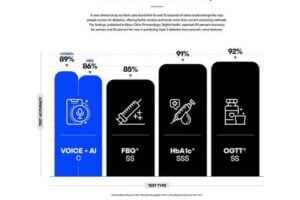
A new clinical study by Klick Labs found that AI and 10 seconds of voice could change the way people screen for diabetes, offering better access and lower costs than current screening methods. The findings, published in Mayo Clinic Proceedings: Digital Health, reported 89 percent accuracy for women and 86 percent for men in predicting Type 2 diabetes from acoustic voice features.

AI and 10 seconds of voice can screen for diabetes, new study reveals

To convey a sense of urgency, try reaching people through their ears. | iStock/CSA Images

Effective Recommendations Are Better Heard Than Seen

Substack subscription form sign up

Comments

  • Forehead Slap on Women With HIV Are Dying of Trauma, Not the Virus, and Death Records Are Missing It
  • Andrea on Women With HIV Are Dying of Trauma, Not the Virus, and Death Records Are Missing It
  • Foo on A New Theory Says DMT Entities Might Be Real, and Proposes How to Test It
  • John E on A New Theory Says DMT Entities Might Be Real, and Proposes How to Test It
  • Fully Whelmed on A New Theory Says DMT Entities Might Be Real, and Proposes How to Test It
© 2026 ScienceBlog.com | Follow our RSS / XML feed