Skip to content
ScienceBlog.com
  • Featured Blogs
    • EU Horizon Blog
    • ESA Tracker
    • Experimental Frontiers
    • Josh Mitteldorf’s Aging Matters
    • Dr. Lu Zhang’s Gondwanaland
    • NeuroEdge
    • NIAAA
    • SciChi
    • The Poetry of Science
    • Wild Science
  • Topics
    • Brain & Behavior
    • Earth, Energy & Environment
    • Health
    • Life & Non-humans
    • Physics & Mathematics
    • Social Sciences
    • Space
    • Technology
  • Our Substack
  • Follow Us!
    • Bluesky
    • Threads
    • FaceBook
    • Google News
    • Twitter/X
  • Contribute/Contact

wildlife conservation

grassland

Restored Grasslands Slash Wildlife Conflicts in Kenyan Communities

Male deer

Experts Warn of Growing Risk from Deer Disease Jumping to Humans, Livestock

Lion at a commercial breeding facility in South Africa.

South Africa’s controversial lion farming industry is fueling the illegal international trade in big cat bones

Herd of elephants

Male elephants signal ‘let’s go’ with deep rumbles

The three fur tag designs

Breakthrough wildlife tracking technology adheres to fur

Wildlife camera photo of bear as part of the noise study

Outdoor recreation noise affects wildlife behavior and habitat use

Polar bear at the zoo

Climate change: Longer ice-free periods may lead to smaller Hudson Bay polar bear population

moose

Parasitic Brain Worm Linked to Declining Moose Populations in North America

Bumble bee

Rising Temperatures Threaten Bumblebee Populations Worldwide

A digital illustration of a nest with eggs and a baby bird, surrounded by sound waves representing traffic noise

Traffic Noise Exposure in Eggs and Nesting Birds Leads to Lifelong Fitness Reduction

A photograph of a white-tailed deer standing in a snowy boreal forest, with a blurred background of snow-covered trees

Deer Expanding North, Threatening Caribou

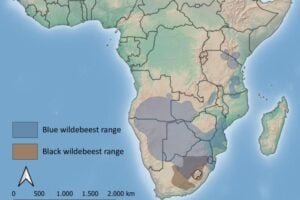
map of southern Africa

Iconic savanna mammals face genetic problems due to fences and roads

Mule deer taking Deer 255's route must cross nearly 200 fences annually on their seasonal migrations.

Mapped: 33 new big game migrations across American West

Using a model validated by historic records, researchers found that in 1900, Canada lynx had more suitable habitat in the U.S. than the few northern corners of the country where they are found currently. The model also helped reveal more potential future habitat for lynx in the future: namely in parts of Utah, central Idaho and the Yellowstone National Park region.

Study Suggests Promising Future for Canada Lynx in the U.S., Expanding Beyond Current Range

Older posts
Page1 Page2 Page3 Next →
Substack subscription form sign up

Comments

  • Karoly Mirnics on Common Prescription Drugs May Disrupt Cholesterol Pathways in the Womb and Raise Autism Risk
  • Aizen on Laziness helped lead to extinction of Homo erectus
  • Norwood johnson on Electrons in New Crystals Behave as If They Live in Four Dimensions
  • ScienceBlog.com on Hidden Geometry Could Finally Fix Quantum Computers
  • Theo Prinse on America Is Going Back to the Moon. This Time, It Plans to Stay
© 2026 ScienceBlog.com | Follow our RSS / XML feed