Skip to content
ScienceBlog.com
  • Featured Blogs
    • EU Horizon Blog
    • ESA Tracker
    • Experimental Frontiers
    • Josh Mitteldorf’s Aging Matters
    • Dr. Lu Zhang’s Gondwanaland
    • NeuroEdge
    • NIAAA
    • SciChi
    • The Poetry of Science
    • Wild Science
  • Topics
    • Brain & Behavior
    • Earth, Energy & Environment
    • Health
    • Life & Non-humans
    • Physics & Mathematics
    • Social Sciences
    • Space
    • Technology
  • Our Substack
  • Follow Us!
    • Bluesky
    • Threads
    • FaceBook
    • Google News
    • Twitter/X
  • Contribute/Contact

Wildlife Protection

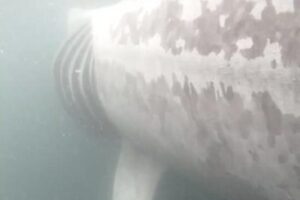
A 7-meter basking shark feeding near the surface after it was tagged by researchers.

Researchers record first-ever images and data of a shark experiencing a boat strike

Harbor porpoises need to eat 2000 fish a day to meet their energy needs. Not because it's demanding to swim, dive and hunt as they are streamlined and very energy efficient. They simply need vast amounts of energy to keep warm in the cold water.

Noisy Motorboats Disrupt Hunting and Threaten Survival of Denmark’s Harbor Porpoises

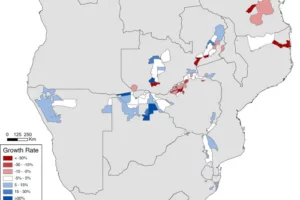
Map of elephant population growth rates across southern Africa. Figure reproduced from Huang et al. 2024 (DOI: 10.1126/sciadv.adk2896)

Protected areas for elephants work best if they are connected

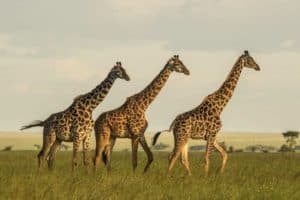
Giraffe family

The Best Way to Save Giraffes is to Support Wildlife Law Enforcement and End Poaching

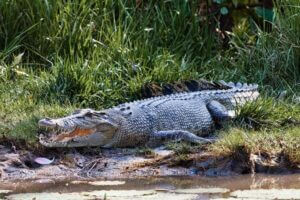
The vaccine is the first of its kind to achieve proven safety and efficacy in crocodiles.

Vaccine to protect crocodiles and multi-million dollar industry

Substack subscription form sign up

Comments

  • Karoly Mirnics on Common Prescription Drugs May Disrupt Cholesterol Pathways in the Womb and Raise Autism Risk
  • Aizen on Laziness helped lead to extinction of Homo erectus
  • Norwood johnson on Electrons in New Crystals Behave as If They Live in Four Dimensions
  • ScienceBlog.com on Hidden Geometry Could Finally Fix Quantum Computers
  • Theo Prinse on America Is Going Back to the Moon. This Time, It Plans to Stay
© 2026 ScienceBlog.com | Follow our RSS / XML feed