


I have been enthusiastic about telomerase therapies for anti-aging since 2003. But if I can’t change my mind as new data appears, what’s the point of being a scientist? I still believe that lengthening telomeres is a net benefit, but the potential for added years is modest, and there are probably risks and tradeoffs. The study that has most influenced me is this one, implying that telomerase affects epigenetics (through methylation) in ways that accelerate aging. My theory is that the unexpected relationship between telomerase and methylation is an example of antagonistic pleiotropy, but pleiotropy in a very different sense from the standard evolutionary theory.
Do people with longer telomeres have longer life expectancy? In 2003, Richard Cawthon of University of Utah first addressed this question experimentally with a study that was clever, innovative and courageous. It was innovative in that he introduced a fast and convenient way to measure telomere length from very small quantities of DNA, using the Polymerase Chain Reaction. It was clever in that, instead of a “prospective study” measuring telomere length in his subjects and then following 20 years to see what would happen to them, he did the experiment retrospectively, using historic samples of blood that had been taken from people twenty years earlier and kept in frozen storage by a local hospital. And it was courageous in that everyone believed at the time that extending life could not be so easy as just lengthening telomeres, or else the body would already be doing it! That is to say, no one would fund the study because they thought they knew how it had to come out.
 But they were wrong. Even with Cawthon’s small sample of only 143 subjects, the relationship between telomere length and diseases of old age jumped out of the statistics. The quartile with the shortest telomeres had suffered two times higher mortality and three times greater incidence of heart disease in the intervening 20 years than those with the longest telomeres.
Red blood cells have no DNA, hence no telomeres, but white blood cells are constantly dividing to target specific bacterial, so the telomeres in white blood cells are a sensitive measure of immune health. Cawthon reported that the group with shortest telomeres had suffered 9 times the rate of infectious disease compared to the longest telomere group.
At the time of Cawthon’s study, there was a great deal of skepticism, based purely on theory. The standard hypothesis was that all animals are evolved to live as long as possible, all else being equal, and if telomerase were being held back, there must be a powerful downside associated with it. I was already marching to the beat of a different drummer in 2003, and I didn’t believe that evolution was always going for the longest lifespan available. Because I believe that aging is an evolutionary program, it was easy for me to see telomere shortening as part of the program. The biggest clue in my mind was the evolutionary origin of telomere shortening in single-celled protozoans. In the ciliates (e.g. paramecium), telomerase is not expressed in mitosis (when the cell copies itself), but only when it conjugates (recombining genes with other individuals) with another. Hence, a cell that just goes on reproducing as fast as possible without sharing its genes was doomed to die of cell senescence. A billion years ago, telomeres were already a means of enforcing the communal imperative, Share your genes! It is easy to imagine that the same evolutionary imperative has persisted through the aeons, and that telomere shortening insures death in many higher organisms. Indeed, since Cawthon, it has been demonstrated that short telomeres are a mode of aging in dogs, cats, and horses, (but not cows, pigs or mice).
Three years ago, I reported on a Danish study that replicated Cawthon’s results on a huge scale. In 60,000 subjects, Rode associated short telomeres with all-cause mortality, heart disease, diabetes, and some cancers.
Telomere shortening leads to senescence and higher disease risk by three known mechanisms. First, stem cells with the shortest telomeres stop reproducing, hence the body’s tissues don’t renew as efficiently. Second, senescent cells are not just dead weight, they actually emit chemical signals (cytokines) that increase inflammation. This has been called SASP, for Senescence-Associated Secretory Phenotype.) Third, senescence in the bone marrow that generates new white blood cells is especially damaging to the immune system, because it prevents the body from responding effectively when challenged with new infections.
Telomeres and cancer
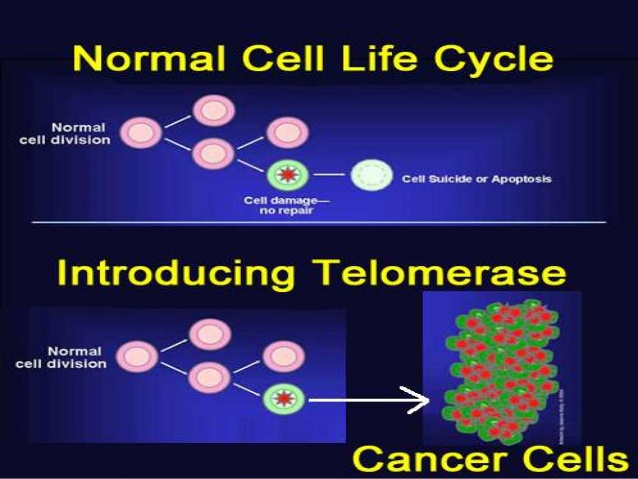
If short telomeres cause all these problems, why would the body ever allow its telomeres to become short? It was recognized early in the game that production of telomerase entails no substantial metabolic cost, so the question challenges the conventional theory that individual animals are evolved to live as long as possible. Of course, for us who believe that aging is programmed, there is no problem with this. But the first suggestion of an answer within the conventional paradigm came from Carol Greider, one of the original discoverers of telomerase, and independently from Ruth Sager. Telomerase is needed to make cells immortal. 90% of cancer cells have found ways to bypass the suppression of telomerase in order to continue proliferating unabated. Greider and Sager proposed that keeping telomerase under lock and key constitutes one of the barriers that keeps cells from going rogue as tumors. Telomere shortening helps to prevent cancer.
This argument never made any sense to me. First, what good was it to suppress cancer if the net effect was to shorten lifespan? And second, I believe that the body’s principal defense against cancer is the immune system, and if short telomeres can cripple the immune system, that was likely to do more to promote cancer than to prevent it.
Nevertheless, the idea that telomerase is rationed to protect against cancer persisted in the biomedical community for 20 years based on theory alone, even as it was moderated by the discovery of SASP.
Experimental link between telomeres and cancer
I came into this field very skeptical of the idea that long telomeres could cause cancer. But as the evidence has accumulated, I’m compelled to reconsider. Just last summer, I blogged critically about the largest genetic study to date, linking genetic predisposition for longer telomeres with cancer rates later in life. I noted that the measured effect is actually quite small, but is reported blown up to alarming proportions by exponential extrapolation. But that didn’t mean it was necessarily wrong, only that it was unconvincing. Shortly afterward, I became aware of observational studies, based on measured telomere length rather than the genetic predisposition. These are harder to refute.
In this study from the Moffitt Cancer Center, short telomeres (as measured directly, not imputed from genetic variation) are associated with higher risk of squamous cell skin cancer, but long telomeres are associated with higher risk of melanoma skin cancer. Same methodology, same authors. Why would I believe one and disbelieve the other? Melanoma tends to occur at younger ages than squamous cell carcinoma, this supporting the Greider hypothesis that telomere shortening should be especially important for cancer prevention while we are still in a fertile stage of life. The Moffitt results on melanoma were confirming a finding reported earlier from Harvard Med School.
In this study, people with the longest telomeres had nearly twice the risk of lung cancer compared to people with short telomeres, after adjustment for age and smoking status. There are 25 co-authors, and Cawthon is #2. In this study, short telomeres protect against (devastatingly lethal) pancreatic cancer, and in this one, there is an elevated risk of breast cancer associated with long telomeres.
There are studies contradicting each of these findings. Overall, the field seems to be more of a confused mess even than most areas of epidemiology. But for lung cancer, melanoma, and pancreatic cancer, the predominance of the evidence says that longer telomeres are associated with higher risk.
Longer telomeres uncontroversially protect against heart disease and stroke. There is no contradiction of this finding in sight, and there has been no contradiction of the major finding (by Rode and Cawthon) that short telomeres increase all-cause mortality. Perhaps that’s all we need to know.
Stop the Presses
Just a few weeks ago, I learned of this new study linking telomerase to the epigenetic changes that the methylation clock associates with aging. The implication is that telomerase accelerates aging. It began with an investigation by Steve Horvath’s group (about which I reported last month) asking, what genetic variations are associated with people who age faster or slower than average, according to the Horvath methylation clock? They did a genome-wide search for statistical correlates and the standout association was telomerase. People who have small genetic variations that support greater telomerase expression tend to have longer telomeres, but they also tend to age faster, as measured by the Horvath clock.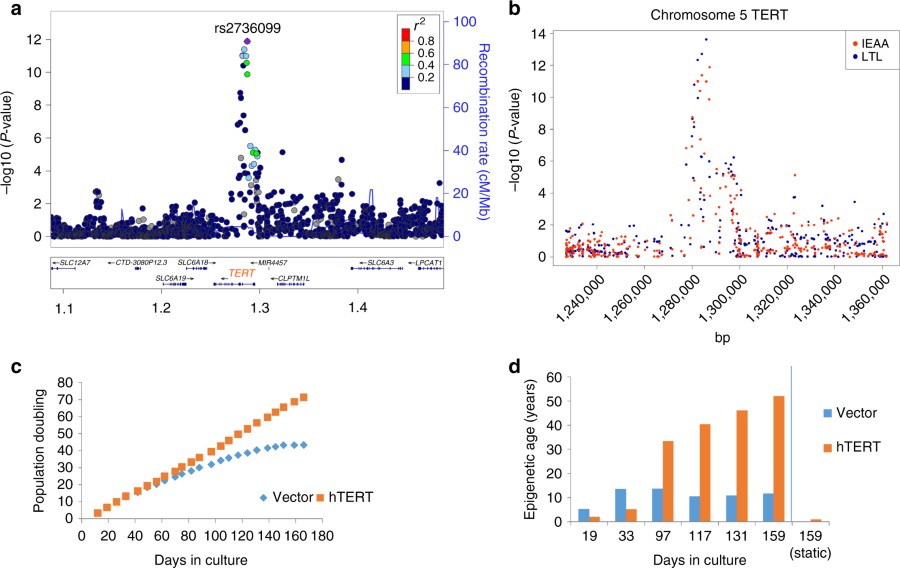
It’s been known for a long time that telomerase has other effects in addition to lengthening telomeres. But this is the first time that telomerase has been reported to affect DNA methylation. So it seems we are presented with a tradeoff, or pleiotropy, or Catch-22, or “damned if you do, damned if you don’t.”
The association between telomerase and accelerated aging (measured by methylation) was found in the genetic statistics, and then confirmed in a cell culture. When telomerase was artificially activated in the cell culture, the methylation patterns changed in the cells consistent with older age according to the Horvath clock. In fact (and remarkably in my opinion) they found no Horvath aging at all in the cell cultures that lacked telomerase. Could it be that telomerase is the one and only driver of epigenetic aging at the cellular level?
Telomere length and the Horvath methylation clock are both correlated with age, but they are not otherwise correlated with each other. The Horvath clock is a combination of 353 methylation levels that is optimized to correlate maximally with age. The observed correlation is 0.95. Telomere length is not statistically optimized but measured as nature offers it, and its correlation is much weaker (~0.4 according to my estimate, as I have not found this number in print). Thus Horvath clock is an excellent measure of chronological age, and combining information about telomere length can make it potentially a little more accurate yet. But the telomere clock on its own is a very unreliable measure of age.
The Horvath group designed an experiment to separate the direct effect of telomerase on methylation from an indirect effect (telomerase ⇒ telomere length ⇒ methylation age). They found no indirect effect. Telomerase itself affects methylation aging, but telomere length does not.
This raises (what is for me) an uncomfortable question. Many “good” life habits have been associated with telomerase expression, including exercise, meditation, and social integration. Could it be that these habits are simultaneously slowing our telomere aging, while hastening our epigenetic aging?
“While the paradoxical finding cannot be disputed on scientific grounds, its biological interpretation remains to be elucidated.” [Lu et. al, 2018, the same study I’ve been talking about]
(Another finding of this same study: Earlier menopause is associated with epigenetic age acceleration in women, but this is mitigated by hormone replacement therapy. HRT modestly slows aging, as measured by the Horvath clock.)
Antagonistic Pleiotropy turned Upside Down
So, what’s going on? My inclination is always to think in evolutionary terms.
Antagonistic Pleiotropy is the standard explanation for aging, though I have long argued that it doesn’t fit the data. The theory says that some genes enhance fertility and survival early in life, but have detrimental effects late in life. These genes are selected in a Darwinian process because their benefits outweigh their costs. Even though they die younger, those individuals carrying the pleiotropic genes leave more offspring, and that’s what counts for evolution. The crux of the theory is that nature is caught between Scylla and Charybdis, forced by limitations of the available genes to choose either high fertility with short lifespan or low fertility with longer lifespan. Crucial to the theory is the assumption that it is biologically impossible to separate the benefits of these pleiotropic genes (fertility) from their costs, so that there is no way evolution could engineer higher fertility without triggering later senescence.
This theory was formulated by George Williams in 1957, long before anyone had heard of epigenetics. He assumed that if you have a gene, you’re stuck with it for life. We can’t blame Williams for the frame of mind that he brought to the evolutionary question, but we now know that this is very much not the case. The body turns genes on and off in individual tissues and at specific times with exquisite precision. In fact, most of the euklaryotic genome is devoted not to genes, but to epigenetic controls of one kind or another.
The fact is that genes are turned on that dial up fertility and promote robust replacement cell growth early in life, and aging at that time occurs quite slowly. Later in life, these growth and fertility genes are dialed way back, and that is the era in which aging comes at us with a vengeance. This, to me, is a direct refutation of Antagonistic Pleiotropy as a theory.
Nevertheless, many examples pleiotropic genes have been found in studies of aging. The above story of telomerase seems to be a conspicuous example. Telomerase promotes epigenetic aging, while lack of telomerase promotes cellular senescence. “If the ’gaitors don’t getcha then the ’skeeters will.”[]
My interpretation of pleiotropy is in my book and some of my academic papers. It is this: Aging has been built into our genomes by natural selection for the sake of the community. Fixed lifespan, (especially when modified conditions of food stress) is helpful in preventing population overshoot that can lead to famines, epidemics, and extinction. But whenever a trait is good for the community and bad for the individual, there is a temptation for the individual to cheat (“cheating” is actually the term used by evolutionary theorists). In this case, cheating would mean evolving a longer lifespan via selfish genes that spread rapidly through the population, because they are more successful at the lowest level of Darwin’s competition.
Individual competition would erase aging if left unchecked. The results would be great for individual fitness, but soon would be disastrous for the population. Overpopulation would ensue, followed by the famines and epidemics mentioned above. Evolution has learned (over a very long expanse of time) to protect the communal interest, placing barriers in the way of individual selection for ever longer lifespan. This is the evolutionary significance of pleiotropy. It provides that no simple mutation can substantially extend any aspect of lifespan without adversely affecting another aspect of lifespan or of fertility. The aging clock has been “purposely” configured so as to be spread out over several different mechanisms, tied not just to other pro-aging mechanisms but to fertility as well. Aging is hard to get rid of “by design”.
In the standard theory that I don’t believe, antagonistic pleiotropy is a precondition, and evolution has had to make the best of a bad deal. In my version, antagonistic pleiotropy has been crafted by natural selection in its long-term mode. Limiting lifespan has been so important to the viability of the population that evolution has arranged to protect it from leaking away due to cheating, and antagonistic pleiotropy is one of the ways in which this is arranged. I have modeled this process in numerical simulations of evolution.
My guess is that the connection between telomerase and epigenetic aging is an example of antagonistic pleiotropy in this latter sense–certainly not in the sense of Williams, because on their face telomerase and methylation have little to do with one another.
Bad news for life extension strategies
But whatever the theoretical origins, the pleiotropic connection between telomerase and epigenetic aging complicates any strategy we might devise for slowing the progression of human aging.
I believe that the preponderance of evidence still indicates that activating telomerase has a net benefit for lifespan, but that probably we can add at most a few years by this route. I think that epigenetics is much closer to the core, the origin of aging, and that interventions to modify epigenetic aging will eventually be our holy grail. The caveat is that telomeres are simple, but methylation is complicated, and methylation is just one of many epigenetic mechanisms.
Discussion
163 reader comments
Imported threads are marked Archive. New comments are welcome and moderated for spam.
It seems that stem cells and progenitor cells thrive with excess telomerase, whilst lack of telomerase causes cancer cells to go into senolysis.
This seems like a catch 22. However, it is a similar situation to the feeding-fasting cycle. Our cells need food, yet periodic fasting brings about a cleansing and senolysis.
Therefore, a possible strategy would be to take a telomerase inhibitor first, to drive cancer cells to senolysis, then take a telomerase activator to invigorate stem and progenitor cells.
And repeat this cycle.
This strategy rests on the idea that cancer cells are more vulnerable to senolysis than healthy cells when exposed to a telomerase inhibitor . If they are, then this cycle should magnify the good cells.
Telomerase inhibitors include curcumin, milk thistle...
Telomerase activators include cycloastragenol, ginkgo bilbao, resveratrol, genistein, DMSO
So, I would propose a cyclic protocol, similar to the feeding-fasting cycle
Ref: https://www.intechopen.com/books/enzyme-inhibitors-and-activators/telomerase-inhibitors-and-activators-pharmaceutical-importance
There's little risk, in that the system will reboot & rewarm, but if one is thoughtless enough to do it where one shouldn't then it's like standing in the middle of the road long enough; animals look for a safe place & some non-human primates bury themselves alive, in the jungle floor, for 7-8 months straight.
Well, I wish you success in your endeavours.
It wasn’t a question really and I wasn’t judgemental. I was just mumbling to myself. The yogis and Tibetan monks enter into torpid state through shutting down some brain activities, I believe. There is some danger in that as well, as I think they need others to wake them up.
You are doing something, which is admirable in itself.
A torpor capability is the one universally shared trait common to all "off-chart" long-living animals, mammals. Even things that don't seem torpid technically are, including, fossorial (e.g., NMR) & diving (e.g., bowhead whale) critters; torpor does not preclude limited/restricted physical activity. Classic telltale hallmarks: spontaneous sub-basal metabolic rate, depressed vitals (including core/periphery temperature); spontaneously reversible; vitals lag follow metabolic rate shifts.
The human side of it: working on it presently, & certain aspects are far down the runway.
;-)
Very interesting. Look forward to hearing more.
If you actually want to known, in a nutshell, basically & without going into the details too much, the metabolic slow-down of torpid states masks several unappreciated features.
Firstly, it is known that life-span, t ∝ ~ (body-mass)^0.2, i.e., bigger-sized animals generally live longer. Obviously, you can't stretch time by up-sizing to whale size. Or can you!? Well, you kinda can. Torpor is special because it transforms the higher pound-for-pound metabolic rate of a small-sized animal to that of larger ones, talking 5 g bat to 200 ton whale, like really. In effect torpor transforms, temporarily small & short-living things into big & long-living things but without the actual body-mass problem. How is this even remotely possible? The thing is, body-mass is not just some inert body-mass, what we're actually talking about here is activated body-mass, i.e., enzyme-active mass, & enzyme activity in torpor is largely & profoundly depressed. Indeed, mice are more metabolically active, pound-per-pound, than whales, except in torpor, in which case they transform into whales, kinda, sorta, which explains, in part, how such wonders as 29 year old instead of 8 y.o. hibernating/estivating & diurnally torpid 150 g jungle-primates even exist; 29 is the lab version, the wild versions might probably live longer. Of course, small critters arouse more frequently than, say, bears, & they are active for at least a third to half the time, which sandbags their scope for living in slo-mo & as long as a whale; arousals are also extremely costly, metabolically speaking. Mole-rats live continously sub-BMR (Q10 temperature effect ensures it), so they're continously "torpid".
But here's the other thing about torpor, it doesn't just dilate biological time, it can also paradoxically speed it up. It's quintessentially-ingenious. If you power-down metabolic rate, temperature generally falls and life's normal degenerative pathways slow or temporarily arrest, but when temperature falls some enzyme, "cold-loving" enzymes, ones that would be largely inactive at c. 37°C come online & to life. And, this is when the metabolic magic happens, e.g., DNA double-strand break can be repaired, telomere can be prolonged probably without telomerase running havoc on mythelation (?). It seems that this effect (there are others) would result in power-shift (& better balance) between degeneration & regeneration. Think, continuous house-keeping (cleaning & repairs) rather than a mere spring-clean or worse, none. This would explain why animals that live in a slo-mo but still active world live very long & practically healthy lives until they get hit by a bus or infection.*
So, I think, the trick is to run cool & "lights-out" or "slow-mo" torpid or pop in-&-out of it selectively, depending on needs & wants, like Brandt's (40 y.o.) bat, which should only live at most about 4 years. But how to do that? This is where it gets tricky, & what's presently being worked on, in humans; we're cut the chase types & not much into those fat little white liars & tellers of tall & long tails [sic], however awesome.
* Torpor suppresses many, many otherwise extremely lethal pathogenic infections (viruses, bacteria, protozoa, even cancer); not so good with fungus.
So cold immersion with a beta blocker? Maybe some meditation and exercise thrown in ?
Noop. Torpor is an orchestrated event, from within, with various environmental triggers that must be activated in the right sequence. One can't throw ice-cubes or drug mimics & think it'll play possum, but many, including DoD (DARPA - Biostasis 03/2018) still think so; not saying cold doesn't help, has to be properly sequenced & applied. "Ummm" wont cut it either, not really; the EEG flatlines.
Here a yogi was able to lower his metabolic rate: “Voluntary hypo metabolism in an Indian yogi”
https://www.sciencedirect.com/science/article/pii/030645658790060X
Would that be considered at least partially torpor state?
No, that would be considered fully torpid, just not the deepest attainable nor the longest. The definition of torpor merely requires a metabolic rate that falls below the normal basal rate; the degree of corezcooling depends on the metabolic rate & several other factors. You'd be hard-pressed to detect EEG in deepest torpor as it's ultra-low voltage. The thing to note is that torpor is not some particulate metabolic rate or core temp or physical activity level but spans a spectrum, which becomes more resolute & easier to detect in terms of vitals the lower these signatures. Consciousness can be maintained to ~ 29 - 30°C but with considerable cognitive & physical deficeit. Even upon reaching merely 33-34°ish, e.g., slurred speech, muscle stiffness, much suppressed vitals, time-warpping, etc. (pers. obs)*. In that sense, it's like hypothermia, but the anapyrexia (i.e., down-regulated cooling) of torpor is, however, not pathological like (accidental or "therapeutic") hypothermia, it's spontaneously reversible as you can see from the link; hypothermia isn't reversible without external rewarming assistance, though the reversibility & pathogenesis of hypothermia is, admittedly, time-dose dependent & hence why it can to a certain extent protect/preserve life for some time. BUT, animals don't medidate (as far as I know) & neither do the torpid human experiments I've been involved with, but that is not to say it precludes entry via meditation.
* http://img1.wsimg.com/blobby/go/13edc45c-64c6-44b8-9675-85299f8f01da/downloads/1c9nmms46_667093.jpg
Thank you JIM for the explanation. I checked up your website. I guess to find out how your experiment works, I have to go through the gateway. Though I think I know the answer to the first puzzle (bear-cave or bat cave), I don’t feel smart enough nor brave enough to go search for that relevant someone up the river, deep in the jungle.
Sorry, I didn't answer your question. We'd be talking Big & deep systems bio, meaning, sharp-edged double-edged, but we know we can sit on this forever & it wont stay buried, just trying to roll it out in a controlled & responsible way, i.e., slow-like. I think Ralph Ellison captured it best:
"Please, a definition: A hibernation is a covert preparation for a more overt action." - The Invisible Man (1952).
PS: I'm not into covert nor overt action, or invisible men ... they tend to be psychopaths generally anyway.
Interesting.
Food for thought:
I know of critters who amp-up telomerase & relenghten telomeres but only during hibernation & diurnal torpor, so that biological time stretches so profound that many, most pathways undergo biostasis, i.e., period of non-aging. And, behold when they spring back to full active life telomerase throttles back. The outcome, healthspan approaches lifespan, & lifespan is, well, off-chart, e.g., what should be a 4-5-years-only living (5-10 g) mouse-size bat lives to +40 years.
It would seem that exogenous administration of telomerase let alone endogenous triggering at the wrong time is bane that "evolution" worked-out long ago, we are simply to darn slowww [sic] to catch on. I believe Orgel's second rule may be in order:
“Evolution is cleverer than you are”. - Leslie E. Orgel
which, herein would imply that the process of natural selection though not in itself perhaps intelligent, clever or purposeful, its products are ingenious. Time to tap it & get ingenious h turn the bane into a blessing as the solution is probably lying in plain sight.
Bought & read your book
Learnt things I did not know ... thanks :-)
Since we've unique access to torpid-capable "critters" we're going to see what we can gleam from it in terms of telomeres, telomerase & methylation clock. Said another way, can we extend the bounds of our ecosystem
JIM,
Indian Yogis and some Tibetan monks seem to be able to induce torpor/hibernation and some do live longer. I wonder how much research has been done on these people
Some Aboriginal Australians. Here's an interesting observation made by officers of The First Fleet to Australia:
"They seemingly enjoy uninterrupted health, & live to a great age. ... We have seen them grey with age but not old."
– Worgan (Fleet surgeon), & Tench (officer), The First Fleet (1788)
Hi Aldebaran
Well telomerase certainly isn’t shortening the lifespan of the naked mole rat. Anything but, I would say.
Hi Paul,
Maybe I have missed that point. Is the naked mole rat known to express more telomerase than other rat species? If yes, that might give us some clues about the importance of epigenetic changes.
But so far at least in humans, the high correlation between Horvath clock and mortality suggests to me that epigenetic changes are at least strongly correlated with aging (if not causally implicated). Thus, I would be careful about anything that accelerates the Horvath clock until an experiment has shown some kind of divergence between aging and Horvarth clock (or an equivalent clock for other mammals).
Of course all of that is just speculation at this point. I am betting on the Horvath clock but I might be wrong.
That's why it would be interesting to reproduce the Blasco study on mices while monitoring their epigenetic changes.
Actually my bad, nmr’s do maintain their telomeres via the alt pathway and not telomerase. Primarily they seem to protect themselves against critically shorts.
I've said this before and I'll continue to say this: the Horvath clock is just measuring how long cells have been around for. That's its correlation with age. More telomerase means cells last longer. Hardly harmful, but this is being confused with old people having cells that hang around longer because stem cells are exhausted.
Beware of people applying statistics and models to the real world and thinking they understand it.
Hi Mark,
But in that case, shouldn't we expect rapamycin or CR (which I think slow down stem cells turnover) to accelerate the Horvath clock? However, the opposite is happening.
In both a CR body and a young body cells last longer. But there is an essential difference in that CR slows down metabolism of cells, whereas telomeres restores metabolism to (higher) youthful levels. That explains the difference according to the Horvath Clock.
Re: what you were asking about gene expression, we know from many in vitro experiments telomerase restores gene expression to youthful levels. I think Shay and Wright did a good paper on this.
It has been discovered that as we age CD38 is the main consumer of nuclear NAD+. The reduction in NAD+ causes a shortage of SIRT3. This causes aging via mitochondrial decline. Reference: "CD38 Dictates Age-Related NAD Decline and Mitochondrial Dysfunction through an SIRT3-Dependent Mechanism" http://www.cell.com/cell-metabolism/fulltext/S1550-4131(16)30224-8 We can reduce nuclear CD38 to youthful levels with apigenin and quercetin, which should restore our sirtuins and increase lifespan Reference: "Flavonoid Apigenin Is an Inhibitor of the NAD+ase" https://www.ncbi.nlm.nih.gov/pmc/articles/PMC3609577/
Apigenin has a half-life of 90 hrs, quercetin of just a few hours. We don't want to over suppress CD38 - see the health problems of CD38 KO mice. I am taking 250 mg of apigenin once a week. Although quercetin would help reduce CD38, I wouldn't take much quercetin because of health risks associated with continuous levels.
I have recently become more skeptical about NR, even though I purchased some myself. The science media is all a buzz right now about boosting NAD+ with Nicotinamide Riboside. Several studies have just come out suggesting this is a health promoting supplement. Boosting NAD+ is supposed to raise Sirtuin levels which have been shown to be health promoting. However, there have so far as I know, been no lifespan increases shown to be associated with boosting NAD+. I am concerned that boosting NAD+ will undermine the proven benefits of energy restriction from CR, Fasting, or pharmaceuticals such as Metformin, Resveratrol, and Rapamycin. Here’s why: All of the proven life extension methods involve reducing energy, slowing metabolism, encouraging autophagy and slowing Mtor. Is boosting NAD+ the same short term robustness vs long term longevity trade-off we see with eating vs fasting. The first study below was just released and shows that boosting NAD+ increases cellular ATP levels. The second and third references show that higher ATP levels will REDUCE AMPK and INCREASE MTOR. Not the way to increase lifespan (so far)!
First study: "Chronic nicotinamide riboside supplementation is well-tolerated and elevates NAD+ in healthy middle-aged and older adults
Christopher R. Martens, Blair A. Denman, […]Douglas R. Seals
Nature Communicationsvolume 9, Article number: 1286 (2018)
doi:10.1038/s41467-018-03421-7
29 March 2018
“Nicotinamide adenine dinucleotide (NAD+) has emerged as a critical co-substrate for enzymes involved in the beneficial effects of regular calorie restriction on healthspan. As such, the use of NAD+ precursors to augment NAD+ bioavailability has been proposed as a strategy for improving cardiovascular and other physiological functions with aging in humans”
“In addition to boosting NAD+-specific metabolites in PBMCs, we also observed increases in the mean concentration of other metabolites involved in the regulation of energy production and metabolism, including adenosine and adenosine triphosphate (ATP; mean change = 699 pmol per mg protein; one-sided 95% CI (84, ∞); Fig. 2 and Table 3); however, analysis of this metabolite was considered a secondary outcome and the increase did not attain statistical significance after correction for multiple comparisons. NR supplementation also tended to raise levels of adenosine diphosphate (ADP) and adenosine monophosphate (AMP), though increases in these metabolites did not reach statistical significance (Supplementary Table 4). Collectively, these findings indicate that chronic NR supplementation effectively stimulates NAD+ metabolism in healthy middle-aged and older men and women.
Metabolite Median Median Range Range
Placebo NR Placebo NR P-value
NAAD 0.0 0.0 0.0−2.3 0.0−8.7 0.018*
NAD+ 7.7 12.2 0.0−27.4 4.7−67.8 0.048*
NADP 6.1 6.3 3.3−17.9 2.7−42.7 0.267
NaM 257.6 278.6 109−411 171−1357 0.065
ATP 1592 2205 363−3446 763−5459 0.032
All values expressed as pmol per mg protein. * represents unadjusted P < 0.05; ATP represents secondary outcome assessed at Bonferroni-adjusted P < 0.006"
I'm not sure why the statistical significance level of .05 was not used for ATP but just looking at the numbers it seem clear to me that NR raised ATP.
Second study referenced: "Cell Rep. Author manuscript; available in PMC 2017 Nov 16.
Published in final edited form as:
Cell Rep. 2017 Oct 31; 21(5): 1331–1346.
doi: 10.1016/j.celrep.2017.10.029
PMCID: PMC5689476
NIHMSID: NIHMS913322
PMID: 29091770
The mTORC1 signaling network senses changes in cellular purine nucleotide levels
Gerta Hoxhaj,1"
“…mTORC1 signaling is also sensitive to changes in cellular energy status. A primary mechanism by which mTORC1 is suppressed by energy stress is through the action of the AMP-activated kinase (AMPK). AMPK is activated by a rise in the ratio of cellular AMP to ATP that accompanies excess ATP consumption or decreased ATP production through glycolysis or mitochondrial respiration (Hardie, 2014). AMPK suppresses mTORC1 signaling through both the TSC complex and through direct phosphorylation of the mTORC1 component Raptor (Gwinn et al., 2008; Inoki et al., 2006; Inoki et al., 2003)…”
Third study referenced: Cell Metab. Author manuscript; available in PMC 2017 Nov 17.
Published in final edited form as:
Cell Metab. 2014 Dec 2; 20(6): 939–952.
Published online 2014 Oct 30. doi: 10.1016/j.cmet.2014.09.013
PMCID: PMC5693325
EMSID: EMS74925
PMID: 25448702
"AMPK – sensing energy while talking to other signaling pathways
D. Grahame Hardie
…The AMP-activated protein kinase (AMPK) is a ubiquitous sensor of cellular energy and nutrient status in eukaryotic cells. Because of the adenylate kinase reaction (2ADP ↔ ATP +AMP), which appears to be maintained close to equilibrium in essentially all cells, increases in the cellular ADP:ATP ratio (signalling a deficit in cellular energy), are always accompanied by even larger increases in the AMP:ATP ratio (Gowans et al., 2013). AMPK monitors the ratio of AMP:ATP (and, to a lesser extent, ADP:ATP) and, if energy deficit is detected, acts to restore energy homeostasis by switching on alternate catabolic pathways that produce ATP, while switching off biosynthetic pathways and other non-essential processes consuming ATP…”
So my question is - does taking NR negate the positive effects of CR, Fasting, Protein Restriction, Exercise, Metformin, Berberine, and Rapamycin?
You make a great point Neil. No evidence of longevity with NR. The users state that it gives them more energy, but in and of itself that's not much of an anti-aging endorsement. I can get more energy from steroids, growth hormone, and even amphetamines, but none of them are longevity promoters, and as you say, the anti-aging agents tend to slow everything down.
I wouldn't have thought NAD boosters negate CR or mTOR inhibition - in fact I suspect higher ATP is downstream from better mitochondrial health, so this is probably exploiting the same or similar pathways.
This is yet to be proven of course but I think we'll find NR or NMN has far greater an effect on health span than lifespan in humans, i.e. it will increase the average but not change the max much.
Hi Neil,
To my knowledge nothing, CR, metformin, rapamycin, etc has been shown to extend human maximum lifespan? So to me, it is speculative that anything like NR or NMN can be distinguished from these other interventions at this time. They all can be seen as modulating health span.
If Josh is right, and I agree with him, that aging is programmatic, then the fact that we can intervene to increase health span without increasing max life span supports a different conclusion. I hold that there are two distinct programs one that governs the processes of increasing decrepitude and another that can best be described as a death program that kills even healthy individuals within a relatively fixed period of time.
I hold that CR, Metformin, Rapamycin, NR, etc act to slow or eliminate the processes of decrepitude which results in increased health span. The "Decrepitude Program" constitute the first of these two programs.
Regardless of the aforementioned interventions that maximize healthspan, species specific maximum lifespans still exists which are mediated by a death program". This program kills the individual when the clock built into this second program, the "Death Program" runs out regardless of the deployment of the standard healthspan increasing interventions.
This death program I believe, as Josh has described in previous posts, could be located in the hypothalamus. As Josh has pointed out, work has recently been re-initiated in this area after a period of near dormancy since the work of D. Denkla.
Kevin
You're right that we know of nothing that can increase human maximum lifespan, but that's only because it takes a human lifetime to find out. It may well be that metformin or rapamycin increase maximum lifespan. It is probable that CR increases human maximum lifespan. We just can't know that without many decades of experimentation on thousands of people.
I wouldn’t give up on telomerase just yet Josh. As you know, larger animals express less telomerase than do smaller animals, presumably as a cancer protective mechanism, it’s also very likely true that telomerase expression by itself doesn’t correlate well with a longer lifespan. However, I think that the message of the naked mole rat is that if you have increased telomerase expression combined with an excellent cancer protective mechanism then that combination may well lead to extreme longevity.
A study was done on mice who were engineered to be cancer resistant who had TERT over expression and they lived 25 to 40 % longer.
So maybe before we throw the baby out with the bath water, we should consider combining the cancer protection of rapamycin with something like TA 65 to get the best of both worlds.
Maybe this isn’t an either or proposition.
Just a thought.
Here is that study https://www.ncbi.nlm.nih.gov/pubmed/19013273
It would be interesting to redo that study on mice and track epigenetic changes (assuming we have a equivalent of Horvath clock for mice).
I kind of share Josh's concern about telomerase accelerating epigenetic changes. However, there must be a way to over-express telomerase while rejuvenating epigenetic since this is what happen during epigenetic reprogramming.
So my hope is that a deeper understanding of epigenetic reprogramming will ultimately lead us to some ways to both rejuvenate epigenetic while still lengthening telomeres.
It would be interesting to redo that study on mice and track epigenetic changes (assuming we have a equivalent of Horvath clock for mice).
I kind of share Josh's concern about telomerase accelerating epigenetic changes. However, there must be a way to over-express telomerase while rejuvenating epigenetic since this is what happen during epigenetic reprogramming.
So my hope is that a deeper understanding of epigenetic reprogramming will ultimately lead us to some ways to both rejuvenate epigenetic while still lengthening telomeres.
So Mark is going to love this: a recent study published in Nature: So how does our liver regenerate? Via telomerase expressing liver cells!
Hi Josh,
Yes I agree with you in a formal scientific sense that we would need life long human experimentation. But at an intuitive or anecdotal level it seems that max lifespan is not being extended.
People have been practicing CR and the Wisconsin longitudinal study on CR in monkeys has been conducted, neither have, to my knowledge, shown signs that max life span is being extended. Also rapamycin and metformin have been used by people for a long time and I have not heard any indication that there are signs that these people are on a trajectory to extended max life span?
Josh do you think, as I do, that a rule of thumb could be stated as "the longer lived the species the less its maximum lifespan is extended by the interventions such as CR or its mimetics"? It seems that animals that live 30 years or more do not extend max lifespan via the current interventions? This limitation seems most strongly expressed in mammals.
I am not a pessimist for extended max life span in humans, I am just in the camp that a death program is part of the bodies developmental program, if this is correct metabolic interventions will not increase max life span in animals that are long lived and as such have a slow rate of metabolic senescence already.
Generally I agree with you Kevin, we need not only slow down the clock but turn it back - however rapamycin does to seem to do that to some limited extent, and people have not been taking it for a long time (intermittently, as needs to be done for Life extension). Used weekly I think the longest users are at about the 2 year mark. So I would not be surprised to see a max lifespan extension from this, albeit a small one, with a larger effect on health span.
For most of us, increase health span also increase life span as diseases kill us. Increasing human maximum life span seems to be extremely difficult as nobody has thus far broke the record set by Jeanne Calment over 20 years ago.
I agree with Aldebaran that we need a fuller understanding of how telomeres effect epigenetic changes. I suspect we'll find out that the little bit at the end of the chromosomes (telomere) is vital to the stability of the entire chromosome, and it's erosion is key to its loss of health.
Btw I suspect the 'wall' of max lifespan in humans is likely to be caused by loss of the telomeres in stem cells. Health span is probably controlled partly by your stem cell telomere reserve, and partly by how well you can cope due to your specific genetics as your cells become increasingly decrepid. This is likely where CR, rapamycin, and improved mitophagy from NAD is primarily acting.
Thanks for the tip Akshay, I'll look that paper up
It is suspected that many super-centenarians died from senile systemic amyloidosis (caused by accumulation of normal transthyretin in the heart and other organs). However, I am not sure why this happen in the first place so maybe it has something to do with stem cells.
To my knowledge, there is no treatment yet but I am wondering if the RNAi approach could help few of them to break the 120 barrier.
Hi Aldebaran, yes I had read that about the transthyretin amyloid build up in centenarians - but let's not forget these elders are not 'pictures of health'. Would a otherwise youthful person ever build up such deposits to a pathological level, and if so, how long would it take? My guess is a very long time. You also have the issue that keeping old people living, by say, an amyloid immunotherapy as has been proposed, just sets them up to be killed by the next thing to reach pathological levels. Better to reset gene expression to youthful levels and then deal with anything that comes up rather than try and play wakamole with every metabolic waste product.
Hi Mark,
Totally agree that RNAi (or any efficient amyloidosis therapy) would just alleviate one issue in old people and in the best case allow them to live few more years in better health. But this is something that might be available in few years and that would still be a huge gain for these people.
The long term plan is of certainly to address the root causes of aging as you suggest (for example resetting gene expression to youthful levels) but I doubt that this will be available before at least two decades.
But resetting telomeres to their youthful level does restore gene expression.
Mark,
To my knowledge, gene expressions are mostly controlled by epigenetic changes. I am not sure if restoring telomeres without rejuvenating epigenetic would restore gene expression to youthful levels. Have you read some papers suggesting that?
The Epigenetic Paradox of Pluripotent ES Cells
Very interesting review paper. they claim that epigenetic age 0 cells - ES cells from blastocysts - exists in an epigenetic control free state. These cells can maintain their 0 age for an infinite number of divisions and they elongate their telomeres via mechanisms related to meiosis. As if they were from some precambrian protozoa. As soon as gastrulation begins they start to rely heavily on epigentice regulation like histone modifications and DNA methylation. So all this epigenetic development and aging is an added layer on top of the unicellular eucaryote.
Interesting study here on Nicotinamide riboside that claims supplementation with mimics calorie restriction.
https://www.nature.com/articles/s41467-018-03421-7
When I read the above mentioned paper I only see two conclusions the authors have written: 1. 1000 mg of NR a day is well tolerated. 2. NR is promising in lowering SBP an aortic stiffness.
I went back to read Josh’s 2014 post “Nicotinamide Riboside - where’s the beef?” and noticed in the discussion that there were a lot of people who raved about how well they felt after talking NR. Now 4 years later, I wonder if they continued taking NR and how do they feel now. Would love to hear their comments.
Here the claim for CR mimic is made more explicitly in quotes from one of the authors.
http://www.sci-news.com/medicine/nicotinamide-riboside-05864.html
I would like to know if Josh has a different take on NR now and with you would like to know other people's experiences.
I hope I am able to change my mind when I get something wong. I'm changing my view about telomerase. But in the case of NR, I see no reason to change my position. There is a lot of hype and money promoting NR, but only secondary indications of its benefit. I'm waiting to see evidence that it lowers mortality rates in humans or extends lifespan in rodents.
I see a new criterion on the horizon--in fact I'm advocating for it. That is retarding the methylation clock. None of the life extension treatments have been tested yet by this standard, but it's relatively cheap and convenient compared to human clinical trials or even animal studies. I'd like to know whether NR can slow the Horvath clock.
But what do you think of my idea that the reason telomerase and epigenetic age are inversely correlated is because longer telomeres mean somatic cells need replacement less often? This would resolve the paradox rather well, don't you think, and is testable?
It also means that if you could increase cell turnover you'd decrease epigenetic age, because new somatic cell lines would be closer epigenetically to their progenitors, but this might also exhaust stem cells. So not everything that reduces epigenetic age is good necessarily.
Thank you Josh for clarifying your position.
Some people at the longecity discussion forum take 4 grams a day, that’s over $600 a month for a single supplement! If I read between the lines, it looks like it might benefit overweight people, hence CR mimics.
Hi Josh
I had another thought about this relationship between telomerase and epigenetic age. Actually I got the idea from something Ed Park said.
What if epigenetic age is just a measure of time since a somatic cell line was spawned from it's stem cell progenitor (which by definition will be younger epigenetically)? That means older people would naturally have an older epigenetic age because their stem cells are less active and somatic cells are replaced less often. It also means an individual with sightly more telomerase (and longer telomeres) would naturally have longer lasting somatic cells, so at any given time their tissues would be older epigenetically because they are also replaced less often. If this is true it means there are two separate but easily confused correlations: older people having less often replaced somatic cells due to tired stem cells, and people who have longer telomeres needing replacement less often (but probably with better preserved stem cells as a result).
Please let me know what you think.
Oh and I should have said - it is the people with longer telomeres at any age that give rise to the correlation of more telomerase: older epigenetic age. But this doesn't mean these people are older biologically, it only appears that way because like people who really are older biologically, they replace somatic cells less often.
I really think this is the answer.
It is also related to my explanatiin for why these people have slightly more rare cancers: it is easier for an emerging cancer to produce more telomerase in someone who naturally has more of it (but note this will still require some short telomeres in my opinion).
Finally, the telomerase-epigenetic age signal should be smaller in tissues that renew more slowly, although I would expect it not to disappear, as telomerase can protect cells in times of stress. Something to ask Horvath to look at in his data, perhaps?
Hi Josh,
in your article "Telomerase- Update and Downgrade" you state "I have modeled this process in numerical simulations of evolution". Can you tell me if that is published and if not did you use Genetic Algorithms in your approach? I have done a lot of work in GAs and have always felt that it would be quite useful in elucidating the cell and its epigenetics etc since the method thrives on many variables in order to approach optimum solutions.
One other thing sort of related, some time ago I asked a question attempting to cast light on some differences between the work of dePinho (Jaskelliof) and Blasco in extending the life of mice. After some thought I came to a tentative conclusion that Blasco's application of telomerase was of the single injection variety, resulting in very small life extension (10%-25%), whereas dePinho (Jaskelliof's) work was of the continuous production of telomerase by the extra gene inserted into the DNA. This was probably significant in that apparently the cell will only effectively apply telomerase to the telomere during S-phase and not continually. This thereby greatly lessens the chances of telomere extension (to say a few hours every year in the case of humans). In Jaskelliof's work the mice were (apparently) completely rejuvenated but reportedly did not survive longer than normal (killed off because of the problem with the terms of the grants from the US source? in not supporting work in aging?).
Frank