

Time and again, evolution has learned (after repeated blind alleys) to do what is best for the community in the long term and not always what is best for the individuals in the short term. But such gains are fragile, easily lost if a cheater can gain a short-term advantage and its progeny take over the community.
Human societies have rules that encourage cooperation, and enforcement mechanisms for people who are reluctant to cooperate. Cooperation in biology is very old, and it turns out that evolution thought about enforcement a billion years before Thomas Hobbes. To see what this has to do with theories of aging, you’ll have to be patient.
Story #1: Conjugation and Cell Senescence
Story #2: Sex Required for Reproduction in Plants and Animals
Story #3: Antagonistic Pleiotropy — a Revisionist Theory
To begin, I’m going to ask you to think fresh thoughts about sex. (Have I lost you already?)
Sex and reproduction, reproduction and sex. Go together like a horse and carriage, right? Well, how did it come to be that way? Sex is not a way to reproduce. Sex is a way to share genes. But sex has become so tightly linked to reproduction that it requires mental gymnastics to imagine that it might have been otherwise.
Reproduction without sex—that’s not too hard. It’s cloning. Or it’s mitosis, simple cell division which is how bacteria do it.
But sex without reproduction? What’s that? Remember—sex is the mixing of genomes between different individuals with different genomes. Does anyone do that except as a prelude to reproduction? What would it even look like?
Bacteria share genes willy-nilly. They shed plasmids, which are little loops of DNA, and they pick up plasmids from around them. The plasmid may be from the same kind of bacteria or another kind of bacteria entirely. Sometimes the gene they pick up is useful; sometimes, not so much; sometimes the imported gene kills them. Bacteria can afford this daredevil lifestyle because there are a lot of them, and their credo is experimentation. Change or die. Bacteria are constantly changing, not only because their generations are measured in hours instead of years, but the change from generation to generation is also greater than large animals and plants. Under stress, they mutate and change even faster. Bacteria are artists of change, and their genius is figuring out what it takes to survive in the environment where they happen to be now. For bacteria, sex is spitting out plasmids and picking them up.

Story #1: Conjugation and Cell Senescence
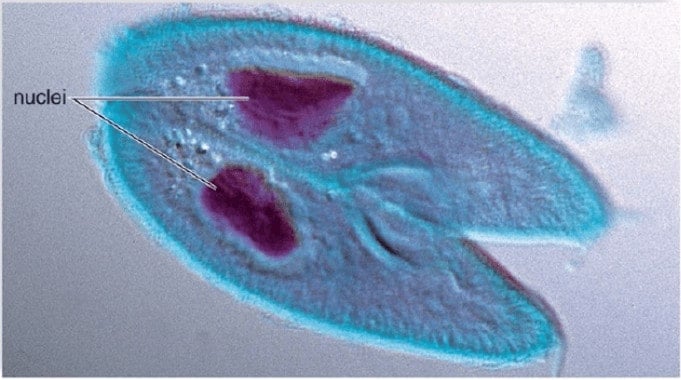
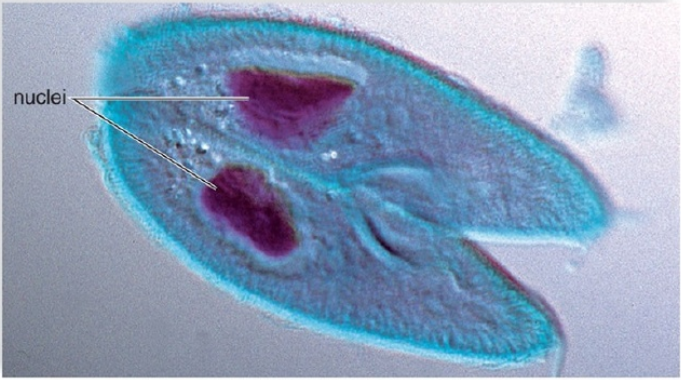
Protists, or protoctista, are single-cell eukaryotes—far more complex and structured than bacteria, with a cell nucleus and many more organelles, a million times bigger than bacteria but still a single cell. Examples are amoebas and paramecia. Protists share genes by a process called conjugation that challenges our idea of the individual. As promised, sex in protists is not linked to reproduction…well, maybe indirectly linked, as we’ll see.
(This movie isn’t conjugation; it’s a hunting expedition.)
In conjugation, two paramecia (Dick and Jane) sidle up to each other and their cell membranes coalesce, forming one big cell. Then the cell nuclei, where the chromosomes live, find each other and the two nuclear membranes open up and merge, just as the cells did. A double size cell with double size nucleus, and two copies of each chromosome. Somehow the chromosomes pair up with the appropriate partner. Like blind people trying to navigate a crowded room, how do the chromosomes arrange a meeting place with their partners? (If chromosomes had telephones, I suppose they would be cell phones. OK, it isn’t funny.) Somehow, Dick’s chromosomes finds Jane’s corresponding chromosome, nearly identical but for the crucial variations that make them individuals. The chromosomes line up in pairs so they can swap genes with one another. Genes cross over until each chromosome contains about half Dick’s genes and half Jane’s. Then—again using their cell phones for coordination—the chromosomes segregate. One from each pair goes north, the other goes south, so that when the nucleus splits in two again, each half has a full complement. Two cells go their separate ways, but the cells that emerge from this process are no longer Dick and Jane. Each one of them is half Dick and half Jane, in its genes, in its cytoplasm, and in its mitochondria.
Conjugation is sex without reproduction. We started with two cells and ended with two cells. They pooled their genes, but didn’t produce “offspring”. Both Dick/Jane and Jane/Dick will someday undergo mitosis and copy themselves, but Dick and Jane have ceased to be, merged instead into an amalgam.
This has nothing
to do with
propagatingThe species
is continued
as so many are
(among the smaller creatures)
by fission(and this species
is very small
next in order to
the amoeba, the beginning one)The paramecium
achieves, then,
immortality
by dividingBut when
the paramecium
desires renewal
strength another joy
this is what
the paramecium does:The paramecium
lies down beside
another parameciumSlowly inexplicably
the exchange
takes place
in which
some bits
of the nucleus of each
are exchangedfor some bits
of the nucleus
of the otherThis is called
the conjugation of the paramecium.
poem by Muriel Rukeyser
Individual Selection and Group Selection,
Short-term Advantage and Long-term Welfare
Why do cells do this? Let’s talk about fitness. In the short term, the race is to the swift. Reproduction is everything, especially among microbes which are always in a tight race with billions of others, and the one that reproduces fastest is the victor in Darwin’s lottery. So natural selection at the individual level motivates Dick and Jane to get on with the business of copying themselves as fast aspossible.
Why did they take time out to merge their genes? Dick and Jane individually must have thought they had a good thing going, each having survived a long while, and beaten out the competition. They each had a combination of genes that work well together. Why would they take a flier on the off-chance that their genes might do even better in some other combination? “Survival of the fittest” at its crudest level simply means that those who reproduce fastest crowd out everyone else. Sharing genes takes time and energy. You can’t afford it.
To make this less abstract: Imagine a puddle with cells swimming in it, all the same species. Suppose some of the cells—the Joneses—go straight to work reproducing, doubling their numbers, while others—the Smiths—stop along the way to have sex with other Smiths. They’re all increasing exponentially, but the Joneses grow at a faster rate. More doublings of the Joneses leads to a powerful numerical advantage. Pretty soon, the Joneses have overwhelmed the Smiths and crowded them out. The Smiths are a thing of the past, driven to extinction. The Smiths have failed to keep up with the Joneses. We say, “the Joneses have evolved to fixation.”
Short-term individual selection says “Don’t do it! Don’t have sex!” But in the long run, the communal legacy is more robust if they DO share genes. Having many diverse combinations of genes is insurance against changes in the environment, and a high-risk investment that just might yield big dividends if the right opportunity opens up in the future. But there’s a danger that the Joneses will crowd out the Smiths in short order, and they won’t live to see the day when their robust diversity shows to their advantage.
After many, many cycles of losing sex in the short term and missing diversity in the long term, evolution stumbled on an expedient. A counter was built into the chromosomes, counting replications. Everyone is allowed to clone about a hundred times, without sharing genes. After that, without conjugation, the cell slows down and dies, stopped dead in its tracks. Every so often, every cell lineage must take time out for conjugation, or the lineage dies.
The counter is the telomere. To enforce conjugation, nature arranged for telomerase to be locked away (in paramecia and other protists) during mitosis. Each act of reproduction makes the telomeres a little shorter. Only during conjugation is telomerase unlocked, and the counter is reset, so the lineage can continue to clone.
Twenty years ago, William Clark wrote two books on this subject at a level accessible to readers of this column. Sex and the Origins of Death, followed by A Means to an End. I read both as they came out, and they had a profound effect on my thinking about evolution and aging.
Cell senescence is programmed death. Can this be an evolutionary advantage? Can programmed death evolve to protect the community from the fast crowd that doesn’t want to share their genes? Sure, there is a long-term advantage, but how was evolution so clever as to arrange this? How did it happen that telomerase came to be sequestered, available only during conjugation? I’ve looked through the evolutionary literature, and found no explanations, so I have asked this question myself, modeling with a computer simulation. The model works surprisingly well. One important feature of the model is that there is a limited reservoir of the food that cells need in order to grow. This means that the “cheaters” who avoid conjugation and reproduce faster don’t have an advantage for long, because they use up the available food store faster. Another crucial feature is that conjugation sometimes leads to combinations of genes that are more efficient at using food resources.
Here is a preliminary write-up — I plan to finish and publish this work in the near future. [Update: 2018July, finished ms as submitted is here.]
Story #2: Sex and Reproduction in Plants and Animals
Half a billion years ago, there was an explosion of multicelled life. Gene sharing is not so easily arranged when there are billions or trillions of cells in each fully-grown organism. Sure, all life passes through an embryo stage, starting with a single cell. But embryos are hardly in a position to seek out a partner and share genes. So evolution needed to invent anew both the mechanics of gene sharing and a means to enforce it on individuals whose primary Darwinian motivation was to reproduce as fast as possible.
So nature took the bull by the horns (or perhaps another part of his anatomy). She laid down the law: “From now on, it takes two to tango. Anyone who wants to reproduce is going to have to share genes.”
Sex and reproduction were tied together anatomically, and the connection was so tight that no would-be cheater could get around the barriers. For some (dioecious) species, there were two separate sexes so that no single individual had the tools to reproduce by itself. In other (hermaphroditic) species, each individual could make both eggs and sperm, and there had to be barriers to self-fertilization, custom-designed for each anatomy.
Exactly how this came about is unknown. Meiosis is an operation of baroque complexity, though clearly an outgrowth of both protist conjugation and mitosis. Graham Bell (quoting Emerson) called it the Masterpiece of Nature, but neither he nor anyone proposed an evolutionary pathway that might have created it.
We know that this whole business of separate sexes and all the cellular and metabolic complexity that it entails managed to evolve, and we know that it offers no conventional advantage in terms that neo-Darwinist theory can understand. No one doubts that the link between sex and reproduction femerged from a process of evolution, but the standard mechanisms recognized by conservative evolutionary theory are at a loss to explain it.
How do we understand evolution of sex? What is the accepted explanation?
Classical evolutionary theory (neo-Darwinism) is in a bind. The theory inherited from R. A. Fisher in the early part of the 20th Century insists that there is only one mechanism of evolution, and that is one-mutation-at-a-time. Each incremental change has to provide a benefit that is capable of gradually spreading through the gene pool. In other words, all by itself and immediately it has to offer the bearers (on average) a faster rate of reproduction. On the other hand, there are numerous examples of complex adaptations (like sexual reproduction) that provide no immediate benefit for reproduction, and that require many changes to many genes in order to be functional at all. Classical evolutionary theory just says, “that’s a tough problem that we haven’t solved yet.”
But it’s more than that. The very limited repertoire of mechanisms recognized by classical evolutionary theory quite obviously can never explain the provenance of sex, or of aging, or of countless other common traits. Classical evolutionary theory is going to have to adapt or die.
I haven’t tried to model the evolution of sex because I can’t think how to do it. The problem is just too hard—all the advantage is with the cheaters, who can reproduce twice as fast because they don’t have two different sexes to support. Nevertheless, look around you—somehow nature managed to arrange most plants and animals in two sexes.
Story #3: Antagonistic Pleiotropy — a Revisionist Theory
Like sex, aging is a trait that benefits the community in the long run, but is costly to the individual in the short run. It’s not as extreme as sex—the benefit is not so essential, and the cost is much less than the cost of sex. (Two sexes cuts fitness by half, by the classical definition of “fitness”. Time and energy required for the mechanics of sex only add to the cost.) So the problem is not as severe as Story #2, but once again, nature has a problem: How to make death obligatory, so that there is population turnover and population diversity and (more important) so the population doesn’t explode past sustainable levels, leading to population crashes and extinction.
Nature’s solution was once again to tie together aging with reproduction, but the link isn’t nearly so tight and consistent as in the case of sex. In fact, population can be kept within sustainable limits either by controlling fertility or limiting lifespan, or any combination of the two, so tying longer lifespan to lower fertility (and vice versa) helps to allow for diversity and flexible strategies, while guarding against those deadly population blooms.
The name for nature’s solution is Antagonistic Pleiotropy. Fertility and longevity are coded in the genome in such a way that inheritance of lifespan and fertility are inversely linked. Higher fertility goes with shorter lifespan. Lower fertility goes with longer lifespan. As long as the two vary together in this way, the threat of population explosion can be kept at bay.
You might be thinking: pleiotropy is everywhere. We don’t need an explanation for pleiotropy, because it’s built into the way genomes are organized. Very few genes have just one mission. A web of regulation affects everything at once, so that distinct traits emerges from many genes, and every gene contributes to many traits. This is true of the way that adaptive traits are realized in nature. To think this way, you have to think of aging as an adaptive trait that nature actively wants to protect.
The Classical view of Antagonistic Pleiotropy
Contrast this with the orthodox theory of Antagonistic Pleiotropy, which has become the best-accepted theory for the evolution of aging. In the orthodox theory, genes for fertility and other traits that are highly beneficial to the individual are tightly linked to deterioration that we call “aging”. Out of the box, the genes work this way, and the forces of evolution have been unable, over half a billion years, to tease the two apart. There is a mighty motivation (says classical theory) to separate aging from fertility so that the individual can have the best of both worlds, but there are physical limitations or logical connections that make this impossible. Hence, natural selection has had to swallow the bitter pill of aging in order to get the sweet nectar of faster reproduction.
In my version, antagonistic pleiotropy is an evolved linkage, after the fact. In the standard version, antagonistic pleiotropy is an inescapable precondition, a given fact about the way genes work that evolution, with all her wiles, has been unable to evade.
How do we know that my interpretation of AP is the right one and all the theorists have it wrong?
- Because the classic theory requires that every “aging gene” must have a benefit that more than compensates, and after 30 years of genetic experiments, pleiotropic costs.have been identified for only about half of the known aging genes.
- We’ve seen that evolution is capable of some amazing feats. It just doesn’t pass muster that evolution has been trying to find a pleiotropy bypass for half a billion years but doesn’t seem to be able to find one.
- Because some of the best-known cases involve quasi-pleiotropic linkages that can be broken in the lab. It’s just not that hard to have your cake and eat it, too. The first example was AGE-1, the first bona fide aging gene to be discovered (in lab worms, 1989).
- When you look at the actual mechanisms of pleiotropy, many of them don’t seem to be functionally essential, but involve unexpected connections between unrelated functions. The most recent example is that methylation aging seems to be inversely related to telomerase expression.
Of these 3 stories, the story of evolved Antagonistic Pleiotropy (#3) is the easiest to model and simulate, which is to say that the model requires few assumptions and works to evolve pleiotropy without a lot of adjustment or tinkering. This alone gives me confidence that AP is evolved, and that the usual interpretation for the meaning of AP is upside down.
I have been working to turn my computer model into an academic article, and a draft of the paper, not yet submitted, is posted here. [Update: 2018July, finished ms as submitted is here.]
Discussion
119 reader comments
Imported threads are marked Archive. New comments are welcome and moderated for spam.
Question to Josh and others: How do you see the benefits of rapamycin vs. metformin. Both reduce mTOR, from what I’ve read metformin seems to have broader effects. Any thoughts on whether they should be taken together? Or should only one or the other be taken? Any research on this?
Thanks, Armando
This is what David Sinclair of Harvard Medical School who is a champion of NAD+ and Resveratrol research takes everyday:
750 mg of NMN every morning, along with a gram of resveratrol and 500 mg of metformin.
That's it. No rapamycin or any other supplement. He shares that his reports and recovery time are closer to a young athlete. He never gets tired.
Was just reading a paper on the GHK peptide and it reminded me of your work, Akshay. How is your paper coming along?
Thanks, Mark
Hi Mark,
We will be submitting to journals for publication. Will keep you posted. Also moving towards manufacturing some products at reasonable price so entire longevity community can take advantage.
Akshay
Sweet! Looking fwd to reading it and seeing what blend you come up with.
New paper on transient OSKM treatment
Unfortunately paywalled.
Reduction of Fibrosis and Scar Formation by Partial Reprogramming In Vivo.
Doeser MC 1 ,
Schöler HR 1 ,
Wu G 1
Interesting. Although still nothing on how you might do this without using a transgenic mouse.
I think it doesnt matter. Its only proof of concept.
Once it works they may be able to do it in the dish like they do CAR-T for example.
This sounds similar to what AgeX are doing with induced tissue regeneration - you can see the potential for scarless healing, burns etc.
It will be interesting to see if they can target certain important stem cell niches, like mesenchymal stem cells for example - as having a newborn's stock of these would certainly be very advantageous. You could then do a senescent cell clearance protocol and have replacement cells ready to go.
Josh, this page appears to have been hacked - keeps trying to open a pop up window.
Asian
Excellent comments on apigenin. We’ve known for a while now that parsley and celery have cancer inhibiting properties, but it was only recently that it was definitively discovered that apigenin was responsible for this effect. Parsley is great but so is chamomile and celery. Lycopene acts in synergy with it. Sadly, in supplement form the bioavailability is poor.
One more thing Asian, be careful with B complex vitamins. If you happen to develop an underlying malignancy, the B vitamins feed cancers like fertilizer.
ok thanks Paul - in truth the only one I 'need' is the B12 ...
Also thanks Mark as well for comments above.
BTW Paul,
If you are looking at a potential agent to reduce AGEs other than carnosine or benfotiamine, the amino acid Lysine seems to do a fantastic job. I can post references or pubmed searches can demonstrate this (in diabetic mice, also shown to reduce ages in kidney and in the heart) ...
Thanks Asian
I’ll check it out. I take glycine and taurine at present
Aslan, I actually thought glucose attached to lysine as part of the maillard reaction. Please post references. Thanks!
I've used l-lysine before for that purpose but can't report any obvious results. I need to try again and see if levels of Hb1AC are reduced.
If you put in the name of the paper into a comment, Josh will often fix the link for you.
Lysine has been found to be effective in reducing AGE and AGE-induced complications of diabetes, especially in the kidneys but also apparently in the heart (1-3). (4) was negative, but the measurement of AGE was in skin, which not be reached by a significant concentration of these nutrients (vs the heart and kidneys, thru' which they would of course travel in the blood when they're taken on an empty stomach), and their conclusion was (reasonably) that "treatment may need to continue for more than 1 year before clinical status improves."
1-Sensi M, De Rossi MG, Celi FS, Cristina A, Rosati C, Perrett D, Andreani D, Di Mario U. D-lysine reduces the non-enzymatic glycation of proteins in experimental diabetes mellitus in rats. Diabetologia. 1993 Sep;36(9):797-801. PMID: 8405749
2-Jyothirmayi GN, Modak R, Reddi AS. L-lysine reduces nonenzymatic glycation of glomerular basement membrane collagen and albuminuria in diabetic rats. Nephron. 2001 Feb;87(2):148-54. PMID: 11244310
3-Sulochana KN, Punitham R, Ramakrishnan S. Beneficial effect of lysine and amino acids on cataractogenesis in experimental diabetes through possible antiglycation of lens proteins. Exp Eye Res. 1998 Nov;67(5):597-601. PubMed PMID: 9878222
4-Contreras I, Reiser KM, Martinez N, Giansante E, Lopez T, Suarez N, Postalian S, Molina M, Gonzalez F, Sanchez MR, Camejo M, Blanco MC. Effects of aspirin or basic amino acids on collagen cross-links and complications in NIDDM. Diabetes Care. 1997 May;20(5):832-5. PMID: 9135951
Hi Paul:
The Vitamins and Lifestyle (VITAL) study, designed to evaluate vitamin and mineral supplements in relation to cancer risk, only used and studied TWO individual B vitamins. Both were NOT the active forms. They did not use the B complex.
The two they used in studies were (B6 and B12). They did not use the B complex (the complex involves coenzymes/cofactors, therefore if the entire complex is not taken some Bs starting depleting each other. This could cause problems
Pyridoxal 5 phosphate (p5p) is the active form of vitamin B6
Methylcobalamin (B12) is the active form of B12 known as cyanocobalamin/cobalamin.
Previous studies, including the European Prospective Investigations into Cancer and Nutrition (EPIC) study, a large trial published in JAMA in 2010, demonstrated that higher blood levels of B6 were associated with a lower risk of lung cancer.
Active forms of nutrients are more easily assimilated by the body than the forms that need to be converted to the active form, before the body can utilize them properly
Also just to note, although not in the study, L methylfolate (5MTHF) is the active form of folic acid or folate.
People with who have a genetic MTHFR mutation are unable to utilise folic acid or folate nutrients properly. They need to take the active form to avoid conversion issues.
A good B complex supplement should contain the active forms
Hi Heather
I agree with your insightful comments. It also should be noted that almost all, if not all, studies that link vitamin usage to an increased cancer risk involved lung cancer and smoking.
It has been my clinical experience that the majority of patients benefit from B 12 supplementation though the reason for this is often not clear.
Yes. You are right about the smoking issue.
Big name brand commercial cigarettes contain a lot of nasty added ingredients.
Hi Heather, Paul
The problem with a B-complex is that it can't be tailored to individuals. For example, I can't take B12 for long without getting a disgusting taste in my mouth (a genetic test showed I am very good at utilizing this B vitamin from food), but I need to supplement B6 (the same test showed I have a double mutated alleles for this). So I am in the position of supplementing B6 alone, and this study did concern me. However I expect my blood levels are still relatively low. And of course I don't smoke.
Hi Mark:
Yes. Genetic factors can always cause issues with the body's utilization of particular nutrients.
Studies conducted by Dr. Bruce Ames have demonstrated that lack of vitamin B9 (folic acid) is as destructive to DNA as radiation. I supplement with folate (methylated B9).
It seems strange that such an effect would be real - smoking and supplementation of something that is ordinarily healthy - being worse than just smoking. And they seem to often be associated with smoking and lung cancer. What about all the other cancers?
I find it strange too, Mark. Haven't read the studies, but could be correlation and not causation?
I'm wondering if it could be a statistical artifact - how many people who smoke happen to supplement? Can't be many.
Perhaps Josh can shed more light on this with his statistical nous.
@Akshay, Paul, Mark et. al,
I was joking a bit about eating piles of NrF2 activating foods since I'm well aware that there is a 'sweet spot' wrt hormesis as pointed out.
I personally stick w 16-8 daily fasting, focussing on beans, greens, veggies, fruitsm nuts & berries and maybe 3/7 days a can of sardines ...
Supplements:
I like what Dr.Paul has said (and has said previously with micro-dose lithium as well as nicotinamide riboside)
I'd like to think that there is 'consensus' among 'us' here that vitamin D3, magnesium, vitamin k2-mk7 and melatonin are all core/basics (and I know Jeff likes this synergistic combo as well).
I personally add to this 2 out of the 3 capsules per day of AOR multi-basics 3, essentially for the B-vitamins but it gives a very small amount of vitamin a, and c as well as all 8 vitamin e isomers (all really conservative quantities) along with some basic trace minerals like selenium and vanadium, copper and zinc - again in small amounts.
Black coffee, green tea, focus on circadian rhythm for sleep and eating patterns - these are also really critical.
btw - this whole discussion of hormesis and autophagy - I wanted to quickly mention something I take everyday - 2x750mg of glucosamine sulfate; again thanks to professor Vince Giuliano for bringing this to my attention; seems quite safe & based on large epidemiological studies to lower all-cause-mortality (more than any other vitamin or supplement), and works via mito-hormesis, and case-in-point is rendered ineffective when taken alongside the anti-oxidant NAC.
This is primarily my main reason for not taking N-acetyl cysteine that I know Josh is fond of - as well as the fact that lingering metabolites of NAC seem to require a person to take vitamin C at 3x the NAC quantity.
Best regards,
Aslan in Narnia
Asian
You certainly have a very good diet and supplement regimen.
I have noticed that NR is much less effective for me since I upped my rapamycin dose so I only take it once a week now.
I took chondroitin out since it may increase the malignant potential of melanomas.
I’ve added taurine since it is high in the Japanese diet and also carnosine due to its protective mechanisms on AGE’s and heavy metals.
Also added boron for prostate cancer protection and vitamin B12 which seems to be additive to vitamin D for pancreatic cancer prevention.
I tried mito-q but it made me anxious.
My dark chocolate is now bakers unsweetened due to zero cadmium and very high polyphenol content, and no sugar added.
Am considering triphala and benfotiamine in the future.
I would also be cautious combining glucosamine with Berberine or Metformin or Honokiol or anything else that intentionally impairs mitochondrial function. The reason is that you'd be hitting the mitochondria from several directions at once, i.e. glucosamine competing with glucose uptake AND metformin impairing the ETC, which probably overkill. Might be okay, might not.
I really think that all this is probably superfluous if you're on rapamycin. The only thing is that if your glucose gets too high you might still want something to address this, but I'd really rather not use metformin. I like the idea of Carnosine to inhibit AGEs, as this is the main potential downside of rapamycin. Only thing is its expensive and not very bioavailable.
Gymnema Sylvestre should be able manage spike in glucose reading
Also – as opposed to spend $1 or $2 (or more) per serving of (a possibly over-hyped but patented and expensive) Nicotinamide Riboside to raise NAD+ levels; Another viable alternative might be to decrease CD38 which then increases of NAD+, which apigenin does a very good job at.
Apigenin has a long half-life (like 91hours) so one serving a day or even 2nd day is enough; 1-2tbsp of dried parsley should yield approx. 20-40mg of apigenin and I add this to soups/veggie chilli daily to achieve this.
Not to mention that apigenin – it seems to also be extremely effective at lowering cortisol, decreasing angiogenesis (similar to the angiogenesis inhibitor Axitinib), AND induce apoptosis of cancer cells IN VIVO!!
One more tid-bit; the AOR multi-basics 3 does have boron and enough B6, folate and B12 to be exactly what I was looking at for a multi-mineral plus B-complex style of multi for longevity purposes.
I used to consume this as a tea but stopped it due to AMPK activation and concerns over TOR inhibition.
Excellent Comments.
By the way - the recent paper that used AI in searching for natural rapamycin and metformin mimetics found glucosamine to act through some similar pathways to metformin and EGCg (green tea) similar to rapamycin in some pathways as well.
I try to avoid exogenous anti-oxidants where possible and as such avoid carnosine; so I instead take it's amino acid precursor - namely beta-alanine which seems to do a better job of raising tissue levels of carnsonine better than carnosine directly; however I'm not sure if it has the same effect on reducing AGEs. Is anyone aware?
Nope it doesn't, sadly. Beta alanine is combined back into carnosine in muscles, but for AGEs we need it circulating in the blood.
Btw anti-oxidants aren't always bad IMO. I regard them as bad only because they reduce your own endogenous supply. However in some situations your endogenous supply is not enough and you might need anti-oxidants to help you recover (say, from regular, hard workouts). Certainly though, it's pointless doing anti-oxidants and glucosamine, say, (which raises ROS short-term , but lowers it long term because of the body's response) because as you point out, they would cancel out.
Thanks Akshay, I drink gynostemma tea and my blood glucose is middle of the range. But I'd like it lower.
To your point Mark, since starting rapamycin my FBS has been 115 , an increase of 17 points. I think that Blagosklonny is correct that this elevation is physiologic and not pathologic. If you read his comments about this carefully he’s pretty much tongue in cheek when he says that if this elevation really bothers you , then just add some metformin.
I have tried this on several occasions and after several weeks I’m forced to stop it due to severe fatigue, especially with exercise. It never fails. So I think you’re absolutely right about it and I’m done with metformin.
I started carnosine but I’m having second thoughts since it’s an mTOR inhibitor like rapamycin. Benfotiamine may be a better option.
Beta-Alanin is a much cheaper alternative to l-carnosine. However, I have no idea, if it gets converted to l-carnosine outside the muscles, e.g. in brain tissue, skin etc.
The best form of B12, is methylcobalamin.
It should b taken with the entire B complex because the Bs work synergistically and some B vitamins in the complex need others as co-factors to function properly
The sublingual form of methylcobalamin is absorbed most efficiently, so taking a sublingual methylcobalmin tablet along with B complex capsules is a good idea.
Do not chew the tablet. Let it dissolve slowly in the mouth to be absorbed through the mucous membranes. Tuck in in your cheek or under your tongue and just let it sit there until it dissolves.
Another glycoprotein transcobalamin secreted by the salivary glands binds to vitamin B12. Vitamin B12 is acid sensitive and in binding to transcobalamin I it can safely pass through the acidic stomach to the duodenum
Most liquid forms of the B complex do not contain all the B complex nutrients. Even if you find one that does, liquid is more difficult to hold in the mouth than a SubQ tablet.
Some people, and typically older people, lack intrinsic factor, a glycoprotein, produced by parietal cells in the stomach. Intrinsic factor helps the body with the absorption of vitamin B12 in the ileum of the small intestine.
Also Metformin is known to deplete B12. Lack of B12 can cause fatigue, leg weakness and memory deficits or brain fog.
https://www.nature.com/articles/s41586-018-0162-7
This study confirms one of the repair n renewal mechanism autophagy which declines with aging when upregulated significantly extends healthspan and lifespan. Their method was to disrupt the inhibitor restricting autophagy. Both making up for autophagy efficiency and the method used to do it confirms my suggestion in my post 'mechanism of aging' on my blog atomic bliss.
Autophagy.Yet another good argument for IF and rapamycin .
Yes, rapamycin is often praised for its ability to block senescence, but senescence is basically caused by the lysosomes being overwhelmed. So rapamycin works by turning down the input driver (mTOR) and giving all the garbage disposal machinery time to catch up. It's remarkable really that it's potent enough to do that in even old worn out cells. And in Vivo too! I expect nrf2 also helps because it decreases the level at which proteins are damaged. Rapamycin does activate nrf2, but does not require nrf2 to block senescence.
https://www.ncbi.nlm.nih.gov/m/pubmed/28371119/
Methylene blue is also a gentle nrf2 activator, primarily through slightly adjusting the NAD/NADH ratio because of more efficient mitochondria. It also keeps cells going longer because of this reduction in oxidative stress and preserved telomeres (as does rapamycin my upregulating some of the shelterin proteins via AMPK).
https://www.sciencedirect.com/science/article/pii/S2213231715001159
If I could only take 2 supplements for longevity it would be these two, plus Vit D + K2 for general heath and wellbeing at any age.
Hi Mark
The article on MB is eye opening and certainly would suggest that MB is a potent anti-aging drug on multiple levels. Of course whenever you’re dealing with a fairly strong anti- senescent agent it ultimately begs the question of cancer risk. What are your thoughts?
Also, you are unique in taking the stuff orally, so how much do you take and do you cycle it? I’m mainly asking this for the benefit of the other readers.
Is there any mTOR affect?
Are there any safety studies that you know of?
Methylene blue is supposed to be cancer preventative, so no worries there - I don't think aging and cancer are different sides of the same coin necessarily; decreasing aging does not always increase cancer. I take it 5 days out of 7, just in case of impurities; I use a relatively expensive version that has impurities removed, but you never know so no harm in cycling it . I notice a slight mental uplifting effect. I did some calculations and reckon to get the concentrations they achieved in the study I posted you should take 0.5-1mg, which is 1-2 drops in your morning coffee. No mTOR effects to speak of. You might notice more if you we're suffering a lot of inflammation, but I just take it as a geroprotector. I've also tried it in skin creams, but no one has got that right yet - you need the right delivery to get it into the skin, and the right concentration for the benefits without turning you blue! Incidentally there is no staining of the tongue or mouth with a drop in coffee, and no blue urine (I've heard higher doses can do that). You still need to be careful not to spill it.
In terms of safety, it's been used for years for treatment of Methemoglobinemia at higher doses, so I'm not too worried.
Oh and Methylene blue also has some interesting data for dissolving amyloid, but you'd need a much higher dose for that I suspect.
Mark, have you tried to add a few drops of MB to a vitamin c serum? Only vitamin c serum formulated at ph3. 2 or lower has the ability to penetrate the skin barrier.
Thanks Ole, great idea.
Paul, not all studies state they used USP verified MB, so harm found using MB at much high doses might be caused by metal contamination. Just a thought.
One of the drawbacks using strong Nrf2 activators seems to be that most compounds acts like potent blood thinners. On two occasions, I have experienced a retinal retinal hemorrhage in my left eye while strength training. Each time, I was max dosing on curcurmin in addition to other Nrf2 activators. To use an Aubrey de Grey anology, this would be like replacing an old engine in an old car with a new engine, without at the same time replacing steering, suspension and brakes. Everything is interconnected.
I suppose you mean scleral hemorrhage and not retinol. Many of The Nrf2 ‘s can interract with nsaid’s and aspirin to increase bleeding risk some. Never heard of them giving a serious bleed in and of themselves though.
Paul, No I do mean retinal haemorrhage
https://en.wikipedia.org/wiki/Retinal_haemorrhage
I certainly don't mean to scare anyone, and I could have weak blood vessels in my left eye, or it could be pure coincidence. For the time being, I am reducing the dose.
Sharing my thoughts: larger doses does not always equate to better outcomes. Extremes of anything will turn harmful. The correct dose would be just enough to make up for the Nrf2 deficiency caused by aging. Unfortunately I haven't come across easy to use method to measure such levels and also the equilibrium level of perfect Nrf2 expression is different for each individual. The safer alternative to get some benefit would be take lower doses and cycle them - take breaks.
Ole:
To strengthen blood vessels horse chestnut (for elasticity) and a Vitamin C complex supplement containing bioflavonoids might help to prevent future eye hemorrhages
"In 1937, Dr. Albert Szent-Gyorgyi from Hungary won the Nobel Prize in Medicine for isolating vitamin C. In the course of doing this he discovered and dubbed the bioflavonoid substances vitamin P, for permeability.
He discovered that among the bioflavanoids, rutin and citrus bioflavanoids plus hesperidin have particularly beneficial effects on capillary strength and stability, and may also protect these blood vessels. They are vital in their ability to increase strength of the blood vessels and to regulate their permeability." ...
"The main healing compound horsechestnut is aescine which is very effective in strengthening vein walls and very significant in promoting vein integrity."
As you are most likely aware, It make take six months to a year to see an effect.
Unlike drugs, the majority of nutrients do not provide a quick result.
To add to the previous post:
Ole:
Once you see a result from the C complex and/or horsechestnut, you can then typically begin to cycle it or take it a couple of times per week instead of daily.
I take about ten supplements daily, but most others I cycle or take intermittently.
Ole:
Also when you are lifting weights or using machines such as a leg press with heavy weights, please be sure that you exhale upon exertion.
For example with heavy weights on a leg press machine, exhale when you exert your muscles to push the press out and inhale when you release and draw back your legs.
If not the pressure that builds up upon exertion can sometimes cause too much pressure in blood vessels in the face head and lungs.
You may already know this, but just putting it out there.
Besides bringing back repair and renewal system efficiencies to homeostatic levels at puberty one must also ensure reversal of involution of the thymus possible by way of otc supplements (many need to be taken) maintenance of benefitial hormones (for this read up on Jeff Bowles research but to be taken with aromatase inhibitors and DIM) and finally what very few are aware clearance of accumulated metabolic garbage like lipofuscin, AGE and misfolded protein aggregates. Without the latter many of the above benefits are obstructed. Combined all of the above should lead to regression of age related dysfunctions.
I'm optimistic that we are making headway at understanding aging and what we can do to thwart it. I certainly agree picking out the most down-regulated repair pathways and restoring them to youthful functionality will be very helpful. I am very hopeful your work Akshay will bear fruit for us all; you are actually doing the work so I can't praise you enough.
But I don't think all the answers lie in gene expression. There are various studies of old marathon runners who according to various biomarkers look young (but they don't to my eyes), or women in skin care studies who have better skin than their peers because they have more youthful gene expression (but again they still look old to me, just not as old).
So we have to look further than gene expression. I think its even more fundamental and simple than that. At the end of the day if you don't have the stem cells or sufficient somatic reserve to replace damaged tissues, you are going to have to hold onto damaged cells for longer. That is the main thing that makes you older. So let us say we upregulate Nrf2, or take a mitochondrial antioxidant, or mildly reduce telomere attrition with TA-65. What that is doing it eeking out more cell divisions from a limited pool. Until we restore the pool, we'll still be old. Just a healthier old.
Aslan on differing opinions I would go with Vince Giuliano. All of us have their own deductions derived from each unique research journey. For me bringing back repair and renewal efficiencies to youthful (puberty) levels and maintaining them is the key. Nrf2 is one of the most powerful repair pathways. But as Paul and Mark pointed out over expression can have negative effects. This is also true inversely wherein over inhibition of mTOR too can be damaging. Until we can discover what is your homeostatic levels and be able to meter the dosage of upregulators/inhibitors all of us are taking interventions without accurate knowledge of its outcome. To complicate things further there are so many factors that are important in maintaining homeostasis. For example something as abstract as our thoughts on a chronic trajectory can induce biochemicals leading to death or healing. Temperature, pH balance, electric pulses, etc etc but for its complexity the factors are finite. So one day we will be able identify and optimize them all. We may require tools like live AI. Till then hormesis definitely helps as without that repair and renewal slides only one way as we age which creates a snowballing effect with various feedback loops and spread of damage like an infection on inflamed macrophage highway. Hormesis especially if well cycled with potent triggers in appropriate doses can keep reversing briefly the slide. Which if someone like Josh mathematically models should lead to slowing of the snowballing effect.
Ladies & Gents,
An a recent blog here, another poster said:
"NrF2 stimulators MAY cause issues during mitophagy and mitochondrial fission/fusion cycles; this is good for short-term health, not so good for long-term"
I was left confused/concerned by this comment and wondering if anyone here can better explain or possibly alleviate concerns regarding NrF2 upregulation.
I have read on Vince Giulianos site that supplements that upregulate NrF2 generally (or always?) down-regulate of NfKb (inflammatory marker). (This would be desirable for pro-health/anti-aging).
Any comments much appreciated.
By the way - also from Vince Giuliano's blog of NrF2:
"The naked mole rat is a good example: it lives eight times as long as comparable-size mice and has six times the amount of endogenous expression of Nrf2."
I find this quite interesting, especially considering Calico's recent publication on the Naked Mole Rat and their findings that it's chance of dying does not increase with age.
Standard meal from now on is some brocolli sprouts and horse radish & radishes on my broccoli salad (and wash it down with green tea, coffee, ) ... and of course not to forget other NrF2 stimulators such as ashwagandha, parsley, blueberries and even fish oil
Hi Asian
I’ve been delving into this Nrf2 issue for the past month and it seems that it’s best to view Nrf2 activation as a form of hormesis . There is a sweet spot and you can overdo it.
Nrf2 is a major transcription factor in detoxifying the body. It is generally activated by oxidative stress and the body responds by making more glutathione. But there are certain conditions like chronic Lyme disease, EBV, and metals where you have a chronic inflammatory response syndrome and activating Nrf2 even more can make you feel worse.
Surprisingly, smoking is a Nrf2 activator, and this can be overexpressed in chain smokers . It is believed that Nrf2 can exacerbate the malignant potential of underlying cancers. Constant activation, as seen in people with very high cholesterol levels, may also exacerbate atherosclerosis.
On the other hand Periodic Nrf2 activation can prevent cancers, kidney, liver, and lung diseases, atherosclerosis, skin disorders and protect against multiple toxins.
There are multiple ways to periodically activate it as well as some interesting synergies.
Exercise + coq10 + sun exposure
Broccoli sprouts + infrareds
Lions mane + melatonin
I found hundreds of supplements that can activate it, as well as multiple diet and lifestyle interventions. The best source of these can be found on mybiohack.com.
The other interesting thing is that certain substances like curcumin activate Nrf2, and then Nrf2 allows the curcumin a pathway in which to work.
So I would say to treat it like exercise. Generally very helpful, but don’t overdo it, and probably cycle it.
Paul is exactly right. Nrf2 is a hormetic response to hardship, which can come in many forms. And there are lots of supplement combinations for activating it synergistically. But my view is that this toughens you up against aging, it does not really prevent it. And yes, sometimes it can actually go up as you age as response to greater damage.
Look at Wim Hoff as a perfect example of chronic nrf2 activation through deep breathing and cold exposure. He can walk up mountains in his shorts, is as strong as a young man in his fifties. But does he look young? Not really. I suspect he'll go like he does now for many years, and then drop dead one day, without ever having cancer or diabetes, or atherosclerosis.
And unlike Wim, the naked mole rat is unique in its ability to inhibit mTOR, elongate it’s telomeres, while also activating Nrf2. Maybe he should add some protective rapamycin to his regimen!
Maybe we should suggest it to him! Tricky little buggers those mole rats. How on earth do they extend telomeres? Apparently by the ALT method (shorts can template off longs), plus their cells have massive contact inhibition controls to stop cancerous growth (that one would imagine could hijack enhanced ALT). Sadly I think we're going to have to wait for safe and effective gene therapy to be able to pull those tricks off.
Very interesting Paul, I did not know that. The world is a strange place!
Wim Hoff's skin likely does not look youthful because of damage from solar radiation.
Many of his activities take place outside.
If he wears sunblock at all he likely sweats it off to the point of it being useless unless reapplied frequently.
Nutritional approaches will only help to keep skin youthful looking longer, if the user concomitantly avoids excessive or unprotected sun exposure starting at an early age.
Mark as promised an update on our pre-clinical trial to upregulate repair systems using natural activators: we have completed a 58 day study on rats. The treated old rat's TNF-alpha and IL6 levels significantly reduced vs untreated old rats and reached at levels similar to young control rats. Similar results with barnes maze and grip strength.
Can you tell us more? What were the "natural activators"?
Will reveal soon. Currently in process of filing patent. Post that will be submitting for publication in peer reviewed Journals. It was a cocktail of activators selected as per theory that the aging program through methylation changes selectively down regulates agonists of repair systems whereby the antagonists progressively dominate. I have shared the idea in my post mechanism of aging on my blog atomic bliss. I wanted to see what happens if we bring back the levels of agonists of the known major repair pathways - I tried to cover all - except direct upregulation of mitophagy as just could not source it so I can reveal it's name as it could not be part of the study: urolithin a.
As all the pathways seem to be interconnected I also wanted to see what happens if we resurrect some of the poles holding up a folding tent - will it be sufficient to raise the entire tent. Apparently it does. We did not expect such dramatic reversal. Also in some of the markers second month showed better results than first month so duration of treatment is also important. It's like a 70 year old man getting back memory, strength and low grade inflammation levels of a 18 year old. Didn't realize how expensive it could be - that too crossed our expectations.
Nice job Akshay. Eagerly awaiting your results
Thank you Paul
Very interesting, thanks for sharing your results so far Akshay. I'm very happy they exceeded your expectations. I've seen a few combinations of supplements to bring up things like Nrf2, but I've always been a little suspicious that we're treating the symptoms not the cause. It sounds like you've found a better way. I'm not too worried about mitophagy, rapamycin sorts that out simply via downregulating cellular growth input signal giving the cell more time to clear up everything (incl. Mitochondria). And if you don't like the idea of rapamycin I think nicotinamide probably helps with mitophagy.
Thanks Mark. I am on rapamycin after reading Dr. Alan Green's post and some studies. Only concern is if mTOR is inhibited continuously as with daily high dose metformin. Cyclical intervention remedies to some extent the dysfunction of mTOR pathway by way of hormesis - in the young switching is more efficient. But it does need to switch on occasionally for growth for example after weight session at gym. Hormesis benefits though system wide seem to be limited - more like a booster than a cure. Mitochondria and Mitophagy seems to be quite important in aging so would like to study it one day with an activator like urolithin a hopefully. Yes Nrf2 activation was one of our central themes. A big fan of Nrf2 pathway.
Incidentally whatever repair activation we did inversely inhibited mTOR. So if one could activate with safe natural molecules and compounds one may not need to take rapamycin. For example our compound could not activate Nrf2 without by default inhibiting mTOR.
I think InSilica did a study recently showing that ashwaghanda inhibited mTOR. But I wouldn't expect the effect to be direct, so it will much less potent that rapamycin.
Not to put a downer on things, but we need to be a little careful here whether we are actually treating aging or helping our cells deal better with aging. I expect all our current interventions including rapamycin are unfortunately in the latter category. The older we get the more we'll need to slow things down, and there is a limit to how much we can do that.
I don't want to slow things down, I want to accelerate them back to youthful levels, but unlike a bodybuilder on growth hormone, I actually want the body to be able to benefit from that.
@Paul
In which form and dose are you taking Pine Bark?
I used to eat the inner bark raw or chewing it like bubble gum.
I know it is rich in Vitamin A and C, are there any other reasons why you take it?
Thanks.
Very exiting stuff Akshay! Seems to me that you have done the hard part of the job which is to find an efficient way to up-regulate the repair systems. Great job!
Two questions come to mind:
1) Is the epigenetic program slowed down by up-regulating the repair systems?
2) Does the animals live actually longer than their untreated peers?
Do you have already an answer to these questions or is it something that is left for future studies? I can imagine that life span studies might be long and expensive but I was hoping that measuring epigenetic changes would be easier.
Thanks again for sharing
Thank you Aldebaran. We are in the process of working with the best expert in the world to see if can measure rat epigenetic/age clock the way human one which is already discovered. So may be in the next 3 - 4 months that may be discovered. Which will help not only us but every pre-clinical trial on aging. On this particular trial we could not wait until natural death to check life span extension. Although I would have liked that very much but we ran out of resources to do that as we had overshot our budget. The treated rats which were housed with us from their age of 18 months could have lived to 3 years or more as their key markers had regressed to almost the same as young control rats. So it would have been an open ended budget which at this stage for us was not possible. But encouraged by these results we are in the process of raising more resources and one of outcomes of that hopefully will be a study to investigate lifespan extension. In the meantime from the DNA samples we will try to ascertain whether we reversed their epigenetic clock.
Akshay,
Thanks for these precision. Looks like you did the right thing with the available budget. Looking forward to read your paper!
Makes me think of the problem of gamblers ruin - that a player with limited wealth playing a fair game will eventually go bankrupt playing against an opponent with infinite wealth. Every morning a Hydra has a good chance of making it through the day but the environment is not static and eventually a black swan event will occur in the niche in which it lives. Sex and death make sense as a way of getting around gamblers ruin which would apply to long lived species and may be the reason why there aren’t too many of them around.
Great analogy, I like it a lot! Reminds me of the idea that a less optimised strategy can be more robust in the long run. Could explain both aging and sex.