
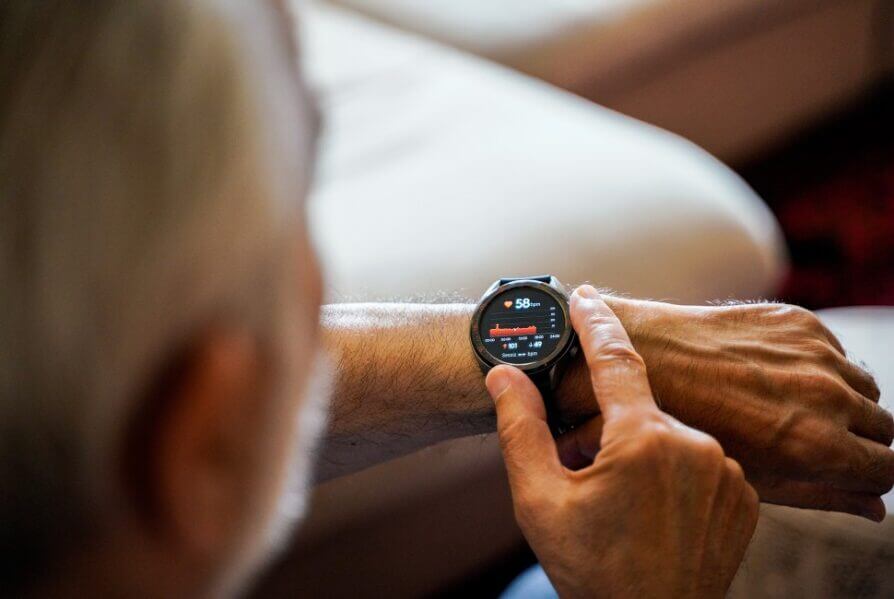
It began with a question that could change how millions monitor their health: can a smartwatch detect structural heart disease long before symptoms appear? In a new study presented at the American Heart Association’s Scientific Sessions 2025, researchers from Yale School of Medicine say the answer is a promising yes.
Using the single-lead electrocardiogram (ECG) sensors already built into consumer smartwatches, an artificial intelligence algorithm accurately identified major forms of structural heart disease, including weakened pumping ability, damaged valves, and thickened heart muscle. The findings suggest that a device sitting on the wrist could one day help detect conditions that usually require an advanced ultrasound scan known as an echocardiogram.
From 12 Leads to One: Teaching AI to Listen Closely
To build the model, the Yale team trained their AI on more than 266,000 standard 12-lead ECGs collected from 110,000 adults at Yale New Haven Hospital between 2015 and 2023. The goal was to teach the system to recognize telltale electrical patterns linked to hidden structural disease, then see if the same information could be gleaned from a single lead, the type used in a smartwatch’s electrical heart sensor.
Lead author Arya Aminorroaya, M.D., M.P.H., an internal medicine resident at Yale New Haven Hospital and research affiliate at the Cardiovascular Data Science (CarDS) Lab, said the motivation was simple accessibility.
“Millions of people wear smartwatches, and they are currently mainly used to detect heart rhythm problems such as atrial fibrillation,” said Aminorroaya. “Structural heart diseases, on the other hand, are usually found with an echocardiogram, an advanced ultrasound imaging test of the heart that requires special equipment and isn’t widely available for routine screening.”
The researchers simulated the noisier, imperfect signals that come from real-world smartwatch ECGs by introducing random interference into their training data. This “noise injection” made the AI more resilient to motion and environmental artifacts, allowing it to interpret wrist-based readings with near-clinical precision.
After validation using hospital and population data from both the U.S. and Brazil, the team tested the system prospectively in 600 adults who wore the same type of smartwatch for a 30-second ECG recording on the day they underwent a heart ultrasound. The median age was 62, and about half were women.
Early Screening at the Wrist
Compared to gold-standard hospital ECGs, the smartwatch-based model held up remarkably well. Using single-lead data, the AI achieved 88% accuracy in detecting structural heart disease and a 99% negative predictive value, meaning it was highly reliable at ruling out heart problems when none were present. Even with just 30 seconds of data, the algorithm identified most people with disease, reaching an 86% sensitivity score.
Senior author Rohan Khera, M.D., M.S., director of the CarDS Lab, believes the technology could help bridge gaps in preventive care.
“On its own, a single-lead ECG is limited; it can’t replace a 12-lead ECG test available in health care settings. However, with AI, it becomes powerful enough to screen for important heart conditions,” said Khera. “This could make early screening for structural heart disease possible on a large scale, using devices many people already own.”
The researchers emphasize that the findings are preliminary and based on an abstract presented at a scientific meeting, not yet peer-reviewed. Still, they plan to evaluate the tool in broader populations and explore how it could be integrated into community-based screening programs. If validated, such technology might allow people in remote or underserved regions to capture ECG readings at home and transmit them to clinicians for review, detecting subtle heart abnormalities before they lead to hospitalization or heart failure.
For now, the idea that an ordinary smartwatch could act as a silent sentry for one of the world’s leading causes of death feels both futuristic and familiar. It reflects a broader shift in medicine toward democratizing diagnostics, bringing powerful tools out of the clinic and into the everyday rhythms of life. What was once a gadget for counting steps might soon help save lives—one heartbeat at a time.
American Heart Association Scientific Sessions 2025
ScienceBlog.com has no paywalls, no sponsored content, and no agenda beyond getting the science right. Every story here is written to inform, not to impress an advertiser or push a point of view.
Good science journalism takes time — reading the papers, checking the claims, finding researchers who can put findings in context. We do that work because we think it matters.
If you find this site useful, consider supporting it with a donation. Even a few dollars a month helps keep the coverage independent and free for everyone.