
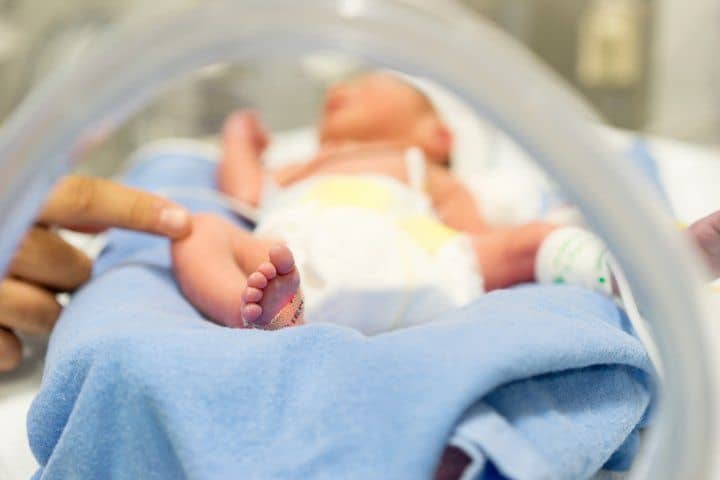
Two hours of skin-to-skin contact between premature babies and their mothers immediately after birth significantly increases breastfeeding rates without affecting long-term development, according to a new Norwegian study that challenges standard hospital practices.
The research found that 84% of very preterm babies who received immediate contact were breastfeeding at discharge, compared to just 67% who received conventional incubator care.
The findings come from a six-year randomized trial involving 108 babies born between 28 and 32 weeks of pregnancy at three Norwegian hospitals. While the study found no differences in cognitive or motor development at ages 2-3, the breastfeeding benefits persisted for a full year after birth.
Challenging Hospital Separation Protocols
“The first few hours after birth are an early sensitive period. During this period, the first contact between mother and child is established,” said Associate Professor Laila Kristoffersen at the Norwegian University of Science and Technology, who led the research team.
Currently, most hospitals immediately separate premature babies from their mothers for medical care. “Since premature babies often need medical care after birth, the standard practice is for them to be placed in an incubator and transferred to a neonatal intensive care unit,” Kristoffersen explained. This separation can last hours or even days.
Study Design and Safety Measures
The researchers randomly assigned babies to either two hours of chest-to-chest contact with their mothers or standard incubator care. Only babies weighing at least 1000 grams who didn’t require intensive breathing support were included, ensuring safety during the pioneering protocol.
During skin-to-skin contact, babies were positioned upright between their mother’s breasts with arms and legs flexed, head slightly elevated to maintain clear airways. Medical monitoring continued throughout the two-hour period.
Key Research Findings
- 84% of skin-to-skin babies were breastfeeding at discharge vs. 67% in standard care
- Exclusive breastfeeding lasted longer in the contact group
- 44% were still breastfeeding at 12 months vs. 26% in the control group
- No differences in cognitive or motor development at ages 2-3
- No safety concerns or complications from immediate contact
The study specifically examined very preterm babies born at 28-32 weeks gestation—a vulnerable population that typically faces increased risks of developmental delays. Surprisingly, both groups scored within normal ranges on standardized developmental tests, suggesting that in high-resource medical settings, most very preterm babies develop normally regardless of early contact.
Hidden Study Details Reveal Broader Implications
One detail not emphasized in the press release: the research team had to stop enrollment early after six years because they considered it “unethical to continue randomization and consequently hinder immediate mother-neonate SSC.” This suggests the evidence for benefits became compelling enough that denying contact felt inappropriate.
The study also revealed that mothers themselves strongly desired early contact. During interviews, “the mothers said that having their baby on their chest after birth was important for early bonding and to promote a feeling of security and coping,” Kristoffersen noted.
Global Health Implications
The research aligns with recent World Health Organization recommendations advising immediate skin-to-skin contact “as soon as possible after birth” for all preterm infants. This represents a significant shift in neonatal care philosophy from separation-focused to family-integrated approaches.
St. Olavs Hospital in Norway, where the research was conducted, implemented these protocols permanently after the study concluded in 2020. The hospital now facilitates immediate contact for babies born as early as 28 weeks of pregnancy—12 weeks before their due date.
“The positive effect of early skin-to-skin contact between mother and baby is accepted as a matter of course when a baby is born full term. There are good reasons why we should offer the same opportunity to vulnerable premature babies,” Kristoffersen concluded.
The findings suggest that while immediate skin-to-skin contact may not dramatically alter developmental trajectories, the intervention offers meaningful benefits for breastfeeding success and maternal bonding—outcomes that could influence long-term health in ways not captured by standard cognitive assessments.
ScienceBlog.com has no paywalls, no sponsored content, and no agenda beyond getting the science right. Every story here is written to inform, not to impress an advertiser or push a point of view.
Good science journalism takes time — reading the papers, checking the claims, finding researchers who can put findings in context. We do that work because we think it matters.
If you find this site useful, consider supporting it with a donation. Even a few dollars a month helps keep the coverage independent and free for everyone.