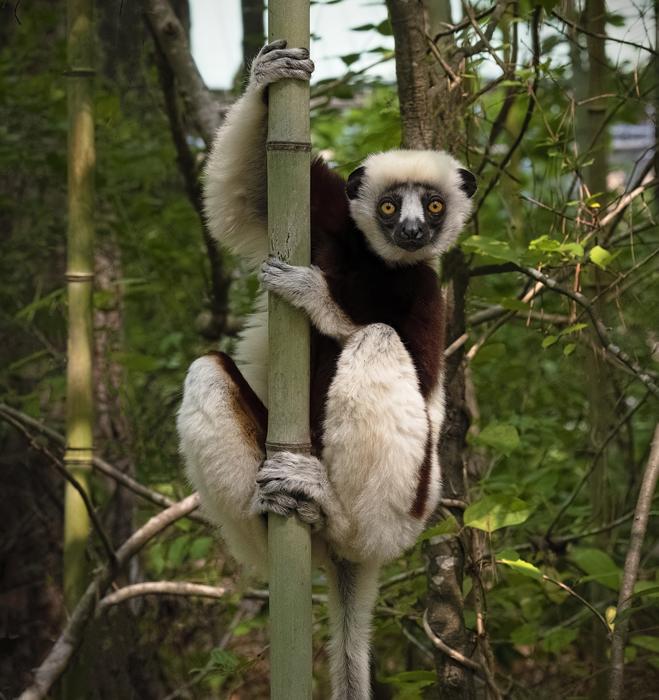
Ring-tailed lemurs and sifakas may hold the key to understanding why humans suffer from age-related inflammation—by showing us it doesn’t have to happen at all.
Duke University researchers discovered that these primates sidestep “inflammaging,” the chronic low-grade inflammation that plagues older humans and contributes to heart disease, diabetes, and cancer.
The findings turn conventional wisdom about primate aging on its head. “Contrary to our predictions, neither species showed age-related change in either marker of oxidative stress,” said Elaine Guevara, the biological anthropologist who led the research. Even more striking, ring-tailed lemurs actually showed declining inflammation as they aged—the opposite of what happens in humans.
Two Species, Different Strategies
Guevara’s team compared biomarkers in urine samples from 41 ring-tailed lemurs and 49 Coquerel’s sifakas at the Duke Lemur Center. The species make ideal subjects because they share evolutionary history with humans but live at different paces. Ring-tailed lemurs race through life with faster reproduction and shorter lifespans, while sifakas take the slow lane with extended development and longer lives.
The data revealed fascinating differences. Ring-tailed lemurs showed significantly higher DNA damage levels than sifakas—18.6 versus 8.0 nanograms per milligram of creatinine. This aligns with their faster life history, suggesting they prioritize reproduction over cellular maintenance. Yet neither species experienced the inflammation creep that characterizes human aging.
Key Findings That Challenge Human Aging Models
- Neither lemur species showed increased oxidative stress with age
- Ring-tailed lemurs actually became less inflamed as they aged
- DNA damage levels differed between species but remained stable across ages
- Results contradict the assumption that inflammaging is universal among primates
Christine Drea, a professor of evolutionary anthropology involved in the study, noted that these results align with recent research on other non-human primates. The pattern suggests inflammaging might not be an inevitable consequence of aging, even in humans. “The study shows inflammaging is not a universal feature of primates,” she explained.
From Captivity to Wild Implications
The research required careful methodology to avoid harming the animals. Drea, who has worked with the Duke Lemur Center since 1999, said the team spent considerable time “planning, designing, brainstorming, comparing and getting these samples” from urine rather than invasive blood draws.
One intriguing detail from the full study that wasn’t highlighted in the press release: sifakas actually showed slightly higher inflammation levels overall, possibly reflecting health challenges this species faces in captivity. This observation points to environmental factors that could influence the aging process.
Guevara plans to extend the research to wild lemur populations next. “There are a lot of good reasons to think that aging can be quite different in captivity and in the wild,” she said. Such studies could help determine whether human inflammaging stems from intrinsic biological processes or environmental pressures.
Clinical Potential
The implications extend beyond academic curiosity. With global populations aging rapidly, understanding why some primates avoid inflammaging could inform human health strategies. The research might reveal targets for preventing or treating age-related diseases that affect millions.
Guevara views this work as “the first step in unraveling the question of why humans are suffering from inflammatory-related and age-related conditions and finding ways to treat them.” With a rapidly aging global population, she added, “these insights are essential for mitigating disability and improving quality of life in later years.”
The study appears in the Journal of Comparative Physiology B, adding to growing evidence that aging processes vary more than previously thought across primate species. For humans, the lemur data suggests that chronic inflammation might be preventable rather than inevitable—a possibility that could reshape approaches to healthy aging.