

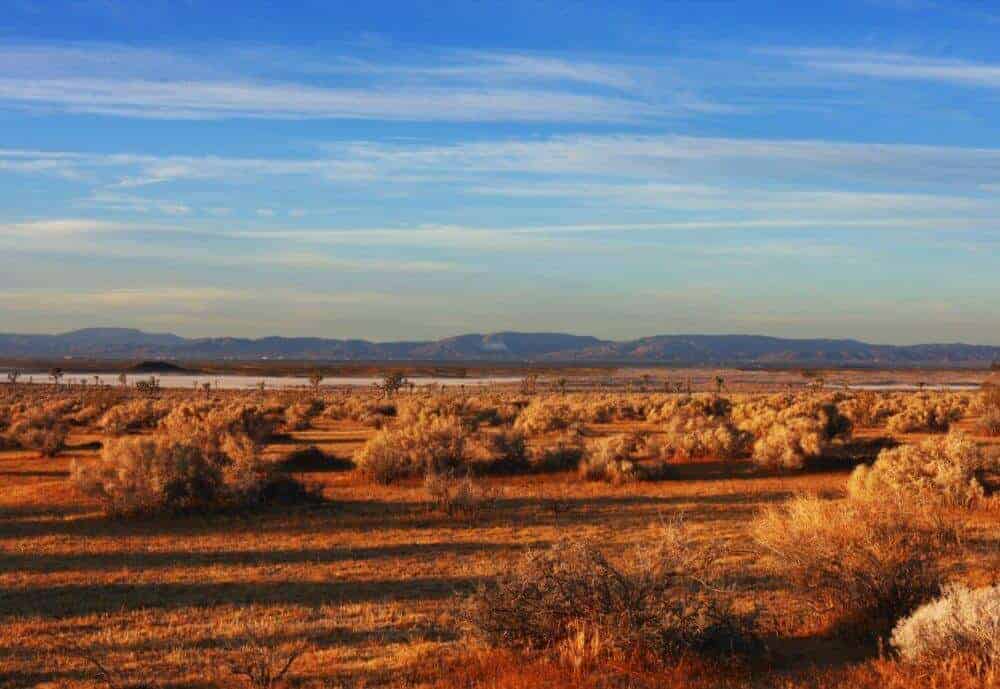
For more than three decades, the American Southwest has been locked in a grip of drought so severe that scientists have called it the worst dry spell in over 1,200 years. What many researchers assumed was simply bad luck, a natural climate pattern that would eventually reverse, turns out to be something far more ominous: a direct consequence of human pollution that could persist for decades to come.A groundbreaking Nature study reveals that human emissions of greenhouse gases and industrial pollutants have fundamentally altered a major Pacific Ocean climate cycle—the Pacific Decadal Oscillation (PDO)—locking it into a configuration that starves the western United States of rainfall. Recent research led by University of Colorado Boulder suggests the region’s water crisis may not ease for another 30 years, even under the most optimistic scenarios.
“Our results show that the drought and ocean patterns we’re seeing today are not just natural fluctuations—they’re largely driven by human activity,” said Jeremy Klavans, a postdoctoral researcher at the University of Colorado Boulder who led the research.
The Pacific’s broken heartbeat
The study focuses on the Pacific Decadal Oscillation (PDO), a climate pattern that scientists have tracked for over a century as it swings between warm and cool phases every few decades. Think of it as the Pacific’s slow heartbeat, influencing weather patterns across North America and beyond.
When the PDO enters its “negative” phase, with cooler waters hugging the West Coast, storm tracks shift northward and the Southwest gets significantly less rain. The pattern has been stuck in this drought-inducing mode since the 1990s, far longer than the natural cycle typically lasts. Scientists estimate this is the driest 20-year period in at least 1,200 years.
Overturning scientific consensus
What makes this research striking is how it overturns previous consensus, even the Intergovernmental Panel on Climate Change stated with “high confidence” that the PDO operates independently of human influence. Climate models have consistently treated it as a purely natural phenomenon.
“If the PDO were purely natural, we would have expected it to shift back to positive after the strong El Niño in 2015,” Klavans explained. “Instead, it flipped briefly and then reverted, suggesting something deeper and undiscovered is holding it in place.”
A computational breakthrough
The breakthrough came through sheer computational force—researchers analyzed over 500 climate model simulations, detecting patterns invisible in smaller studies. They discovered that since the 1950s, more than half of the PDO’s behavior can be traced to human emissions. Scientists have found a growing fingerprint of warming climate on global droughts going back over a century.
The pollution paradox
From the 1950s to 1980s, rapid rises in industrial aerosol pollution actually pushed the PDO toward its wetter phase. But as aerosol emissions leveled off—thanks to clean air regulations—while greenhouse gas concentrations kept climbing, the balance shifted dramatically.
Since the late 1980s, greenhouse warming has dominated, driving the PDO into its current negative phase and locking in drought conditions that have become the Southwest’s new normal. Studies have detected human fingerprints on drought trends in recent decades.
Solving the signal-to-noise paradox
This sensitivity extends far beyond the American West. The research team’s methods could revolutionize how scientists understand long-term climate patterns in other regions, including Europe’s drought-prone areas influenced by North Atlantic oscillations. Evidence of human influence on Northern Hemisphere snow loss has similarly emerged.
Their correction to climate models increased the predicted precipitation decline in the western United States from a modest 2.1% to a dramatic 12.6% over 30 years—closely matching the 13.3% decline actually observed.
“This isn’t a temporary dry spell,” Klavans warned. “It’s a climate-driven transformation of the region’s water system. Planners and policymakers need to treat it as such.”
Water crisis reality
Water managers across the Southwest are already grappling with shrinking reservoirs, stressed agricultural systems, and growing urban populations. Lake Mead, the nation’s largest reservoir, has dropped to historic lows, while California has implemented unprecedented water restrictions.
The research suggests these aren’t temporary measures, but adaptations to a new climatic reality. As long as greenhouse gas emissions continue rising at current rates, the PDO is likely to remain locked in its drought-inducing configuration.
Global implications
The findings also shed light on climate science’s recent puzzles—such as the so-called global warming “hiatus” of the early 2000s. Scientists now realize that the PDO’s persistent negative phase, driven by human emissions, was masking some of the warming that greenhouse gases would have otherwise produced.
As the Southwest prepares for decades more of water scarcity, this research delivers both sobering realism and crucial scientific clarity: The drought gripping the region isn’t a natural accident, but a preview of how human activities can fundamentally rewire Earth’s climate systems.
For water managers, urban planners, and farmers across the American West, that distinction could mean the difference between temporary adaptation and permanent transformation.