
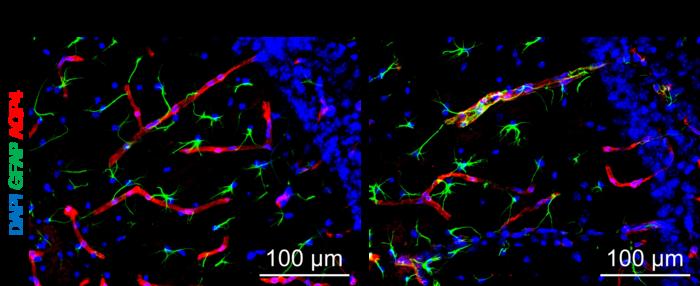
The smallest particles in dirty air may be doing something unusually cruel: reshaping proteins in the brain into toxic clumps linked to Lewy body dementia.
In a sweeping new study published in Science, Johns Hopkins researchers and collaborators report that exposure to fine particulate matter (PM2.5) can trigger a distinct strain of alpha-synuclein aggregates in mice, mimicking those found in human dementia patients. The work builds on a decade of epidemiological hints, but for the first time ties airborne pollutants to a specific molecular pathway.
Lewy body diseases, which include Parkinson’s disease dementia and dementia with Lewy bodies, are marked by abnormal protein buildups called Lewy bodies. These clumps wreak havoc on brain cells and are notoriously hard to target with drugs. The new findings suggest air pollution doesn’t just raise the risk of dementia in the broad sense, it may accelerate one of the most devastating forms through a unique biochemical mechanism.
“We have identified a novel strain of Lewy bodies formed after exposure to air pollution,” said Xiaobo Mao, associate professor of neurology at Johns Hopkins. “By defining this strain, we hope to establish a specific target for future drugs aimed at slowing the progression of neurodegenerative diseases marked by Lewy bodies.”
The story begins with a massive analysis of U.S. hospital records. Mining data from 56.5 million patients admitted between 2000 and 2014, the team found that residents of ZIP codes with higher PM2.5 levels were significantly more likely to be hospitalized for Lewy body-related dementia. Each uptick in pollution corresponded to a 17 percent greater risk of Parkinson’s disease dementia and a 12 percent greater risk of dementia with Lewy bodies. The numbers are striking, but the real surprise came when the scientists moved from statistics to biology.
In a 10-month experiment, normal mice breathing PM2.5 every other day developed brain atrophy, nerve cell death, and measurable cognitive decline. Mice lacking the alpha-synuclein protein, however, were largely spared. That detail matters: it points squarely at alpha-synuclein as the molecular switch pollution may be flipping.
The researchers went further. In genetically engineered mice carrying a human Parkinson’s mutation, PM2.5 exposure produced widespread pockets of alpha-synuclein. The clumps, when examined with high-resolution biochemical tools, had a structure distinct from those formed during natural aging. And when pollution samples were collected from China, Europe, and the United States, the same destructive pattern emerged, suggesting the toxic effect is not tied to a single local pollutant source but to PM2.5 itself.
“The statistical association we uncovered is even stronger than what previous studies found when lumping all Alzheimer’s and related dementias together,” said Xiao Wu, a co-author from Columbia University. “We hope to inspire researchers to conduct both epidemiologic and molecular studies that focus on dementia subtypes linked to Lewy bodies.”
Adding to the concern, the gene expression profiles of pollution-exposed mouse brains matched those seen in patients with Lewy body dementia. In other words, pollution not only pushed proteins into harmful shapes, it appeared to flip whole sets of genes into disease-like patterns. That convergence, across human data and animal experiments, makes the case hard to dismiss.
The study stops short of proving that air pollution alone can cause Lewy body dementia in humans. Genetics, aging, and other environmental factors remain key players. But the authors emphasize that unlike DNA, pollution exposure is at least partly within societal control. Regulations on vehicle exhaust, industrial emissions, and wildfire management could lower PM2.5 levels and, by extension, lighten the neurological burden.
One unresolved question is which components of PM2.5 drive the brain damage. These particles are a mix of chemicals, metals, and organic residues, and parsing out the worst offenders will be crucial for public health. Still, the message is already clear: what we breathe can leave molecular scars on the brain.
Explainer: What Is Lewy Body Dementia?
Lewy body dementia (LBD) is the second most common form of dementia after Alzheimer’s. It is caused by abnormal clumps of the protein alpha-synuclein building up inside nerve cells. These clumps, called Lewy bodies, disrupt brain communication and lead to problems with memory, movement, mood, and behavior. Symptoms often overlap with Parkinson’s disease and Alzheimer’s, making diagnosis difficult. Unlike Alzheimer’s, which mainly affects memory at first, LBD can cause vivid hallucinations, fluctuating attention, and movement disorders early on. There is no cure, and current treatments mostly manage symptoms. Understanding environmental triggers like air pollution may open new paths for prevention or therapy.
Journal: Science. DOI: 10.1126/science.adu4132
ScienceBlog.com has no paywalls, no sponsored content, and no agenda beyond getting the science right. Every story here is written to inform, not to impress an advertiser or push a point of view.
Good science journalism takes time — reading the papers, checking the claims, finding researchers who can put findings in context. We do that work because we think it matters.
If you find this site useful, consider supporting it with a donation. Even a few dollars a month helps keep the coverage independent and free for everyone.