

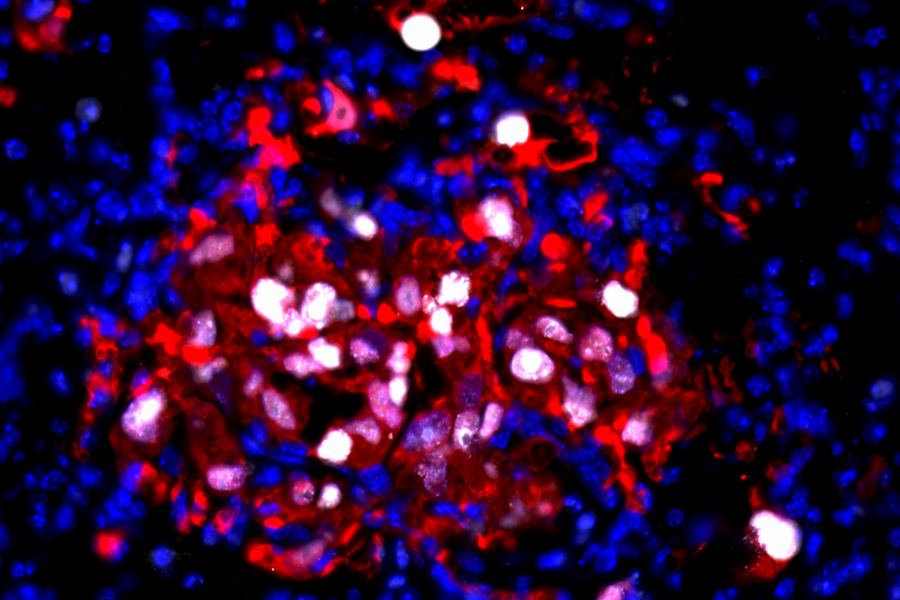
The very treatment meant to cure cancer may be inadvertently triggering its return. New research from MIT’s Whitehead Institute reveals that bleomycin, a commonly prescribed chemotherapy drug, can jolt dormant breast cancer cells back to life by inflaming the lung tissue where they hide.
For decades, oncologists have puzzled over why breast cancer can resurface years or even decades after successful treatment, often appearing in completely different organs. The answer, according to Robert Weinberg and his research team, lies not in the cancer cells themselves but in the inflammatory environments that surround them.
“The inflammation jolts the dormant cancer cells awake. Once awakened, they start multiplying again, seeding new life-threatening tumors in the body.”
The discovery, published September 1 in The Proceedings of the National Academy of Sciences, challenges conventional thinking about cancer recurrence. Rather than awakening spontaneously, these cellular sleeper agents require an external trigger – and chemotherapy itself may be providing it.
The Journey of Rogue Cells
Cancer’s most lethal phase begins when individual cells break away from the original tumor, like seeds dispersed by wind. These rogue cells navigate through blood vessels and lymphatic channels, seeking new territory in distant organs. Most die during this treacherous journey, but survivors can establish footholds in lungs, liver, bone, and brain tissue.
Yet arriving at a new location doesn’t guarantee success. The foreign environment – what scientists call the “tumor microenvironment” – often proves hostile. Cancer cells face immune system attacks and lack the supportive cellular networks they enjoyed in their original home. Many respond by entering a protective dormant state, essentially hibernating until conditions improve.
This dormancy presents a cruel paradox for patients and doctors. Scans show no evidence of disease, blood tests return to normal, and hope flourishes. But scattered throughout the body, microscopic time bombs wait for the right signal to detonate.
Weinberg’s team discovered this signal by tracking fluorescent breast cancer cells injected into laboratory mice. When researchers administered bleomycin to create lung inflammation, dormant cancer cells suddenly sprang back to life, forming aggressive new colonies within the lung tissue.
The Cellular Wake-Up Call
The awakening process unfolds like a carefully choreographed molecular dance. Inflammation draws specialized immune cells called M2 macrophages to the affected tissue. These cells release epidermal growth factor receptor (EGFR) ligands, which dock onto dormant cancer cells like keys fitting into locks. This binding triggers internal signaling cascades that flip the cellular switch from “sleep” to “multiply.”
But the most unsettling finding came when researchers examined what happened next. Once awakened, the cancer cells didn’t need continued inflammatory signals to remain active. They had developed what postdoc Jingwei Zhang calls an “awakening memory.”
“They no longer require ongoing inflammatory signals from the microenvironment to stay active – they remember the awakened state.”
This cellular memory explains why cancer recurrence can be so swift and aggressive. The awakened cells have already overcome the major hurdle of adapting to their new environment and can begin immediate expansion when triggered.
The research also revealed that awakening involves a fundamental shift in cellular identity. Dormant cancer cells exist in what scientists term a “highly mesenchymal” state – essentially locked in survival mode with limited growth potential. Upon awakening, they transition to a “quasi-mesenchymal” state that combines survival skills with renewed proliferative power.
This finding carries immediate clinical implications. Bleomycin is routinely prescribed to prevent cancer recurrence after surgery, yet this study suggests it might sometimes achieve the opposite effect. The irony isn’t lost on Weinberg, who notes that nearly 90 percent of cancer deaths result from metastasis rather than original tumors.
The discovery opens new avenues for therapeutic intervention. If inflammation awakens dormant cancer cells, then controlling that inflammation might keep them sleeping indefinitely. Researchers are now investigating which specific inflammatory signals are most critical and whether blocking them could prevent metastatic recurrence.
For the millions of cancer survivors living with the uncertainty of potential recurrence, this research offers both sobering realism and cautious hope. Understanding the enemy’s strategy is the first step toward defeating it. As Weinberg’s team continues mapping the molecular mechanisms of metastatic awakening, they’re building the foundation for treatments that could transform cancer from a recurring nightmare into a truly curable disease.
The work represents a significant step forward in cancer biology’s most challenging frontier – not just treating cancer, but preventing its return.
Proceedings of the National Academy of Sciences: 10.1073/pnas.2515009122