

A week of bad air might be enough to permanently alter the microscopic ecosystem inside your chest. That’s the unsettling discovery from UC Riverside researchers who exposed mice to dust from California’s dying Salton Sea and watched their lung microbiomes transform in real time.
The findings, published in mSphere, mark the first time scientists have documented environmental pollutants reshaping the lung’s bacterial landscape in otherwise healthy animals. Previous research showed diseases like cystic fibrosis could disrupt lung microbes, but nobody had proven that simply breathing dirty air could rewrite your internal biology this fast.
“Even Salton Sea dust filtered to remove live bacteria or fungi is altering what microbes survive in the lungs,” said Mia Maltz, the UCR mycologist who led the study. The implication is stark: you don’t need to inhale living pathogens to trigger deep biological changes. Dead bacterial fragments and chemical residues are enough.
When a Lake Dies, Its Neighbors Suffer
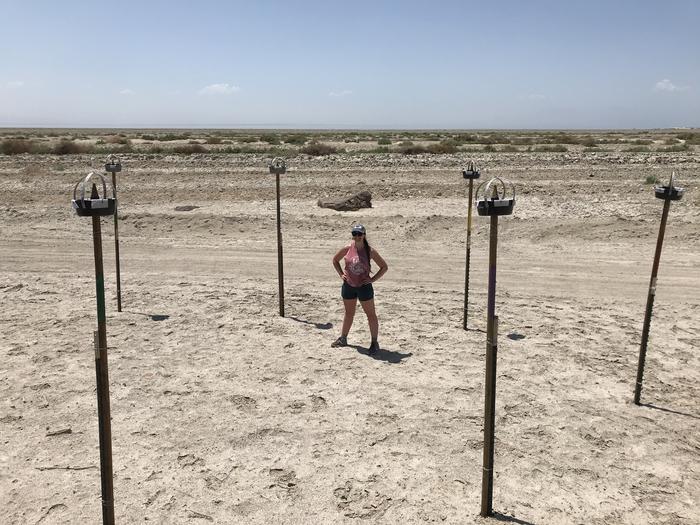
The Salton Sea, a shallow landlocked lake southeast of Los Angeles, has been evaporating for decades. As water vanishes, it leaves behind a toxic crust of agricultural runoff, heavy metals, and decomposed algae. Wind whips this sediment into the air, and people downwind breathe it in. Local residents have long suspected the dust makes them sick, but proving causation required controlled experiments.
The researchers built an exposure chamber that mimicked real-world conditions, then collected dust samples at varying distances from the lakebed. Over a series of one-week trials, they exposed mice to aerosolized particles while monitoring changes in lung tissue and immune responses.
The transformations were rapid and dramatic. Bacterial species like Pseudomonas and Staphylococcus, both linked to respiratory inflammation, proliferated in the lungs of exposed mice. Many of these bacteria produce lipopolysaccharide, or LPS, a molecular residue on their outer membranes that acts like an alarm bell for the immune system.
“We think microbial products like LPS are part of what’s causing the inflammation. It’s like breathing in a chemical fingerprint of dead bacteria.”
In some cases, up to 60 percent of lung immune cells showed markers of neutrophil activation, a sign of aggressive inflammation. Mice breathing filtered air had neutrophil levels of only 10 to 15 percent. The dust wasn’t just irritating. It was fundamentally altering how the lungs functioned.
Your Lungs Harbor an Invisible Forest
Scientists have spent years mapping the gut microbiome, linking its trillions of residents to everything from digestion to mood. The lung microbiome, by contrast, remains poorly understood. Partly, that’s because lungs were long thought to be sterile, and partly because extracting microbial DNA from lung tissue without contamination is technically difficult.
Maltz spent four years developing a method to isolate microbial DNA from host tissue, enabling a more detailed look at lung microbial communities than previous techniques allowed. What she found challenges longstanding assumptions in pulmonary science.
“We’ve seen these kinds of microbial shifts in people with cystic fibrosis or infections,” said Emma Aronson, a UCR environmental microbiologist and study author. “But these mice had no pre-existing conditions. This was a clean slate, and it still happened.”
The researchers noticed clues even before analyzing tissue samples. “The dust also just doesn’t smell good,” Aronson noted. “When we were processing it in the lab, it could be stinky.” Talyssa Topacio, a UCR graduate student and co-first author, added that field work near the Salton Sea meant enduring heat, dustiness, and pungent air that locals have long complained about.
David Lo, a distinguished professor of biomedical sciences at UCR, said the findings may explain why asthma rates are unusually high in communities near the lake. “Our lab studies discovered that the dust generated at the Salton Sea can have significant health effects especially in the lung, and it is likely a major factor in the high incidence of asthma in the nearby communities.”
“Breathing in the dust over time may have chronic impacts in the lung, and these studies on the potential for altering the lung microbiome are an important first step in identifying factors that could lead to asthma and other chronic diseases.”
The research raises uncomfortable questions about other airborne pollutants. If dust can remodel lung microbes, what about wildfire smoke, car exhaust, or aerosols from vaping? The team plans to test whether other exposures cause similar disruptions.
They’re also examining whether similar microbial shifts occur in children living near the Salton Sea. As the lakebed continues drying, more toxic sediment becomes airborne each year, and the population breathing it grows sicker. Understanding whether the changes are reversible, and how long they persist, will determine whether interventions can help.
“We’ve only just begun to understand how dust exposure changes the lung microbiome,” Maltz said. “We don’t yet know how long the changes last, or whether they’re reversible. That’s another big question.”