

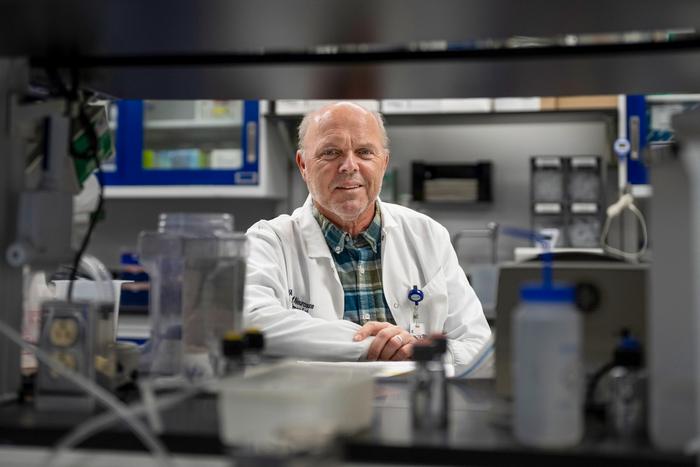
It is among the most painful milestones in Alzheimer’s disease: when a patient can no longer recognize their family. Now scientists at the University of Virginia School of Medicine have identified a physical change in the brain that may explain why this happens, and how it might be stopped.
The UVA team, led by neuroscientist Harald Sontheimer, found that Alzheimer’s destroys the brain’s protective latticework known as perineuronal nets. These sugar-protein coatings surround certain neurons and stabilize the circuits that encode social memories, the memories that help us recognize faces and relationships. When the nets were preserved in lab mice, the animals retained their ability to remember other mice even as the disease progressed.
The Brain’s Hidden Armor
Under a microscope, the hippocampal CA2 region looks like a grid of glowing threads. These perineuronal nets (PNNs) act like insulation around wiring, keeping the brain’s electrical signals precise. In Alzheimer’s models, however, that insulation frays. The UVA researchers discovered that enzymes called matrix metalloproteinases (MMPs) break down the nets, leaving neurons exposed and their connections unstable.
Blocking those enzymes halted the damage. When researchers treated Alzheimer’s mice with MMP inhibitors, drugs already tested for arthritis and cancer, their social memory returned to normal. The same animals could still form new object memories, suggesting that the disease first attacks the social circuits that help us remember familiar people and faces.
“Finding a structural change that explains a specific memory loss in Alzheimer’s is very exciting,” said Harald Sontheimer, PhD, chair of UVA’s Department of Neuroscience. “It is a completely new target, and we already have suitable drug candidates in hand.”
Sontheimer’s graduate student and coauthor Lata Chaunsali added that the nets appear to guard the very essence of social recognition. When the team protected them early in life, even genetically vulnerable mice maintained their memory of social interactions.
“Our research will help us get closer to finding a new, non-traditional way to treat or better yet prevent Alzheimer’s disease,” said Chaunsali. “Keeping these brain structures intact may be the key to preserving who we are.”
Beyond Amyloid and Tau
The discovery challenges decades of Alzheimer’s dogma. Traditional theories focus on the accumulation of amyloid plaques and tau tangles as primary culprits. But Sontheimer’s team observed that the breakdown of the perineuronal nets occurred even in brain regions free of amyloid deposits. The finding suggests that social memory loss may follow a different biological pathway entirely.
In aging mice, the nets weakened progressively in the CA2 region of the hippocampus, the same area linked to social cognition in humans. Genetic deletion or enzymatic digestion of these nets produced identical behavioral deficits. When the nets reformed naturally two weeks later, the animals’ social memory returned, a striking demonstration that the damage is reversible if caught early.
At a molecular level, RNA sequencing revealed a surge in MMP activity that outpaced the nets’ ability to repair themselves. This disequilibrium, the researchers say, may mark a tipping point in Alzheimer’s progression. It also provides a new therapeutic foothold: inhibit MMPs to stabilize the extracellular matrix, and memory circuits might be spared.
The work adds a new dimension to how scientists think about brain aging. If confirmed in humans, therapies that preserve perineuronal nets could one day complement or even surpass amyloid-targeting drugs. Sontheimer’s group at UVA’s Paul and Diane Manning Institute of Biotechnology is already pursuing follow-up studies on the safety and timing of MMP inhibition.
For families watching loved ones fade, the idea that such recognition could be protected offers a rare measure of hope. Memory, it seems, may depend not only on neurons themselves, but on the quiet scaffolding that holds them together.