

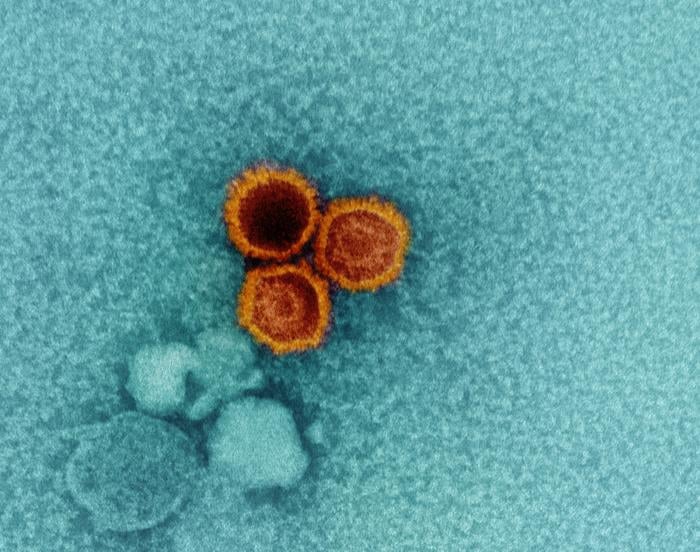
A new study lands with a thud of inevitability, the kind that makes you wonder how the field missed it for so long. Published in Science Translational Medicine, the work argues that Epstein Barr virus is not just associated with lupus but may actively rewire a tiny subset of B cells into inflammatory agitators that rouse the immune system against the body itself. It’s an unsettling proposal, yet carries the clarity of something that fits too well to ignore.
The paper, led by Stanford immunologists William Robinson and Shady Younis, reaches into territory that has felt out of focus for decades. Everyone with lupus seems to harbor EBV, but so does nearly everyone without it. That overlap has been a riddle without a mechanism. Now, with a sequencing method precise enough to pick out the few EBV infected B cells hiding among hundreds of billions of healthy ones, the team captures something startling. The virus can prod those B cells into acting like professional antigen presenting cells, the very kind that instruct T cells to escalate an immune response. Once that escalation begins, the immune system does the rest.
A Tiny Population With Outsize Influence
In healthy individuals, perhaps one in ten thousand B cells carries dormant EBV. In lupus patients, the number climbs to roughly one in four hundred. That twenty five fold shift sounds small in absolute terms, but the study shows how little the virus needs to ignite a chain reaction. EBV occasionally pushes out a single protein, EBNA2, inside its host B cell. EBNA2 sits on key regulatory regions of the human genome and activates genes involved in antigen presentation and inflammation. The infected B cell begins to behave like a field sergeant, rallying helper T cells that target nuclear material. Those T cells then recruit uninfected autoreactive B cells and plasmablasts. As the wave grows, the immune system starts striking tissues throughout the body.
“This is the single most impactful finding to emerge from my lab in my entire career,” said William Robinson. “We think it applies to 100 percent of lupus cases.”
The sequencing work makes the biology visible in a way it has never been. EBV positive B cells in lupus patients carry a transcriptional program that is coherent and distinct, built around genes like CD27, ZEB2 and TBX21. They look nothing like their uninfected neighbors. They look, instead, like cells designed to provoke. The team even expressed antibodies from these cells and confirmed that they bind the nuclear antigens that define lupus. In healthy people, the corresponding antibodies do not.
It feels almost unsettling, watching the pieces lock in. A virus most of us carry quietly in childhood. A sliver of B cells that are naturally autoreactive. A viral protein that bends the cell toward inflammation. And a helper T cell army ready to follow any signal that points toward nuclear debris. The process is slow and subtle, unfolding over years or decades, but the logic is relentless.
A Mechanism With Implications
The study ventures into personal territory for anyone who has lived with or treated lupus. Existing therapies can soften the disease but rarely undo it. The idea that EBV might be the upstream driver of the autoimmune cascade offers a new angle entirely, one grounded in early events rather than downstream damage.
“Practically the only way to not get EBV is to live in a bubble,” Robinson said.
The ubiquity of the virus fuels an obvious question. If ninety five percent of us carry EBV, why do only a small fraction develop lupus. Robinson suggests that particular strains might be better suited to transform B cells into these antigen presenting instigators. It’s a hypothesis, but the genetic patterns the team observed hint that strain level differences could matter more than anyone realized.
Vaccines targeting EBV are already in clinical trials, but they must be administered early in life because nothing currently can clear the virus once it’s established. That reality shapes the therapeutic ambitions surrounding this work. Robinson and colleagues have helped file a provisional patent related to their technology, and a company they co founded is exploring ultradeep B cell depletion, a process that wipes out all circulating B cells and allows the bone marrow to rebuild the compartment with EBV free cells. It’s a bold idea, but it flows from the logic the study lays out.
The findings stretch beyond lupus too. EBNA2 activity has been noted in other autoimmune conditions, including multiple sclerosis and rheumatoid arthritis. Whether the same mechanism applies remains uncertain, but the study offers a blueprint for how to look.
What lingers after reading the work is the sense that something quiet has been operating under the surface for a long time. A viral protein that pulses now and then. A B cell nudged into a role it was never meant to play. A cascade that builds slowly, then becomes impossible to ignore. The inevitability the study evokes is not fatalistic. It’s clarifying, a way of seeing lupus not as a random tangle of autoimmunity but as a process with an identifiable spark at its center.
Journal: Science Translational Medicine