
Rats with moderate traumatic brain injuries make lousy decisions. They can’t wait. They grab for rewards even when waiting would pay off better. It’s one of the most persistent problems after TBI, and there’s basically nothing doctors can do about it.
But a team at Ohio State University has been chasing a weird angle: what if the problem isn’t just in the brain? Their latest results, presented at Neuroscience 2025, suggest that a simple dietary prebiotic—galacto-oligosaccharide, the kind of fiber supplement you can buy at the drugstore—actually reduces impulsive decision making in injured rats.
The study builds on earlier work from the same lab showing that within days of a brain injury, the gut microbiome falls apart. That dysbiosis persists, and it correlates with long-term cognitive problems. So they tried an intervention: feed rats either standard chow or chow with two percent GOS mixed in, starting six weeks before injury and continuing sixty days after. Then test them.
The gambling task
The test itself is surprisingly simple. Rats learn which choice ports give high-reward sugar pellets and which come with penalties—a miniature gambling task that injured animals consistently fail. They rush. They misjudge. They go for the immediate reward even when it’s the losing option.
“In our task, we basically ask them to make a decision, but they have to wait for the cue light to come on. And that’s hard to do if you’re a hungry rat, right? So it sets up a measure of impulsivity, and that’s where we saw one of the most robust effects.”
That’s Cole Vonder Haar, the neuroscientist leading the project. The rats getting GOS weren’t cured—they still showed deficits compared to uninjured controls. But their impulsivity dropped meaningfully compared to injured rats on the standard diet.
It’s a modest result, but it matters because there aren’t any FDA-approved treatments for TBI. “People are stuck with their symptoms and do whatever they can to manage those symptoms, whether it’s rehabilitation or pharmacological help for specific symptoms like depression,” Vonder Haar said.
Why the gut?
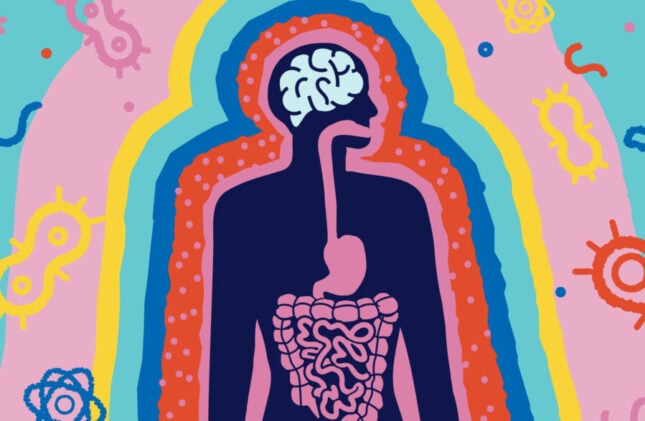
The gut-brain connection in TBI is still being mapped out. Vonder Haar chaired a minisymposium on the topic at this year’s Neuroscience meeting, and he recently coauthored a review in the Journal of Neuroscience laying out the mechanisms: nutrient processing, inflammatory signaling, vagus nerve pathways. The microbiome talks to the brain in multiple ways, and when it destabilizes after injury, those conversations get noisy.
The Ohio State team had already shown that acute microbiome changes predict chronic impairments. This study tested whether you could change that trajectory by stabilizing the gut early. The answer seems to be yes, at least partially.
A rat waiting for a cue light is a stand-in for a person trying to hold focus in a meeting or resist an impulse while driving. The mechanisms are still unclear, and the improvement is incomplete. But the signal is there.
The work was funded by the Department of Defense, which has obvious reasons to care—blast injuries, vehicle accidents, combat sports. If gut-targeted therapies can nudge impulsivity and memory back toward baseline, that would be the first real treatment option for millions of people living with TBI, many of them for decades.
Vonder Haar’s group is planning follow-up studies to figure out which microbial species are doing the work and whether the timing of the intervention matters. For now, they’ve shown that the gut isn’t just a bystander in brain injury. It’s part of the problem, which means it might also be part of the solution.
ScienceBlog.com has no paywalls, no sponsored content, and no agenda beyond getting the science right. Every story here is written to inform, not to impress an advertiser or push a point of view.
Good science journalism takes time — reading the papers, checking the claims, finding researchers who can put findings in context. We do that work because we think it matters.
If you find this site useful, consider supporting it with a donation. Even a few dollars a month helps keep the coverage independent and free for everyone.