

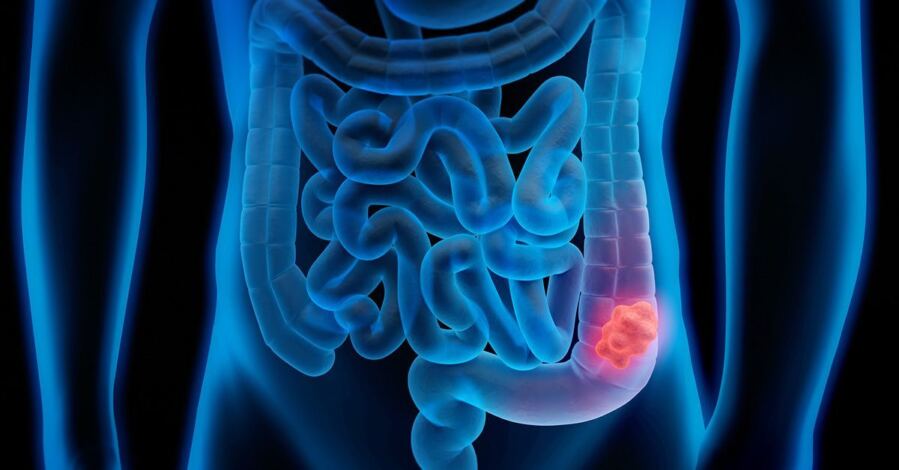
Buried in each tumour genome is a kind of chemical diary. Every carcinogen that has ever damaged a cell’s DNA leaves a characteristic pattern of mutations behind, a signature as distinctive as a fingerprint, and those signatures persist long after the exposure itself has ceased. When researchers from UC San Diego, the International Agency for Research on Cancer and the Wellcome Sanger Institute set about sequencing 981 colorectal cancers from patients across 11 countries, they weren’t primarily hunting for a single culprit. They were trying to understand why colorectal cancer rates vary so markedly between Argentina and Japan, between Colombia and Canada. What they found, threaded through the youngest cases, was something rather more unsettling.
The mutational fingerprint of colibactin, a toxin produced by certain strains of Escherichia coli that colonise the gut, kept appearing. And it appeared at far higher rates in people diagnosed before the age of 50.
Colorectal cancer was, until fairly recently, reliably a disease of older adults. The median age at diagnosis in the United States sat comfortably above 65 for most of the 20th century. Then, somewhere around the turn of the millennium, something shifted. Cases among adults under 50 began climbing, first in the US, then in Australia, Canada, Japan, and across Europe. By the most recent estimates, roughly 27 countries are seeing the same trend. Incidence in younger adults has roughly doubled over the past two decades. If the trajectory holds, colorectal cancer is projected to become the leading cause of cancer-related death among people under 45 by 2030. No one has had a convincing explanation for why.
Young adults who develop it are often otherwise healthy, without the family history or metabolic risk factors that tend to flag elevated risk. Something environmental seems to be at work, something that has changed in the past 30 or 40 years. The new data, published in Nature, points toward a candidate that has been hiding in plain sight: bacteria that certain children are harbouring in their colons, possibly in infancy, possibly doing damage that won’t manifest for decades.
A Toxin That Writes Itself Into DNA
Colibactin itself is a genotoxin, a molecule that bonds directly to DNA and distorts its structure. Bacteria carrying the pks pathogenicity island, a roughly 40-kilobase cluster of genes encoding the colibactin biosynthetic machinery, have been found in the gut microbiomes of healthy adults and children alike, though prevalence varies. When colibactin-producing bacteria take up residence in the colon, they can induce a specific pattern of mutations in the surrounding epithelial cells, insertions and deletions with a characteristic profile that researchers label SBS88 and ID18. These signatures are now well-established; prior studies have detected them in normal colorectal tissue and in roughly ten to fifteen percent of all colorectal cancers. What this latest study does, for the first time, is demonstrate how dramatically their presence is concentrated in early-onset disease.
Compared with patients diagnosed after 70, colibactin signatures were 3.3 times more common in patients diagnosed before 40. “These mutation patterns are a kind of historical record in the genome,” said Ludmil Alexandrov, professor of bioengineering at UC San Diego and the study’s senior author, “and they point to early-life exposure to colibactin as a driving force behind early-onset disease.” The enrichment was particularly pronounced in cancers of the distal colon and rectum, consistent with the known epidemiology of early-onset cases, which tend to develop further down the large intestine than cancers in older patients.
The team also traced where in tumour evolution the colibactin mutations fall. Using a technique called molecular timing, which compares the relative timing of mutations based on whether they appear in all cancer cells or only some, they showed that SBS88 and ID18 are overwhelmingly early-clonal events, present in the founding population of cancer cells rather than acquired later. That is consistent with evidence from prior work suggesting colibactin exposure typically occurs in the first decade of life and then ceases, leaving a permanent mutational record. The bacteria don’t necessarily have to still be present to have already done their damage. Indeed, when the team searched the sequenced tumour samples for the genetic material of pks-positive bacteria, they found no correlation between an active bacterial presence and the colibactin mutational signatures, which is roughly what you’d expect if the exposure happened years or decades earlier and the microbiome had since shifted.
“When we started this project, we weren’t planning to focus on early-onset colorectal cancer,” said Marcos Díaz-Gay, a co-first author who conducted the research as a postdoctoral researcher in Alexandrov’s lab. “Our original goal was to examine global patterns of colorectal cancer to understand why some countries have much higher rates than others. But as we dug into the data, one of the most interesting and striking findings was how frequently colibactin-related mutations appeared in the early-onset cases.” Among the additional geographic findings: distinctive mutational signatures of unknown cause were elevated in Argentina, Colombia, and Russia, suggesting local environmental exposures of their own that remain to be identified.
A Head Start on Cancer, Decades Early
The colibactin connection gains particular force from the link with APC driver mutations. APC is a tumour suppressor gene and the first to be inactivated in the canonical sequence of genetic steps that leads to colorectal cancer. Lose a functional copy of APC early enough, and the cells that carry that loss are, in a sense, decades ahead of schedule on the path toward malignancy. The analysis found that colibactin’s insertion-deletion signature, ID18, was responsible for about a quarter of APC driver indels in tumours where colibactin exposure had occurred. “If someone acquires one of these driver mutations by the time they’re ten years old,” Alexandrov said, “they could be decades ahead of schedule for developing colorectal cancer, getting it at age 40 instead of 60.”
The researchers are careful to note that association is not causation. Establishing that colibactin actually causes the rise in early-onset colorectal cancer, rather than merely correlating with it, will require prospective studies comparing colibactin mutation burdens in the normal colorectal tissue of young people who later develop cancer against matched healthy controls. It will also require understanding why colibactin-producing bacteria might have become more prevalent, or more virulent, in the latter half of the twentieth century, if indeed they have. Diet, antibiotic use, early-life microbiome disruption, and urban-rural differences are all plausible factors, and all currently speculative.
The team is now investigating whether probiotics or targeted interventions could safely reduce carriage of pks-positive bacteria, and is developing stool-based tests that might detect colibactin-associated mutation patterns as an early-warning signal. That work will depend heavily on sustained funding; Alexandrov noted the research draws substantially on NIH support, which faces proposed budget cuts. “It’s possible that different countries have different unknown causes,” said Díaz-Gay, who is launching his own group at Spain’s National Cancer Research Centre in Madrid. “That could open up the potential for targeted, region-specific prevention strategies.” If colibactin turns out to be a genuine driver of early-onset colorectal cancer, the implications extend well beyond gastroenterology, raising questions about how much of adult cancer burden is effectively written during childhood, in the microbiome, years before any tumour is detectable.
Source: Díaz-Gay et al., Nature 643, 230-240 (2025)
Frequently Asked Questions
Could colibactin-producing bacteria be detected and cleared before they cause lasting damage?
That is exactly what researchers are now trying to determine. The UC San Diego team is investigating whether probiotics or other targeted approaches could safely reduce carriage of the relevant bacterial strains, and is developing stool-based tests designed to detect colibactin-associated mutation patterns. The main complication is that the damage may occur in very early childhood, so any preventive strategy would need to act well before a cancer risk becomes apparent.
Why would colibactin exposure in childhood only cause cancer decades later?
Colibactin doesn’t cause cancer directly; it shifts the odds. By triggering mutations in tumour suppressor genes like APC during early childhood, it gives a small cluster of colon cells a significant head start on the sequence of genetic changes that eventually produces cancer. The cancer itself still requires additional mutations accumulated over many years, but those cells are effectively years or decades further along the path than they would otherwise be.
Is the rise in young-adult colorectal cancer happening everywhere, or just in wealthy countries?
It appears to be a widespread phenomenon rather than one confined to high-income countries. The trend has been documented in at least 27 countries across different income levels, and the new Nature study found colibactin signatures enriched in early-onset cases across 11 countries on four continents, including in Colombia, Brazil, and Thailand. Whether the specific bacterial strains involved, or the broader environmental drivers, differ between regions is one of the open questions the research team is now pursuing.
What makes colibactin different from other bacterial toxins studied in cancer research?
Most known bacterial risk factors in colorectal cancer are associated with inflammation or chronic infection, acting relatively late in tumour development. Colibactin is unusual because it directly damages DNA, leaving a permanent and identifiable mutational signature in normal colon cells, and appears to act very early in life before the immune system and microbiome have fully stabilised. That early imprinting is what makes it a plausible candidate for explaining a cancer trend that begins decades before diagnosis.
