
Deep in the gut of a two-year-old, bacteria are doing something they were not quite supposed to do. Working on amino acids drawn from whatever the child has eaten, communities of microbes convert tryptophan and phenylalanine into molecules that look, structurally, quite a lot like serotonin and dopamine. Not the real thing. Distorted versions, chemically adjacent, that travel through the bloodstream and cross into the brain. In children with autism, these metabolites are present at concentrations that would be unremarkable if they were a little elevated. They are not a little elevated. In some cases they are a thousand times higher than anything seen in typically developing children of the same age.
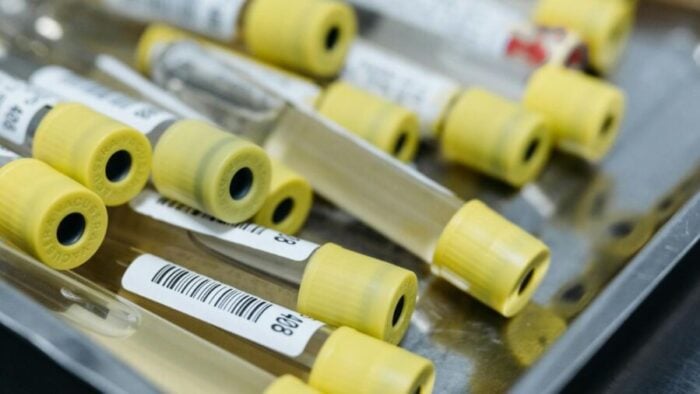
That single biological fact has now been turned into a screening test, one that requires nothing more invasive than a urine sample. And it may be able to flag which young children are at high risk for autism before a clinician has formally assessed them.
The research, published in Molecular Psychiatry, comes from Arizona State University’s Biodesign Center for Health Through Microbiomes, where James Adams has spent roughly fifteen years building a case that the gut microbiome is doing something important in autism spectrum disorder. The study measured concentrations of seventeen microbially derived metabolites in urine samples from 52 children with autism and 47 typically developing children, all between the ages of two and eleven, recruited at four sites across the United States. What the team found was not subtle: nearly every child with autism had at least one metabolite exceeding the highest level observed in any control child. The average child with autism had three elevated metabolites. The control children had none.
What the Bacteria Are Making
The metabolites fall into three broad categories: those derived from phenylalanine and tyrosine, those derived from tryptophan, and those associated with yeast and fungal overgrowth. The first two groups are the most conceptually striking. Tryptophan is a precursor to serotonin and melatonin. Phenylalanine feeds into dopamine synthesis. When gut bacteria process these amino acids, they produce metabolites that compete with, mimic, or interfere with the neurotransmitter pathways that those amino acids would otherwise supply.
“What’s really striking about the bacteria is that they make metabolites that are basically altered versions of serotonin and dopamine,” said Adams, who is a President’s Professor at ASU and a corresponding author on the study. He argues these compounds could explain quite a lot about the behavioral and cognitive profile of autism: the social communication difficulties, the anxiety, the attention problems, the mood instability. Whether the metabolites are a cause or a downstream consequence of a disrupted gut microbiome is not something this study can resolve. But the association, across more than 40 prior studies measuring individual metabolites, is consistent enough that Adams’s team is now fairly confident the connection is real.
The best-studied of these compounds is p-cresol sulfate, a molecule produced from phenylalanine or tyrosine by more than sixty gut bacterial species. It has been found elevated in children with autism compared to controls in 17 of 17 independent studies; in animal models, administering p-cresol produces autistic-like behaviors, and fecal transplants from healthy animals reverse the effect. That kind of cross-species consistency is not something researchers see every day.
The Test Itself
The diagnostic tool the team has developed, called the MDM System, works as a scoring method rather than a single-biomarker test. For each of seventeen metabolites, the system checks whether the child’s urine concentration exceeds the reference range established from typically developing children. Each metabolite above that threshold adds a point. A score of one or more means the child has at least one extremely elevated microbial metabolite; in this study, that threshold caught 90% of the autism group and misidentified none of the controls. Sensitivity of 90%, specificity of 100%. Those are, to put it plainly, unusually strong numbers for a screening test, though the researchers are cautious about the moderate sample size and are running a replication cohort.
Christina Flynn, the first author and now research director of ASU’s newly launched autism diagnostics laboratory, has been working on this since her doctoral research in chemical engineering. She is also the parent of a child with autism. “What we’ve discovered is that 80 to 90% of children with autism have extremely high levels of one or more microbially derived metabolites,” she said. Beyond the diagnostic number, she is interested in what a biological test might do for families who have been waiting. Autism is currently diagnosed through behavioral observation, which requires a specialist clinician, and the average age of first diagnostic assessment in the United States is 47 months, nearly four years old. For families who suspect something earlier, that wait is substantial.
Flynn talks about families spending months, sometimes years, not knowing what they are dealing with. “If this test shortens that gap, even by a little, that’s meaningful because earlier intervention can really help,” she said. She has also noted that parents sometimes delay seeking diagnosis because they worry they will be judged, that it will look like a parenting failure. A urine test that points to gut chemistry, she thinks, could reframe that entirely.
A New Phenotype, and What Comes Next
Based on their finding that roughly nine in ten children with autism in the study had elevated metabolites, the team has proposed a new clinical phenotype: ASD associated with Microbially-Derived Metabolites, or ASD-MDM. The roughly 10% of children with autism who showed no elevated metabolites in urine were not simply normal across the board; most of them had other significant metabolic anomalies, in some cases suggesting possible inborn metabolic errors that may have independently produced autistic features. The implication is that ASD-MDM might define the large majority of autism cases, with a biologically distinct minority group underneath.
The test is already commercially available through Analutos, a UK laboratory that performed the quantitative analysis for the study and now offers the test internationally from samples shipped to them. Rosa Krajmalnik-Brown, director of the Biodesign Center and a co-author, has been pursuing the gut-autism connection for over fifteen years. “I am excited about the MDM test, which includes important microbial metabolites, previously hypothesized to be linked with autism,” she said. For her, the test represents a way to make a biological hypothesis operational in a clinical setting, something that has proved difficult to do in this field.
Whether the metabolites can also serve as therapeutic targets is the question that follows naturally, and the one the team is most cautious about. A prior open-label trial of microbiota transplant therapy found substantial reductions in p-cresol sulfate alongside meaningful improvements in gut and behavioral symptoms, but that study was not controlled, and the field is not at the point where anyone should be recommending transplant therapy as routine. Still, if a urine test can tell you which metabolites are elevated in a specific child, and if future trials demonstrate that reducing those metabolites improves outcomes, the path toward personalized gut-targeted intervention for autism starts to look at least plausible.
For now, the urine test is a screening tool, not a diagnosis. A positive result means a child should move to the front of the queue for formal evaluation, not that the evaluation can be skipped. But in a system where waiting lists for pediatric developmental assessments can stretch for years, moving to the front of the queue is not a small thing.
https://doi.org/10.1038/s41380-026-03620-5
Frequently Asked Questions
How does a urine test detect autism if autism is a brain condition?
The test doesn’t measure anything in the brain directly. It detects metabolites produced by gut bacteria that appear to influence brain chemistry by mimicking or disrupting the pathways that produce serotonin and dopamine. In children with autism, these metabolites were found at concentrations up to a thousand times higher than in typically developing children, suggesting the gut microbiome is behaving very differently. The gut-brain axis, the chemical signaling pathway between the digestive system and the nervous system, is increasingly understood to play a significant role in neurodevelopmental conditions.
Does this mean autism is caused by gut bacteria?
Not necessarily, and the researchers are careful to say so. The study demonstrates a strong and consistent association between elevated gut metabolites and autism spectrum disorder, backed by over 40 prior studies finding similar patterns. But whether the disrupted microbiome is a cause of autism, a consequence of it, or something that worsens symptoms without causing the condition in the first place remains an open question. What the findings do suggest is that gut biology is involved in the majority of cases, which opens up new possibilities for both screening and treatment.
Could a child test positive on this and not have autism?
In the study sample, none of the typically developing children had even one metabolite above the reference range, giving the test 100% specificity, meaning no false positives among controls. That said, the sample size was moderate at 99 children total, and the researchers stress that a positive result should prompt formal clinical evaluation rather than replace it. The test is designed as a triage tool to help prioritize which children see a specialist sooner, not as a standalone diagnosis.
What’s stopping this from being used widely right now?
The test is already commercially available through a UK laboratory called Analutos, which accepts samples from anywhere in the world. The main obstacles are awareness and replication: this is a pilot study and a larger independent cohort needs to confirm the findings before most clinical guidelines would recommend it. There are also open questions about whether the reference ranges hold across more diverse populations, very young infants, and teenagers or adults, since the study focused on children aged two to eleven.
If gut metabolites are the problem, could fixing the gut microbiome improve autism symptoms?
Preliminary evidence suggests it might in some cases. An earlier open-label trial of microbiota transplant therapy found substantial reductions in p-cresol sulfate, one of the key metabolites measured in this study, alongside improvements in gastrointestinal and behavioral symptoms. The researchers are far from recommending it as standard care; the trial wasn’t controlled, and more rigorous studies are still needed. But the possibility that personalized gut-targeted therapies could reduce symptom severity is one of the more concrete therapeutic directions this line of research is pointing toward.
ScienceBlog.com has no paywalls, no sponsored content, and no agenda beyond getting the science right. Every story here is written to inform, not to impress an advertiser or push a point of view.
Good science journalism takes time — reading the papers, checking the claims, finding researchers who can put findings in context. We do that work because we think it matters.
If you find this site useful, consider supporting it with a donation. Even a few dollars a month helps keep the coverage independent and free for everyone.