

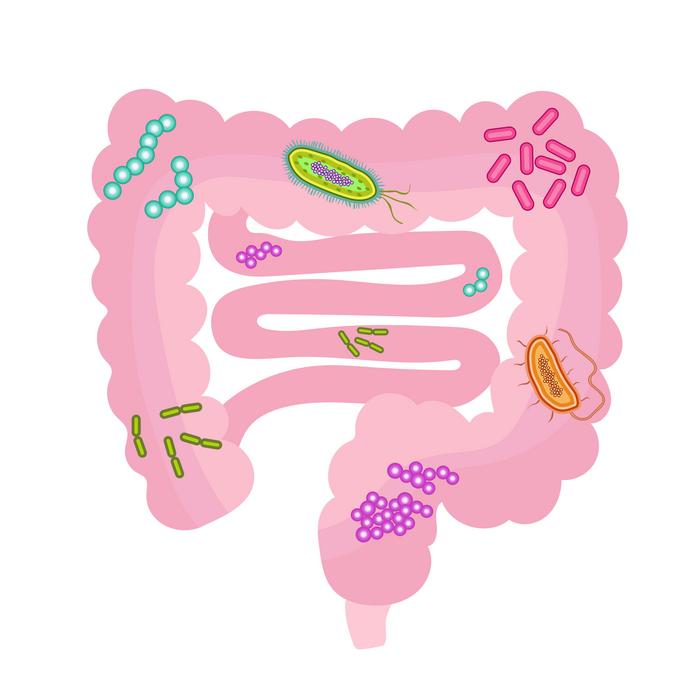
Swallow a Brazil nut, or a forkful of tuna, and you take in a little selenium along with it. What happens next has always been told as a story about you: your gut wall absorbs the mineral, your cells fold it into protective enzymes, your kidneys flush out the surplus. Tidy enough. But a team in Japan has now shown that this account leaves out a crowd of silent partners, the trillions of bacteria living in your intestines, who get first crack at the selenium and rather a lot of say in where it goes.
Their study, in rats, traces a genuine back-and-forth between host and microbe. Eat more selenium and you reshape the bacterial community; that altered community, in turn, changes the chemical fate of the very mineral that reshaped it.
Selenium is one of those nutrients with almost no margin for error. We need it for antioxidant enzymes and for keeping the immune system ticking over, yet the gap between too little and too much is narrow in a way that few other trace elements are. Skimp on it and immunity suffers. Overdo it and you raise your risk of type 2 diabetes and heart trouble. So the body has evolved careful machinery for absorbing the stuff, putting it to work, and getting rid of whatever it cannot use.
Most of that machinery has been studied as if the gut were sterile. It is anything but.
Following a tagged atom through the gut
Kazuaki Takahashi at Chiba University and his colleagues Momoka Yamagata and Yasumitsu Ogra raised rats on three diets, selenium-deficient, adequate, and excessive, then split each group in two. Half kept their normal gut flora. The other half were dosed with a cocktail of antibiotics to knock the microbes back. The researchers then fed every animal a tagged form of selenium, an enriched isotope that they could follow through urine, feces and blood without confusing it for the selenium already on board.
The tag is what makes the work convincing. Track only total selenium and the microbes’ contribution hides in the noise; track the labelled dose and you can watch, more or less in real time, who is doing what to it.
The clearest signal came from a compound called trimethylselenonium, or TMSe, which the body dumps in urine when it has selenium to spare. Rats with their microbes intact, fed the high-selenium diet, excreted roughly five times more TMSe than animals on an adequate diet. Strip out the bacteria with antibiotics and that surge collapsed. Something similar showed up in feces, where a selenium-bearing amino acid called selenomethionine ran about three times higher in animals that still had their gut flora. The microbes, in other words, were not passive bystanders; they were actively churning dietary selenium into new forms, mostly through methylation, the same chemical tagging the body leans on for detox. “Gut microbiota supplies unique selenometabolites, which differ from the original dietary substrates to the host,” says Takahashi. The bugs hand back something other than what went in.
Helpful partner, or quiet competitor
And here is the twist that complicates any simple “microbes help us” reading. When the team looked at how efficiently selenium got built into selenoprotein P, a reliable marker of selenium status, the animals without microbes did better. Suppress the flora and the host soaked up more usable selenium.
One reading is competition, plain and simple: the bacteria and the host both want the mineral, and in lean conditions the bugs grab their share first. Another is that the microbes convert some selenium into forms the body can barely use, such as a volatile compound that gets breathed out rather than banked.
Both can be true, and that is rather the point. Under excess, the same microbial busywork that costs the host some nutritional selenium also looks protective, hustling the surplus out as the less toxic TMSe before it can do harm. Friend or freeloader depends on the dose. The work has obvious limits, three rats per group, a single chemical form of selenium, bacterial functions inferred from gene surveys rather than measured outright, and the authors are careful to say so. Which bacteria actually run these reactions remains an open question, and a Lactobacillus that flourished on an adequate diet wilted under excess, hinting that more selenium is not reliably better for the microbiome either.
Still, if even part of this holds in people, the implication is faintly unsettling and quite useful: the official selenium intake on a label assumes a standard body, when the body it lands in is really a negotiation between you and your particular microbes. “This work will hopefully pave the way for the design of more effective nutrient intake strategies,” Takahashi says. Personalised nutrition has been a buzzword for years. This is a small, concrete reason to think the gut, and not just the diet, belongs in the equation.
Takahashi, K., Yamagata, M. & Ogra, Y. Food Bioscience 79, 108850 (2026)
Frequently Asked Questions
Why would gut bacteria affect how much selenium I actually get from food?
Because they reach the mineral before your body fully does. As dietary selenium passes through the gut, resident microbes chemically transform some of it into compounds that behave differently from what you ate, and in lean conditions they appear to compete with the host for the supply. In rats, animals whose microbes were suppressed actually built selenium into key proteins more efficiently, which hints that your personal flora may be quietly shifting your real intake away from what a food label promises.
Is it true that taking more selenium is always better for you?
No, and this work is another reason to be wary of that idea. Selenium has an unusually narrow safe window, with deficiency weakening immunity and excess linked to higher risk of type 2 diabetes and heart problems. The study adds a wrinkle: a beneficial Lactobacillus thrived at adequate selenium but declined under excess, so overdoing it may not even be good for the microbiome you are trying to support.
How do the microbes actually change the selenium?
Mostly by methylation, attaching small chemical tags that the body also uses for detoxification. The bacteria appear to push selenium toward compounds like the urinary form TMSe and the amino acid selenomethionine, which the host then excretes or handles differently. When researchers wiped out the microbes with antibiotics, production of these particular compounds dropped sharply, pointing straight back at the bugs as the source.
Could this lead to selenium advice tailored to my own gut?
That is the hope, though it is early days. The researchers suggest microbiota-targeted approaches could one day fine-tune how the body uses selenium, which would push nutrition beyond one-size-fits-all recommendations. For now the evidence sits in a small rat study using a single form of selenium, so the leap to personalised human guidelines is still a long one.
Editor’s note: This article was updated on September 14, 2026, to align its headline and wording more closely with the evidence and sources.