

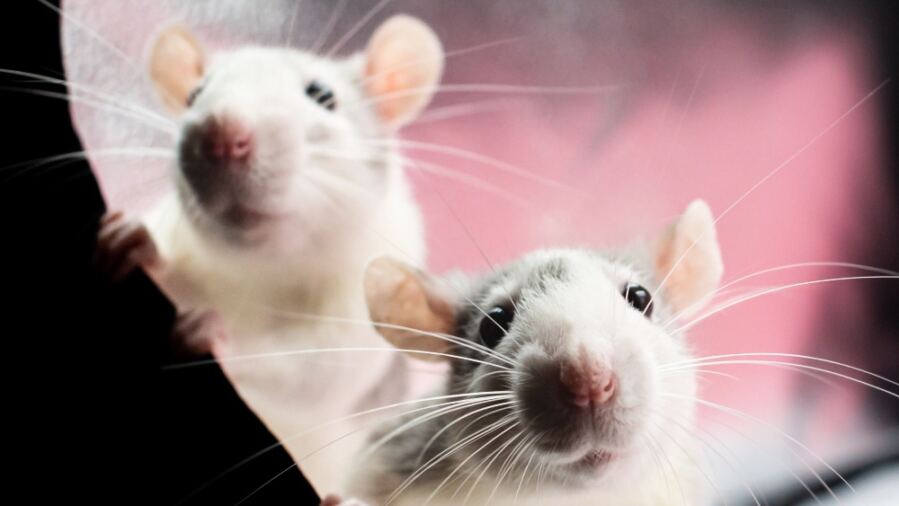
A mouse finds the bait before you do. It is curious by nature, drawn to anything new in its territory, so the little block of poison tucked behind the refrigerator is less a threat than an invitation. It nibbles. In a city street a few doors down, a rat does the calculus differently. It circles the same bait for days, sniffs, retreats, comes back, sniffs again. That difference in temperament, it turns out, may be quietly reshaping which rodents live and which ones die in the cities of the northeastern United States.
Pest controllers had been muttering about it for years. In certain neighbourhoods the rodents simply would not go, no matter how faithfully the traps were baited with the usual chemicals. Something was off.
To find out what, researchers at Rutgers University collected tissue from 147 house mice and 143 Norway rats pulled from urban sites across New York, New Jersey, Pennsylvania and Washington, DC, then read the DNA. They were hunting for changes in a single gene, Vkorc1, that governs how an animal recycles vitamin K. It matters because the most widely used rodent poisons, the anticoagulants, work by jamming exactly that machinery, so the blood never clots and the animal bleeds out internally. Tweak the gene, and the poison loses its grip.
The numbers, when they came back, were not subtle. Among the mice, 84 per cent carried at least one mutation in Vkorc1.
Nearly seventy per cent carried changes already known to help mice shrug off the standard poisons, and about one in five carried two mutations at once. Two of the variants the team turned up had never been recorded in house mice before, which means nobody yet knows whether they help the animals survive or do nothing at all.
“We found that resistance appears to be much more widespread in house mice than many people realized,” says Jin-Jia Yu, the postdoctoral fellow at Rutgers who led the work. “Norway rats also carried genetic mutations, but scientists do not yet know whether most of those mutations affect Norway rats’ susceptibility to rodenticides.”
Why the Mice Are Winning
And there is the genuinely odd part of the story. The rats, by every reputation the more formidable urban survivor, are lagging behind the mice. Only about 35 per cent of the Norway rats carried any Vkorc1 mutation at all, and none of those changes is confirmed to blunt the poisons. The mice are pulling ahead in an evolutionary race the rats are barely running. The likeliest reason has nothing to do with cleverness and everything to do with appetite. Mice are neophilic, biologists’ word for creatures that find novelty irresistible; they investigate, they sample, they eat. So a mouse meets the bait, eats the bait, and either dies or, if it happens to carry the right mutation, survives to breed. Every poisoned bait station becomes a sorting machine, and the survivors pass their luck along.
Rats run the opposite program. They are neophobic, suspicious of anything that was not there yesterday, and that wariness keeps a lot of them away from the poison long enough to never face the test at all.
“Rats are very clever,” says Yu. “They will approach the novel food many times before they really take the food or the bait.” Less exposure, less selection pressure, fewer survivors carrying resistance genes. The rat’s caution is, in a strange way, protecting its own susceptibility.
There is a deeper twist in the rat data, too. American Norway rats descend from a fairly small founding population that crossed from western Europe, and they seem to have arrived with a thin genetic toolkit; European rats carry far more Vkorc1 variants than their American cousins, despite centuries of ships crossing the Atlantic. Whatever resistance American rodents are brewing, it looks to be largely homegrown rather than imported, a local response to decades of local poisoning. Anticoagulants have been in heavy use since the 1950s, when the first generation arrived, followed in the 1970s by tougher compounds that were supposed to overwhelm any resistance the rodents had managed to evolve. Difethialone, one of those tougher second-generation poisons, was the active ingredient at most of the sites the team sampled.
What It Means for the Block You Live On
If the poisons are failing, that is not just an inconvenience for the pest-control trade. Rodents foul food, gnaw through wiring and structures, and ferry diseases and parasites into the places people sleep and eat. Roughly 12 per cent of American households reported seeing rodents in a recent national survey, a figure that climbed to nearly a third in Philadelphia. A poison that quietly stops working is a public-health problem dressed up as a nuisance.
“This research provides some of the first information on rodenticide resistance in the northeastern United States,” says Yu. “By understanding how prevalent the mutations are and where resistance exists, pest management professionals and public health agencies can make better decisions about how to control rodents.”
The fix, the researchers argue, is to stop leaning so hard on the chemistry. That means rotating between different poison types so populations cannot adapt to any single one, and pairing the bait with the unglamorous basics: sealing the gaps rodents squeeze through, cleaning up the food that draws them in, and trapping where it makes sense. There is an environmental dividend, as well. The persistent second-generation anticoagulants accumulate up the food chain, and they keep turning up in birds, raccoons, skunks and other animals that never touched a bait station.
Changlu Wang, the Rutgers urban-pest specialist who coauthored the study, frames it as a moving target. “Studies like this help us understand how rodent populations are changing and how our management strategies need to evolve with them,” he says. The rodents have been adapting to us for as long as we have been trying to kill them, and on this evidence the mice, at least, are adapting faster than we are keeping up.
Yu et al., Pest Management Science (2026), DOI 10.1002/ps.70833
Frequently Asked Questions
Does this mean rat poison just doesn’t work anymore?
Not exactly, but its reliability is slipping in some places, especially against house mice. The Rutgers study found that most urban mice in the northeastern US now carry genetic changes that can help them survive anticoagulant poisons, which is why some infestations shrug off repeated treatment. The poisons still work on susceptible animals, but the proportion of those is shrinking in heavily treated areas.
Why are mice beating the poison faster than rats?
It comes down to behavior rather than brains. Mice are naturally drawn to new things and will readily eat unfamiliar bait, which means every poisoning event weeds out the vulnerable and leaves resistant survivors to breed. Rats are far more cautious around anything new, so fewer of them are ever exposed long enough for resistance to be selected for.
Is rat poison actually dangerous to other animals?
Yes, and that is a large part of why researchers want to reduce reliance on it. The stronger, longer-lasting anticoagulants build up in the bodies of poisoned rodents and pass to whatever eats them, which is why these chemicals keep showing up in birds of prey, raccoons, skunks and other urban wildlife. The push toward traps, sealing and sanitation is partly an attempt to spare those bystanders.
What can actually be done if poison is losing its edge?
The researchers recommend treating chemicals as one tool among several rather than the whole strategy. Alternating between different classes of poison slows resistance, and combining that with blocking entry points, removing food sources and trapping tackles the problem from angles a mutation cannot defeat. There are also non-anticoagulant poisons that work through entirely different mechanisms for cases where chemicals are genuinely needed.
