Fentale Volcano in Ethiopia released at least 38,200 tonnes of methane and at least 2.9 million tonnes of carbon dioxide in early 2025 without erupting, according to satellite measurements published in Nature Geoscience on 19 November 2026.
The team, led by Edna Dualeh at the University of Bristol with researchers including Shubham Sharma at the Space Research Organisation Netherlands (SRON), links the release to a sheet of magma that forced its way through the crust near the volcano. The paper says no satellite had detected methane from a volcano before.
“The observation of a methane outburst from a volcano was a complete surprise,” Dualeh said in a University of Bristol statement.
A dyke, then a gas plume
The magma started moving on 17 December 2024. By 29 December the intrusion, known as a dyke, had spread about 50 km north towards Dofen, and it kept opening until mid-March 2025. About 1.4 cubic kilometres of magma stayed underground.
An independent study in Geophysical Journal International recorded more than 300 earthquakes of magnitude four to 5.9 along the dyke. In January 2025, the UN humanitarian office reported that local authorities put 90,000 people at risk and were evacuating about 75,000.
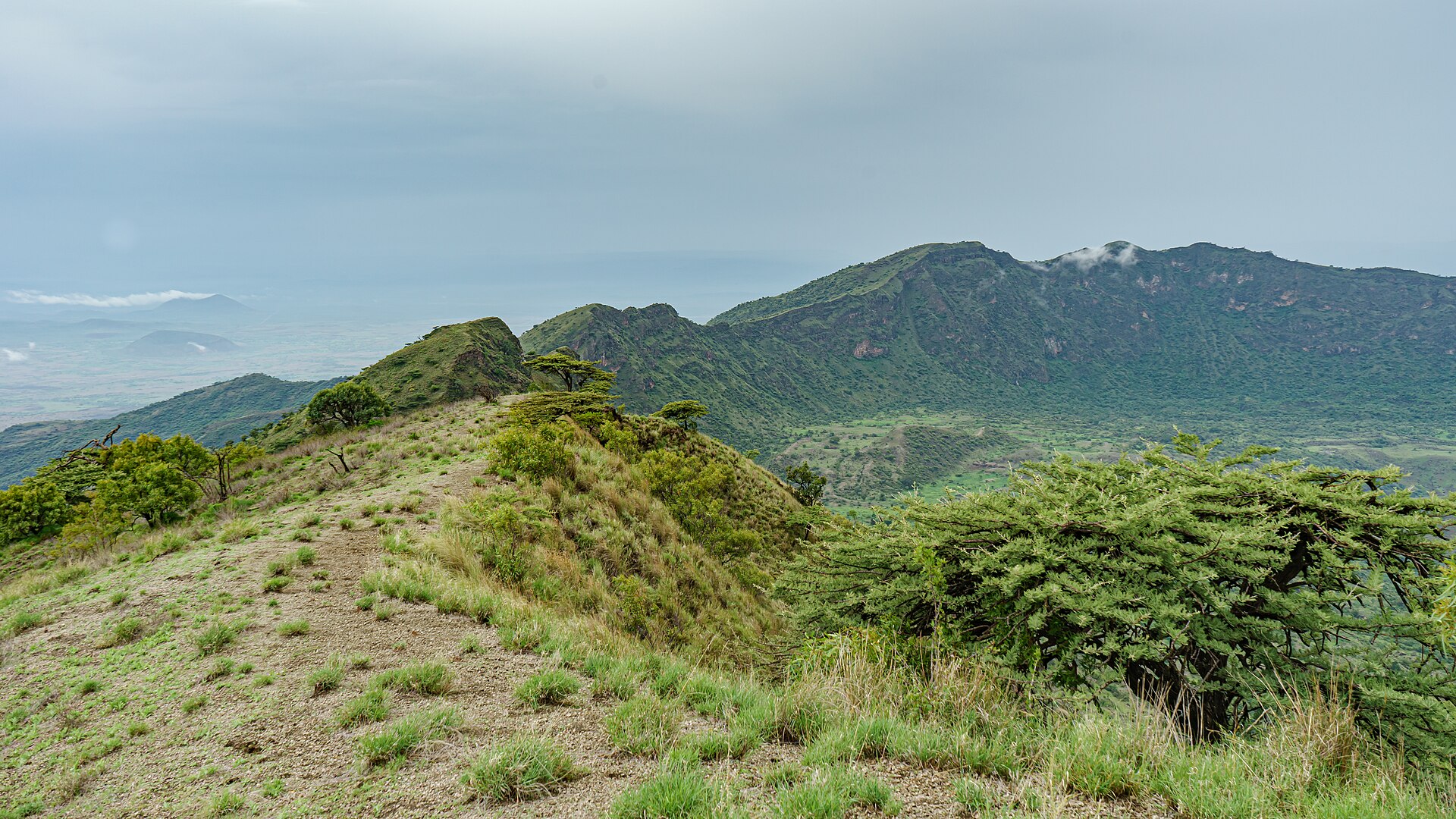
The gas came weeks after the dyke began. A heat anomaly appeared in Fentale’s caldera, the collapsed crater at its summit, late on 14 January 2025. A low white cloud, which the authors read as rich in carbon dioxide, gathered in a hollow the next morning.
On 19 January the TROPOMI instrument on the European Space Agency’s Sentinel-5P satellite picked up a strong methane plume southwest of the volcano. The authors put the emission rate at 157 tonnes an hour, give or take 41 tonnes. A higher-resolution image from the company GHGSat on 31 January traced the methane to the caldera.
Methane was detected until 9 April. About 90 per cent of the total came out in the first month. GHGSat and the Tanager-1 satellite then measured carbon dioxide through February, totalling at least 2.9 million tonnes over 14 days. The paper calls this the largest carbon dioxide emission yet measured from a volcano that was not erupting.
Radar showed the caldera floor sinking by about 22 cm between 15 and 23 January, as the methane poured out. On 14 February part of the caldera collapsed by about 40 metres, at the same time as a magnitude 6.0 earthquake about 20 km down.
Why a volcano would emit methane
Volcanoes normally release very little methane. The paper says well-documented volcanoes in Europe emit less than 0.2 tonnes a day. Fentale’s peak was “approximately four orders of magnitude higher than methane emission rates from other volcanic systems”, the authors write.
Over its first 31 days, the outburst averaged about 1,090 tonnes of methane a day. The paper compares that with the 2015 Aliso Canyon gas leak in California, which averaged 866 tonnes a day over 112 days, and a 2019 gas well blowout in Louisiana at 1,289 tonnes a day over 38 days.
The authors argue the methane came from old sedimentary rock, not from the magma. The Main Ethiopian Rift formed within basins of shale, limestone and sandstone that hold oil and gas at depths of two to five km and are targets for petroleum exploration. Heat from repeated intrusions can cook organic matter in those rocks into gas.
“We propose that the intrusion disrupted an impermeable cap beneath which methane, derived from hydrocarbon-rich sediments, was trapped,” the paper says. The emissions then fell away quickly, which the authors say fits a reservoir losing pressure.
The team estimates that at the slow leak rates seen at other volcanoes in the rift, 38,000 tonnes of methane would build up in 100 to 200 years. That matches the last eruption at Fentale, in about 1810. The authors suggest the system sealed soon after that eruption and stayed sealed until 2025.
A small release with a deep-time link
The outburst was large for a natural source but small on a global scale. The paper puts it at less than 0.1 per cent of the oil and gas industry’s yearly methane emissions. SRON says the event “does not have a noticeable effect on today’s climate change”.
The authors’ interest is in what it shows about the past. Magma pushing into carbon-rich rock has been linked to sudden warming episodes, such as the Palaeocene-Eocene Thermal Maximum about 56 million years ago. The paper calls the East African Rift a possible modern analogue, “albeit at a much smaller scale”.
The gas is also a hazard in its own right. Methane and carbon dioxide are colourless and odourless and can displace oxygen. Fentale’s caldera is uninhabited, but the authors note that other calderas in the rift are home to large populations. No casualties were reported at Fentale.
What the study cannot show
The source of the methane is an inference. No one measured the carbon isotopes of Fentale’s gas, the standard test of where methane comes from. The authors rely instead on isotope values from other volcanoes in the rift, the local geology and the sheer size of the release.
The cap-rock explanation is a proposal, built from satellite data with few observations on the ground. A single event cannot show how often such outbursts happen. TROPOMI has only provided global coverage since 2018, so earlier releases would probably have gone unseen. The authors call for more ground-based measurements and continued satellite monitoring of volcanoes in rifts and sedimentary basins.
Spot an error in this article? Email [email protected]