

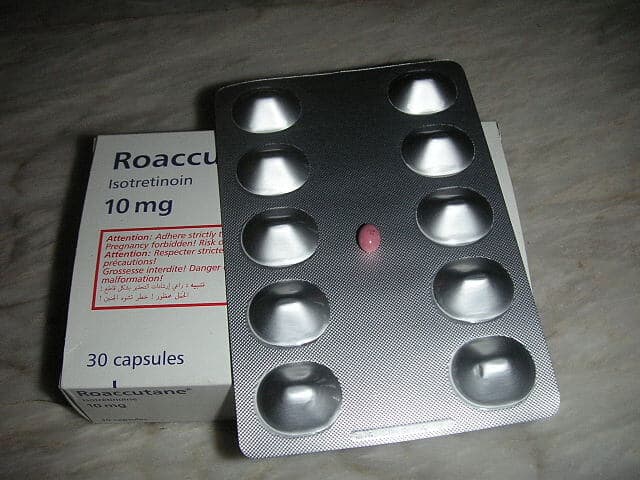
What if a medication once known only for fighting acne could help men with no sperm become biological fathers?
A new study published in the Journal of Assisted Reproduction and Genetics offers an answer that might surprise many: isotretinoin, a derivative of vitamin A, helped 37 percent of severely infertile men in the trial produce motile sperm through ejaculation, making in vitro fertilization possible without surgery.
The finding could change the path to parenthood for thousands of men diagnosed with nonobstructive azoospermia or cryptozoospermia, conditions that typically require invasive testicular procedures, or leave them without options at all.
A Promising Path Without Surgery
The study, led by researchers from The Turek Clinic and the University of Washington, treated 30 men with a six-month course of oral isotretinoin, dosed at 20 mg twice daily. The participants had no sperm or extremely low sperm levels in their semen. Most had already undergone unsuccessful surgical sperm retrieval.
- 11 of 30 men (37%) developed reliable, motile ejaculated sperm
- 100% of men with cryptozoospermia responded to treatment
- At least one live birth and several euploid embryos resulted from IVF using the recovered sperm
- The treatment reduced the need for invasive testicular surgery
“Avoiding surgical procedures to get sperm for sterile men opens up new, less invasive paths to family building,” said Dr. Stephanie Page, Professor of Medicine at the University of Washington, who was not involved in the study.
Why Vitamin A?
Retinoic acid, the active form of vitamin A, is crucial for sperm development. It’s involved in the transformation of early-stage germ cells into mature sperm and is often deficient in the testes of infertile men. Earlier pilot studies hinted that retinoic acid could stimulate sperm production. This new trial builds on that by showing measurable success in a clinical setting.
The researchers found that men with early or late maturation arrest—the point at which developing sperm cells stop maturing—had the highest response rates. Among these men, 54 percent responded to isotretinoin.
From Skin to Sperm: Repurposing a Familiar Drug
Isotretinoin is more commonly recognized under its brand name, Accutane, a treatment for severe acne. It is not currently approved by the FDA for treating infertility. However, this study and earlier research show it may restore sperm production in men previously considered untreatable.
“Intratesticular retinoic acid deficiency may underlie some forms of severe male factor infertility,” the authors wrote. “Treatment with isotretinoin increases sperm production in some men with NOA or cryptozoospermia to the point of obviating the need for testicular sperm retrieval procedures.”
Risks and Side Effects
Side effects were common but mostly manageable. All participants reported dry skin and chapped lips. Other issues included rash (13%), irritability (47%), and changes in cholesterol levels (17%). One participant dropped out due to anxiety.
Importantly, isotretinoin is a known teratogen, meaning it can cause birth defects if taken during pregnancy. All patients were enrolled in the FDA’s iPLEDGE program to ensure safe usage and monitoring.
What Happens Next?
The Turek Clinic has already launched a clinical program offering this six-month protocol to qualifying patients. The results, while early, suggest a possible shift in how male infertility is treated, using a pill instead of a scalpel.
The study authors acknowledge limitations: it was single-arm and uncontrolled, and larger studies are needed to confirm the findings and refine the treatment protocol. But for many men who had no hope of becoming biological fathers, this research opens a new chapter.
As Dr. Paul Turek, senior author and founder of The Turek Clinic, wrote, “By inducing ejaculated sperm in these patient cohorts, it obviates the need for complex and invasive sperm retrieval procedures.”
Journal: Journal of Assisted Reproduction and Genetics