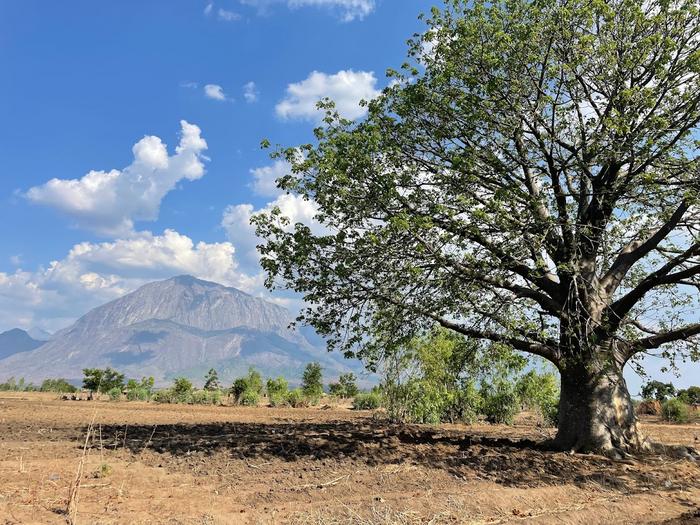
The mbula plum does not look like a solution to anything. It is a scrubby, slow-growing thing, common across the woodlands of Malawi, the sort of tree a passer-by might walk straight past. But its flowers feed the bees that make honey, its fruit is loaded with antioxidants, and its bark and leaves have been used for generations to treat pneumonia, earaches, even cataracts. One tree, a dozen uses. And across Africa, in the rush to put trees back into the ground, species like it are being left out.
That is the uncomfortable argument at the heart of a new Perspective in PNAS Nexus, led by Emilie Vansant at the University of Copenhagen. Restoration, she and her colleagues contend, has a blind spot. We talk about it as if planting trees were straightforwardly good. It is more complicated than that.
Consider the scale of what’s happening. More than a billion dollars has been pledged for landscape restoration across the African continent, much of it under the banner of AFR100, an initiative aiming to restore 100 million hectares by 2030 with commitments from thirty-four countries. The money is there. The political will is there. But the deadlines that drive these schemes tend to reward speed, and speed favours a small cast of fast-growing exotics: eucalyptus, pine, the reliable workhorses that hit area targets and turn a return. Over 60 percent of AFR100’s agroforestry projects, the team notes, lean on non-indigenous species.
Here’s the catch. A field of identical pines is not a forest, not really.
Low-diversity plantations are brittle. They burn more easily, succumb to pests and disease, drink down groundwater, and buckle under the droughts and freak weather that climate change keeps delivering. Introduce a vigorous exotic in bulk and it can turn invasive, muscling out whatever grew there first. And most plantation favourites, pine and eucalyptus among them, produce nothing you’d want to eat. So you end up with a landscape that is greener on a satellite map but no richer for the people living in it.
Which is the part that tends to get overlooked. Trees feed people. Across Africa, forests and farm trees supply fruits, nuts, seeds and leafy vegetables that carry vitamin A, zinc, iron, folate, the micronutrients that diets so often lack. Roughly 30 percent of African children under five are stunted, a marker of chronic malnutrition, and in Malawi the figure is higher still, about a third. When the trees go, a food source goes with them, off the books.
A country betting big on trees
Malawi makes a sharp test case. It is a densely populated place where more than 80 percent of people live rurally and lean on the land, and it has lost some 17 percent of its tree cover this century. It has also made an extraordinary promise: to restore more than 40 percent of its entire land area, a far larger share than most countries have dared pledge. The appetite for restoration, in other words, is enormous. The question is what gets planted.
To find out, Vansant’s team ran workshops and surveys with 21 civil society organisations running 39 restoration projects, spread across all 28 districts of the country. What they heard was striking. Local practitioners wanted to plant native food trees. Wild loquat, mbula plum, sour plum, the species woven into local diets and remedies and stories. The enthusiasm was there. What was missing was the know-how, or rather, access to it.
Because here lies the injustice of the whole business. For an exotic like mango or guava, the manuals exist; seed sourcing, nursery care, planting technique, all of it codified, all of it a few clicks away, the product of decades of government and commercial investment. For wild loquat, a fruit Malawians actually prize, almost nothing. Commercial breeders never bothered. So practitioners reported turning to the local forest itself for seed, in 87 percent of projects, scavenging from the wild because the tidy supply chains that exotics enjoy were never built for native species.
Planting is the easy part
And getting a seedling into the soil, it turns out, is only the opening move. The harder one is keeping it alive. Poor seedling survival came up again and again in the workshops, and the wider record is sobering: one review of 174 tree-planting organisations found just 5 percent measured whether their trees survived or did any upkeep after planting. Five percent. The rest, presumably, counted the saplings going in and called it a day. A study in Rwanda tracked survival of 30 to 50 percent over four years, the losses chalked up to weak monitoring. Native trees, with their narrower tolerances, can be fussier still about where they’ll thrive, which makes the neglect bite harder.
None of this means exotics have no place. Mango has been grown in Malawi so long it’s effectively part of the local food culture now, and the authors are clear that noninvasive imports can earn their keep. The argument isn’t purist. It’s about balance, and about what the current balance costs.
There’s a commercial thread here too, and it might be the most hopeful one. Take baobab: its tangy fruit pulp won “novel food” approval in the EU and US back in 2008, and now turns up in Malawi as ice lollies, juices, powders, jams. A wild tree, in other words, became an income stream. Build the processing and storage to match, the standards, the cold chains, the packaging, and a native fruit stops being merely something you forage and becomes something you sell. That economic pull, the researchers suggest, may do more to keep these trees in the ground than any planting target ever could.
What Vansant and her colleagues are really pushing for is a shift in how we keep score. Away from hectares planted, that satisfying headline number, and towards something messier and more honest: trees that live, that feed people, that belong where they’re put. The UN has just adopted dietary quality as a Sustainable Development Goal indicator, which means, for once, the funding and the need might be looking in the same direction. Whether the restoration machine can slow down enough to plant the right trees, and then, the unglamorous bit, actually tend them, is the open question. The mbula plum, for its part, has been doing its dozen jobs all along. Someone just has to plant it.
Source: Vansant, E. et al. “Restoring indigenous trees can help combat malnutrition in Africa.” PNAS Nexus (2026). https://doi.org/10.1093/pnasnexus/pgag156
Frequently Asked Questions
Why would planting trees ever be a bad thing for nutrition?
It isn’t the planting that’s the problem, it’s what gets planted. Large restoration schemes often favour fast-growing exotics like pine and eucalyptus that hit area targets quickly but produce nothing edible, so a landscape can gain tree cover while losing the fruits, nuts and leaves that local diets depend on. Swap in native food trees and you can serve both goals at once. The catch is that the know-how for growing those native species is far harder to come by.
Is it true that most restoration projects don’t check whether their trees survive?
Remarkably, yes. One review of 174 tree-planting organisations found only about 5 percent measured survival rates or maintained trees after planting, meaning the headline figure, trees planted, can mask heavy losses in the years that follow. Native species, which tend to have narrower environmental tolerances, are especially vulnerable to being planted and then forgotten. It’s a big part of why some researchers want the whole field to shift from planting to protecting.
How does a wild tree turn into something that actually helps a household’s income?
The baobab is the model. Its fruit pulp gained “novel food” approval in the EU and US in 2008, and in Malawi it now appears in juices, powders, jams and ice lollies, turning a foraged wild fruit into a sellable product. The missing pieces are usually processing, storage and packaging infrastructure, plus quality standards, which is where targeted investment could make the difference. Get that right and the tree becomes worth protecting for purely economic reasons.
What’s stopping practitioners from just planting native food trees right now?
Mostly a knowledge gap. For popular exotics like mango, seed sourcing, nursery management and planting techniques are well documented and easy to access, the legacy of decades of commercial and government investment. For prized native species like wild loquat, that information barely exists, so growers often end up gathering seed straight from the forest. Closing that gap is exactly what the study’s authors are calling for.