

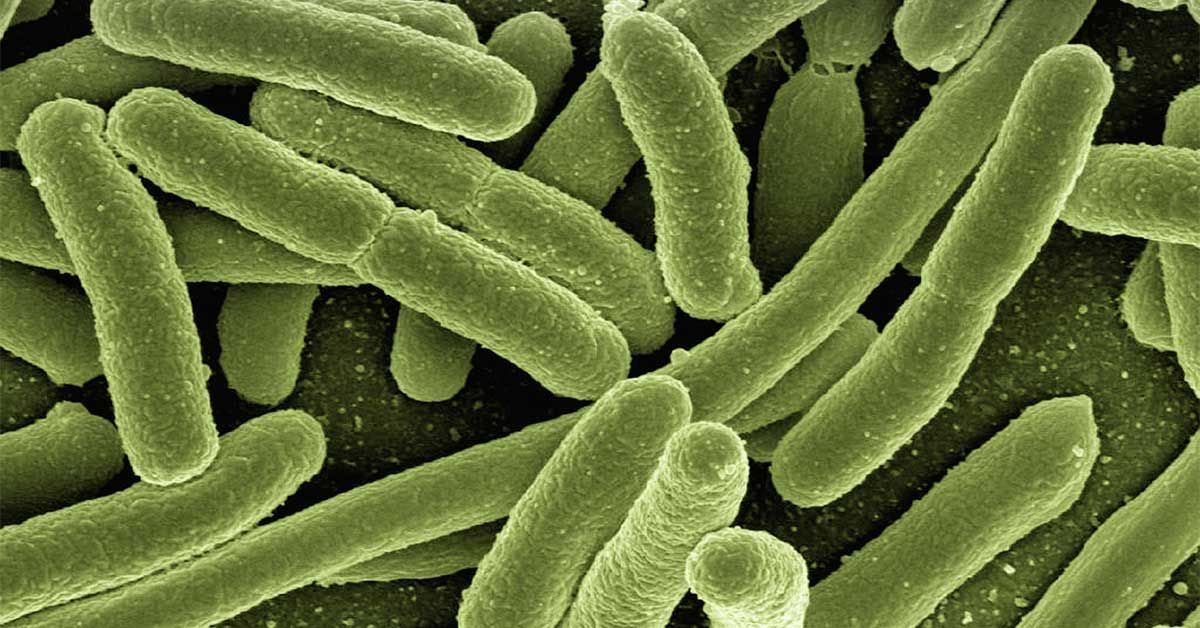
Australian scientists have used artificial intelligence to create custom proteins that can kill antibiotic-resistant E. coli bacteria by starving them of essential nutrients.
The breakthrough demonstrates how AI can rapidly design biological weapons against superbugs that have evolved resistance to traditional antibiotics, potentially transforming how we combat dangerous infections.
The research, published in Nature Communications, represents the first time Australian scientists have used AI to generate ready-to-use therapeutic proteins. What would normally take decades to develop through traditional methods was accomplished in a matter of weeks using computational design tools.
Targeting Bacterial Iron Theft
The team focused on disrupting a critical survival mechanism used by pathogenic E. coli. These bacteria steal iron from human hemoglobin using a specialized transporter protein called ChuA, which extracts heme—the iron-containing component of blood—directly from host proteins.
Iron is essential for bacterial growth and survival, but human immune systems sequester free iron as a defense mechanism. To overcome this, E. coli evolved ChuA as a molecular pirate that can rapidly extract heme from hemoglobin without forming stable complexes, making it difficult to block with traditional approaches.
Using structural modeling and AI-driven protein design tools, the researchers created artificial proteins that bind to ChuA’s extracellular loops, physically blocking its ability to interact with hemoglobin and steal iron.
Rapid Design and Testing Process
The team used RFdiffusion and ProteinMPNN—freely available AI tools—to generate approximately 20,000 potential protein designs. After computational screening, they selected 96 candidates for laboratory testing.
The results exceeded expectations. Several designed proteins showed remarkable potency:
- Protein G7 achieved 42.5 nanomolar inhibition of bacterial growth
- Multiple designs worked at sub-100 nanomolar concentrations
- The proteins specifically blocked heme extraction from hemoglobin without affecting other bacterial functions
- CryoEM structures confirmed the designs matched computational predictions almost perfectly
This represents a success rate far higher than traditional drug discovery approaches, where most compounds fail during development.
Precision Targeting Strategy
The designed proteins work through competitive inhibition—they bind to the same site on ChuA that normally interacts with hemoglobin, preventing the bacteria from accessing this crucial iron source. Importantly, the proteins don’t interfere with free iron transport, meaning they specifically target the hemoglobin-stealing mechanism.
Bio-layer interferometry studies revealed that the artificial proteins bind to ChuA with dissociation constants ranging from 71 to 127 nanomolar—comparable to the natural ChuA-hemoglobin interaction. This high affinity ensures effective competition for the binding site.
The research validated their approach by showing that the proteins had no effect when bacteria were provided with alternative iron sources, confirming the mechanism’s specificity.
Structural Validation
CryoEM structures of the ChuA-protein complexes showed remarkable agreement with computational predictions, with root mean square deviations of only 0.6 Å. This close match demonstrates the accuracy of current AI protein design tools and validates the structural models used to understand bacterial iron acquisition.
The structures revealed that the designed proteins occupy the predicted hemoglobin binding site while causing minimal disruption to other ChuA functions, explaining their selective inhibition of heme extraction.
Broader Implications
According to Dr. Rhys Grinter, who co-led the study, this approach could revolutionize antimicrobial development. “These new methods in deep learning enable efficient de novo design of proteins with specific characteristics and functions, lowering the cost and accelerating the development of novel protein binders and engineered enzymes,” he explained.
The research establishes Australia’s first AI protein design platform capable of generating therapeutic proteins from scratch. PhD student Daniel Fox, who performed much of the experimental work, emphasized the democratizing potential: “It’s important to democratize protein design so that the whole world has the ability to leverage these tools.”
The platform can now engineer proteins for various applications beyond antimicrobials, including pharmaceuticals, vaccines, and diagnostic tools. This positions Australia alongside the US and China in having indigenous AI-driven protein design capabilities.
With antibiotic resistance representing a growing global health crisis, this AI-powered approach offers hope for developing new classes of antimicrobials that work through novel mechanisms—potentially staying ahead of bacterial evolution and providing sustainable solutions for treating dangerous infections.