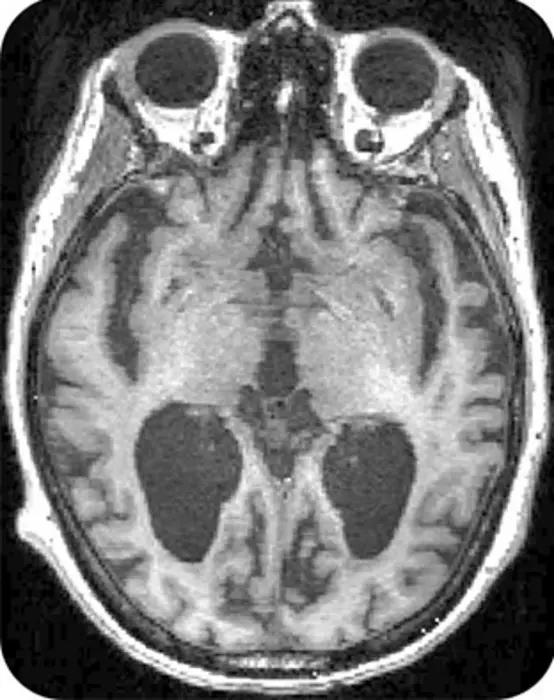
A supposedly unsuccessful Alzheimer’s drug trial has yielded surprising results after researchers used artificial intelligence to separate patients into fast and slow disease progressers—revealing that one group experienced a 46% reduction in cognitive decline.
The discovery, published today in Nature Communications, demonstrates how AI could dramatically reshape drug development for dementia by identifying which patients are most likely to benefit from treatment. The approach potentially cuts clinical trial costs and accelerates the search for effective therapies in a field plagued by a 95% failure rate.
When “Futile” Becomes Promising
The AMARANTH trial of lanabecestat, a drug designed to clear toxic amyloid protein from the brain, was terminated early after showing no significant benefit across all participants. But when Cambridge University researchers applied their AI model to re-analyze the data, a different story emerged.
The AI system, trained on brain scans, genetic data, and amyloid measurements, split the 1,354 trial participants into two groups: those progressing slowly toward full-blown Alzheimer’s and those declining rapidly. While the drug failed to slow cognitive decline in fast progressers, it proved remarkably effective in the slow-progressing group.
“Promising new drugs fail when given to people too late, when they have no chance of benefiting from them,” said Professor Zoe Kourtzi from Cambridge’s Department of Psychology, who led the research. “With our AI model we can finally identify patients precisely, and match the right patients to the right drugs.”
The Right Patient at the Right Time
The key insight revolves around timing. Alzheimer’s develops gradually through a cascade of brain changes, beginning with amyloid protein deposits that eventually trigger widespread damage. The AI analysis revealed that slow progressers had:
- Lower amyloid burden in their brains
- Better preserved brain tissue in memory-critical regions
- Superior performance on cognitive tests
These patients were essentially at earlier disease stages where intervention could still make a difference. Fast progressers, by contrast, had already sustained too much brain damage for the amyloid-clearing drug to help with symptoms, even though it successfully reduced protein buildup.
The finding aligns with recent FDA-approved Alzheimer’s drugs like lecanemab, which showed modest benefits but only in carefully selected early-stage patients. The Cambridge AI approach could make such patient selection far more precise.
A 90% Reduction in Trial Size
Beyond identifying effective treatments, the AI stratification offers a practical solution to clinical trials’ enormous costs and complexity. The researchers calculated that focusing on slow progressers could reduce required trial participants by 90%—from 762 patients per treatment group to just 82.
“This makes trials more precise, so they can progress faster and cost less, turbocharging the search for a desperately-needed precision medicine approach for dementia treatment,” Kourtzi explained.
The AI model proved three times more accurate than standard clinical assessments based on memory tests, MRI scans, and blood tests in predicting disease progression. It analyzes the complex relationships between brain imaging, genetic factors, and protein levels to generate individual patient prognosis scores.
From Research to Reality
Health Innovation East England, the NHS innovation arm, is now supporting efforts to translate this AI-enabled approach into clinical practice. The implications extend beyond trial design to potentially transforming how doctors diagnose and treat dementia patients.
“This AI-enabled approach could have a significant impact on easing NHS pressure and costs in dementia care by enabling more personalised drug development,” said Joanna Dempsey, Principal Advisor at Health Innovation East England.
The research addresses a critical need in dementia care, where the global burden is expected to triple by 2050. Despite $43 billion spent on research and development over three decades, effective treatments remain elusive. The disease currently costs $1.3 trillion annually worldwide.
For Kourtzi, the work carries personal significance. “Like many people, I have watched hopelessly as dementia stole a loved one from me,” she said. “We’ve got to accelerate the development of dementia medicines. Over £40 billion has already been spent over thirty years of research and development – we can’t wait another thirty years.”
The researchers envision scaling their approach to support more sophisticated trial designs that could test multiple treatments simultaneously, potentially accelerating the discovery of precision medicine interventions for different patient subgroups.
While the AI model currently requires PET scans and MRI imaging, future versions might work with less invasive blood tests, making the approach more accessible and cost-effective for widespread clinical use.