

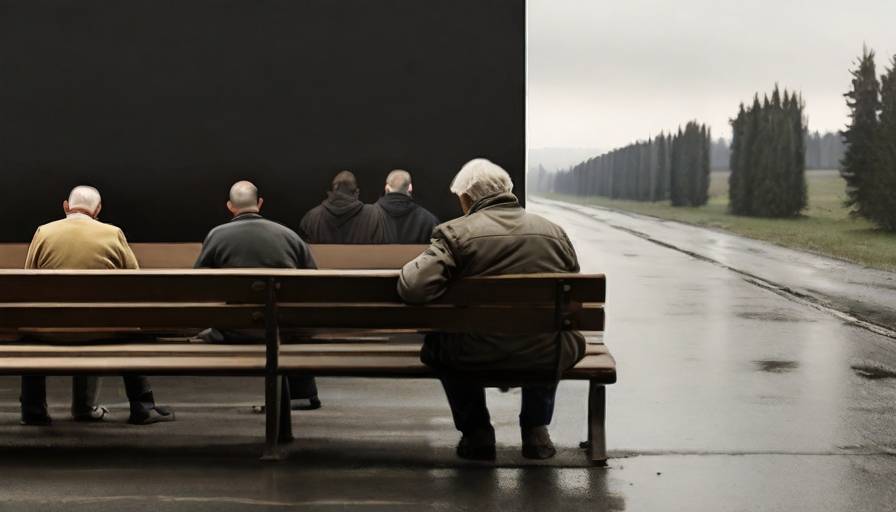
On paper, American cities look dense, dynamic, and interconnected. But where people actually go each day tells a more fractured story.
A new study from University College London researchers finds that every major U.S. city is shaped by hidden patterns of separation that divide residents by income, race, and geography. Using anonymized mobile phone data from millions of people across 383 cities, the team discovered a recurring structure: rings of isolation in affluent suburbs and pockets of segregation closer to urban cores.
The study, published in Nature Cities, tracked daily movements from home neighborhoods to everyday destinations like restaurants, shops, museums, and hospitals between 2019 and 2022. By linking those trips to census data about income and neighborhood demographics, the researchers mapped who actually shares space with whom.
Rings on the Edge, Pockets at the Center
The pattern appeared everywhere. Around the outskirts of most cities, researchers found suburban rings where residents largely interact only with people of similar income and background. These areas, often wealthier and majority white, attract few visitors from outside their own socioeconomic circles.
Closer to downtown, the structure flips. Many cities contain distinct pockets of segregation where residents are surrounded by people like themselves and rarely encounter outsiders. These areas are often poorer and predominantly non-white. Residents may travel elsewhere for work or services, but people from other neighborhoods rarely come in.
Lead author Andrew Renninger, a PhD candidate at UCL’s Centre for Advanced Spatial Analysis, says these invisible boundaries shape everyday life far more than city maps suggest. The sentence before the quote below introduces his perspective on why this matters.
“Cities are supposed to be melting pots – places where people from different backgrounds mix, share ideas, and create opportunities. But our research shows that many U.S. cities are divided by invisible boundaries that shape who interacts with whom every single day.” – Andrew Renninger, UCL Centre for Advanced Spatial Analysis
The study is the first to analyze these dynamics at what researchers call the mesoscale. That is the neighborhood level between individual behavior and citywide averages. This scale reveals structures that disappear when cities are viewed only as whole units.
Why Daily Movement Matters
Not all segregation looks the same. Some neighborhoods host amenities that draw a diverse crowd, even if local residents mostly avoid them. Others send residents out into the city but rarely receive visitors in return. These differences matter because daily exposure to diverse people is closely tied to opportunity, social mobility, and economic growth.
The researchers found that distance from downtown, income, and neighborhood racial composition strongly predict whether an area becomes isolated or segregated. Amenities near city centers tend to attract more diverse visitors, except in majority non-white neighborhoods, where segregation remains high regardless of location.
Historic housing policies also leave a clear fingerprint. Areas shaped by past discriminatory practices, including redlining, are more likely to show entrenched segregation today. The study points to places like South Central Los Angeles, Chicago’s South Side, and the South Bronx as examples where historic policy decisions still shape daily social exposure.
The COVID-19 pandemic briefly intensified these patterns. Segregation and isolation peaked in April 2020, when mobility collapsed and people stayed close to home. By 2022, most cities returned to pre-pandemic levels, though some, including Boston and San Francisco, remained more isolated than before.
The authors argue that cities could use insights from this kind of data to design better interventions. Strategic zoning, investments in downtowns, and clusters of shared amenities placed between isolated zones could help encourage more mixing and reduce inequality.