

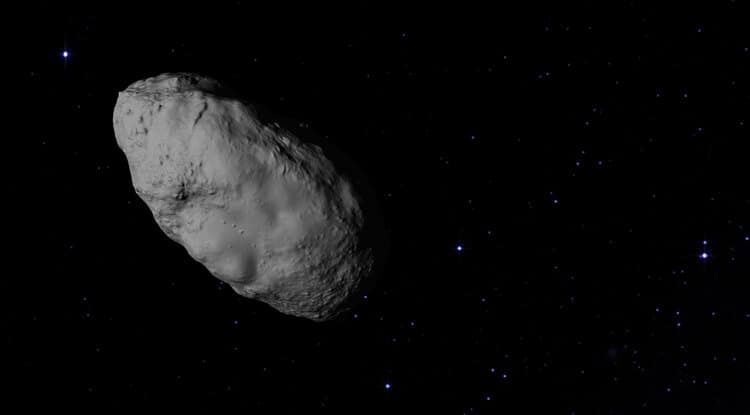
The sample was barely a teaspoon’s worth of dark, precious dust. Scooped from the surface of asteroid Bennu by NASA’s OSIRIS-REx spacecraft and delivered to Earth in September 2023, it had travelled roughly 4.6 billion years through space to reach a lab bench at Penn State. And now, using custom-built instruments sensitive enough to weigh isotopic differences at the picomole scale, a team of researchers has coaxed a secret from that pinch of grit that could rewrite how we think about the origins of life’s most basic ingredients.
For decades, the prevailing story went something like this: amino acids, the molecular building blocks that link together to form proteins, were assembled inside asteroids when warm liquid water trickled through rock, mixing hydrogen cyanide, ammonia and simple carbon compounds in a reaction called Strecker synthesis. It is a tidy explanation, well supported by studies of the Murchison meteorite, a carbon-rich rock that slammed into the Australian outback in 1969 and has been picked over by chemists ever since. But when Allison Baczynski and Ophélie McIntosh at Penn State turned their instruments on Bennu’s glycine, the simplest amino acid and a key marker of prebiotic chemistry, they found isotopic fingerprints that didn’t fit the old story at all.
“Our results flip the script on how we have typically thought amino acids formed in asteroids,” says Baczynski, an assistant research professor of geosciences. “It now looks like there are many conditions where these building blocks of life can form, not just when there’s warm liquid water.”
The clue lay in carbon isotopes. In Murchison, the two carbon atoms in glycine carry strikingly different isotopic signatures, one heavy and one light, which matches what you’d expect if each carbon came from a different chemical precursor during Strecker synthesis in an aqueous environment. Bennu’s glycine, though, told a different tale. Its two carbons were isotopically similar, within analytical uncertainty of each other. That pattern is hard to square with the warm-water recipe.
Instead, the team hypothesises that Bennu’s glycine formed mainly through a process involving ultraviolet radiation blasting ices containing water, methanol, hydrogen cyanide and ammonia, out in the cold, dark fringes of the early solar system, long before those materials were swept up into the asteroid’s parent body. In this modified radical-radical reaction, both carbon atoms in glycine would derive from the same precursor (hydrogen cyanide), neatly explaining why their isotopic values look so alike. The idea is bolstered by nitrogen isotope data: Bennu’s amino acids are heavily enriched in the heavier nitrogen-15 isotope, with values ranging from +170 to +277 per mille, far higher than those found in Murchison. Such enrichment is a hallmark of cold, interstellar-type chemistry.
“One of the reasons why amino acids are so important is because we think that they played a big role in how life started on Earth,” says McIntosh, a postdoctoral researcher at Penn State. “What’s a real surprise is that the amino acids in Bennu show a much different isotopic pattern than those in Murchison, and these results suggest that Bennu and Murchison’s parent bodies likely originated in chemically distinct regions of the solar system.”
And there was another twist lurking in the data. Amino acids come in two mirror-image forms, left-handed (L) and right-handed (D), like a pair of gloves. Scientists had generally assumed that these chiral twins should carry identical isotopic signatures, since they’re built from the same atoms in the same arrangement, just flipped. But in the Bennu sample, D-glutamic acid had a nitrogen isotope value of +277 per mille, some 87 per mille higher than its L counterpart. That’s a sizeable gap, and nobody is quite sure what to make of it yet. The team has floated three possibilities: the two forms might have drawn nitrogen from different reservoirs within the asteroid’s parent body; nitrogen could have swapped between amino acids and mineral-bound ammonium in clays; or minerals might have preferentially grabbed one mirror form over the other, subtly altering its chemistry. All three remain speculative, but the finding challenges a long-standing assumption and could complicate how scientists use isotope ratios to check for terrestrial contamination in meteorite samples.
None of this would have been possible without some rather bespoke kit. Baczynski’s lab uses a technique called pico-CSIA, capable of measuring carbon isotopes in compounds present at vanishingly small concentrations, paired with a GC-Orbitrap mass spectrometer for nitrogen isotope work. “Here at Penn State, we have modified instrumentation that allows us to make isotopic measurements on really low abundances of organic compounds like glycine,” Baczynski says. “Without advances in technology and investment in specialized instrumentation, we would have never made this discovery.”
The results, published today in the Proceedings of the National Academy of Sciences, don’t rule out Strecker synthesis entirely for Bennu. Formaldehyde, the specific aldehyde precursor for glycine in that pathway, hasn’t yet been isotopically measured in Bennu samples, so there’s a slim chance the numbers could still work out. But taken together, the carbon isotope patterns, the nitrogen enrichment and the alignment with what we know about photochemical ice processing all point towards a colder, more radiation-drenched origin for at least some of these molecules. The amino acids that survived on Bennu, the researchers suggest, may have been forged in primordial ices and then preserved through billions of years of geological upheaval, including multiple bouts of aqueous alteration on the parent body itself.
It is a reminder that the solar system’s chemistry was (and perhaps still is) more inventive than we’d given it credit for. Warm ponds aren’t the only crucible for life’s raw materials. Frozen, irradiated expanses of ice can apparently do the job too.
“We have more questions now than answers,” Baczynski says. “We want to know if they continue to look like Murchison and Bennu, or maybe there is even more diversity in the conditions and pathways that can create the building blocks of life.” With OSIRIS-REx’s remaining Bennu material still available for study, and meteorites from other parent bodies waiting in the wings, the next few years could get interesting.
Study link: https://www.pnas.org/doi/10.1073/pnas.2517723123