Skip to content
ScienceBlog.com
  • Featured Blogs
    • EU Horizon Blog
    • ESA Tracker
    • Experimental Frontiers
    • Josh Mitteldorf’s Aging Matters
    • Dr. Lu Zhang’s Gondwanaland
    • NeuroEdge
    • NIAAA
    • SciChi
    • The Poetry of Science
    • Wild Science
  • Topics
    • Brain & Behavior
    • Earth, Energy & Environment
    • Health
    • Life & Non-humans
    • Physics & Mathematics
    • Social Sciences
    • Space
    • Technology
  • Our Substack
  • Follow Us!
    • Bluesky
    • Threads
    • FaceBook
    • Google News
    • Twitter/X
  • Contribute/Contact

Cell Press

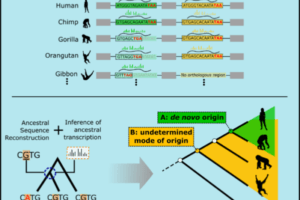
This graphical abstract depicts the rise of new genes in humans.

Humans continue to evolve with the emergence of new genes

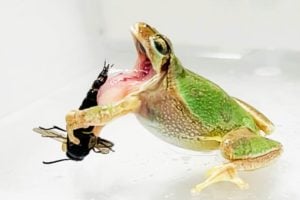
A tree frog (Dryophytes japonica) spitting out a male wasp (Anterhynchium gibbifrons) after being stung (by pseudo-stings)

Male wasps sting predators with their genitals

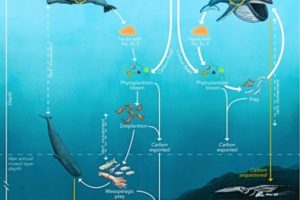
Whale diagram

Whales (yes whales) could be a valuable carbon sink

Stem cells used to generate mini brains of the last male Sumatran rhino

AI rendering of bees and electricity

Insects contribute to atmospheric electricity

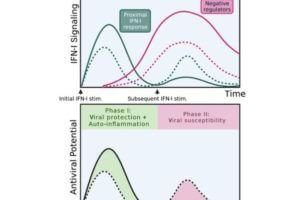
Oscillations of hyper- and hypo-response to the potent cytokine IFN-I in individuals with Down syndrome predispose to both lower incidence of viral disease and increased infection-related morbidity and mortality

Viral infections are less frequent but more severe in people with Down syndrome

Identifying which action soothes crying infants the best

Scientists say the best way to soothe a crying infant is by carrying them on a 5-minute walk

Dogs cry more when reunited with their owners

In the culture medium a robotic finger covered with human living skin self heals after researchers covered its wound with a collagen sheet

Scientists craft living human skin for robots

A dolphin with a fungal infection on its dorsal fin

Watch dolphins line up to self-medicate skin ailments at coral “clinics”

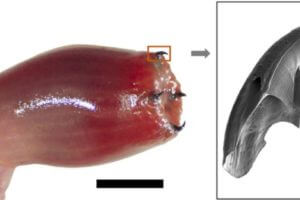
Left: Image of the everted proboscis of Glycera dibranchiata with its four jaws exposed, Right: Scanning electron microscope image of a Glycera jaw (Scale bar, 0.5 mm)

Scientists have discovered how bloodworms make their unique copper teeth

Bringing back the extinct Christmas Island rat

Hippos recognize each other’s voices, respond differently to calls of strangers

Dolphin females have working clitoris, anatomical evidence suggests

Older posts
Newer posts
← Previous Page1 … Page3 Page4 Page5 Next →
Substack subscription form sign up

Comments

  • Not Buying Yer Bullshit on More Than a Third of Americans Have Lost Relationships Over Politics
  • Marco Messina on More Than a Third of Americans Have Lost Relationships Over Politics
  • Anon on Why Fructose Behaves Less Like a Calorie and More Like a Hormone
  • Mark Mellinger on Living Plastic Can Self-Destruct on Command
  • Marie Feret on The Silent Frequency That Makes Old Buildings Feel Haunted
© 2026 ScienceBlog.com | Follow our RSS / XML feed