Skip to content
ScienceBlog.com
  • Featured Blogs
    • EU Horizon Blog
    • ESA Tracker
    • Experimental Frontiers
    • Josh Mitteldorf’s Aging Matters
    • Dr. Lu Zhang’s Gondwanaland
    • NeuroEdge
    • NIAAA
    • SciChi
    • The Poetry of Science
    • Wild Science
  • Topics
    • Brain & Behavior
    • Earth, Energy & Environment
    • Health
    • Life & Non-humans
    • Physics & Mathematics
    • Social Sciences
    • Space
    • Technology
  • Our Substack
  • Follow Us!
    • Bluesky
    • Threads
    • FaceBook
    • Google News
    • Twitter/X
  • Contribute/Contact

Penn State

Anti-terror researchers turn sites to real-time, continuous detection of Coronavirus

Study reveals important flowering plants for city-dwelling honey bees

Web of psychological cues may tempt people to reveal more online

Hurricanes twist evolution in island lizards

How do epidemics spread and persist before and after introduction of a vaccine?

Web of psychological cues may tempt people to reveal more online

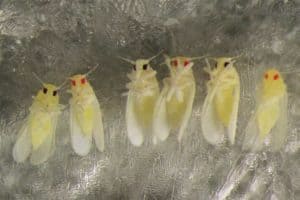
Gene-editing protocol for whitefly pest opens door to control

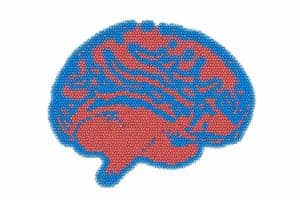
Information gerrymandering can change the way we think about political decisions, as depicted in this image of a gerrymandered mind. People must integrate disparate sources of information when deciding how to vote. But information does not always flow freely; it can be constrained by social networks and distorted by zealots and automated bots. Researchers showed that certain structures in a social network can sway the voting outcome of towards one party, even when both parties have equal size and each player has the same influence, a phenomenon they called “information gerrymandering." (Image: Alexander Stewart)

Anxious about public speaking? Your smart speaker could help

Newer posts
← Previous Page1 … Page26 Page27
Substack subscription form sign up

Comments

  • Not Buying Yer Bullshit on More Than a Third of Americans Have Lost Relationships Over Politics
  • Marco Messina on More Than a Third of Americans Have Lost Relationships Over Politics
  • Anon on Why Fructose Behaves Less Like a Calorie and More Like a Hormone
  • Mark Mellinger on Living Plastic Can Self-Destruct on Command
  • Marie Feret on The Silent Frequency That Makes Old Buildings Feel Haunted
© 2026 ScienceBlog.com | Follow our RSS / XML feed