Skip to content
ScienceBlog.com
  • Featured Blogs
    • EU Horizon Blog
    • ESA Tracker
    • Experimental Frontiers
    • Josh Mitteldorf’s Aging Matters
    • Dr. Lu Zhang’s Gondwanaland
    • NeuroEdge
    • NIAAA
    • SciChi
    • The Poetry of Science
    • Wild Science
  • Topics
    • Brain & Behavior
    • Earth, Energy & Environment
    • Health
    • Life & Non-humans
    • Physics & Mathematics
    • Social Sciences
    • Space
    • Technology
  • Our Substack
  • Follow Us!
    • Bluesky
    • Threads
    • FaceBook
    • Google News
    • Twitter/X
  • Contribute/Contact

Stanford University

Buying a home causes people to vote more in local elections — especially when zoning issues are on the ballot. | Cory Hall

Homeownership boosts voter turnout. But is that a good thing?

The NeuRRAM chip is not only twice as energy efficient as state-of-the-art, it’s also versatile and delivers results that are just as accurate as conventional digital chips. (Image credit: David Baillot/University of California San Diego.)

New chip ramps up AI computing efficiency

A beaver chews on vegetation in a beaver pond. (Image credit: iStockPhoto/Rejean Bedard)

Q&A: harnessing the power of nature to address water and climate challenges

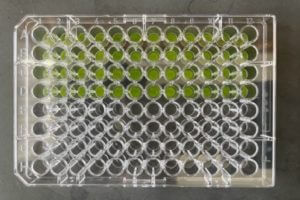
The activity of synthetic genetic circuits that process the presence or absence of specific signals in plant leaves was measured in high throughput by placing leaf punches in 96-well plates. When the correct combinations of inputs are delivered to leaves, they fluoresce green, and the fluorescence can be measured using a plate reader. (Image credit: Jennifer Brophy)

Synthetic genetic circuits could help plants adapt to climate change

Four questions for Paul Segall on the Iceland volcano

AI helps show how have attitudes in U.S. toward immigration have changed

Can we rejuvenate aging brains?

How benign water transforms into harsh hydrogen peroxide

Four questions on the sand shortage

Digital solution for kids with cerebral palsy

Researchers observe memory formation in real time

As technology advances it will become harder to tell the difference between images that are true and those that are manipulated. | iStock/South_agency

How cryptography and Web3 can help restore trust in digital media

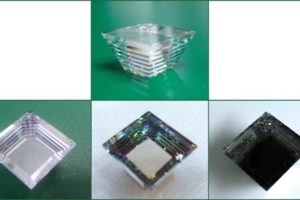
New optical device could help solar arrays focus light, even under clouds

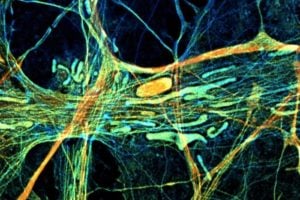
Researchers characterized multiple nerve tracts converging on the nucleus accumbens (NAcc) in humans, shown here in a representative subject. Light blue: medial prefrontal cortex (MPFC); red: anterior insula (AIns); indigo: amygdala (Amy); yellow: midbrain dopamine neurons (VTA / substantia nigra). Credit: Loreen Tisdall and Kelly H. MacNiven.

Brain imaging links stimulant-use relapse to distinct nerve pathway

Older posts
Newer posts
← Previous Page1 … Page6 Page7 Page8 … Page29 Next →
Substack subscription form sign up

Comments

  • Marco Messina on More Than a Third of Americans Have Lost Relationships Over Politics
  • Anon on Why Fructose Behaves Less Like a Calorie and More Like a Hormone
  • Mark Mellinger on Living Plastic Can Self-Destruct on Command
  • Marie Feret on The Silent Frequency That Makes Old Buildings Feel Haunted
  • Dax on The Silent Frequency That Makes Old Buildings Feel Haunted
© 2026 ScienceBlog.com | Follow our RSS / XML feed