Skip to content
ScienceBlog.com
  • Featured Blogs
    • EU Horizon Blog
    • ESA Tracker
    • Experimental Frontiers
    • Josh Mitteldorf’s Aging Matters
    • Dr. Lu Zhang’s Gondwanaland
    • NeuroEdge
    • NIAAA
    • SciChi
    • The Poetry of Science
    • Wild Science
  • Topics
    • Brain & Behavior
    • Earth, Energy & Environment
    • Health
    • Life & Non-humans
    • Physics & Mathematics
    • Social Sciences
    • Space
    • Technology
  • Our Substack
  • Follow Us!
    • Bluesky
    • Threads
    • FaceBook
    • Google News
    • Twitter/X
  • Contribute/Contact

Stanford University

A new study shows dispatching mental health specialists for nonviolent emergencies can be beneficial. In Denver, it reduced reports of less serious crimes and lowered response costs. (Image credit: Getty Images)

Study shows benefits to reinventing 911 responses

Co-author illustration

Meet CoAuthor, an experiment in human-AI collaborative writing

Small retailers provide valuable services to their communities but often struggle to stay afloat. | iStock/Margarita-Young

Upgrades can help mom-and-pop stores compete with Big Retail

v

A pricing paradox: We want digital but will pay more for analog

Oligodendrocyte illustration

Q&A: Secrets of brain health may be hidden in nerve cells’ insulation

The facility, LCLS-II, will soon sharpen our view of how nature works on ultrasmall, ultrafast scales, impacting everything from quantum devices to clean energy.

SLAC’s superconducting X-ray laser reaches operating temperature colder than outer space

Examples of gels.

Video: The physics of gel-like substances

Using wearable fitness tracker data paired with lab data, Stanford scientists have found that runners choose a pace that saves energy during every day running. (Image credit: Getty Images)

Runners prefer the same pace, regardless of distance

Stanford researchers in psychology explored the relationships between mindsets and behaviors, emotions, and well-being during the COVID-19 pandemic. (Image credit: Getty Images)

Early COVID-19 mindset predicts well-being

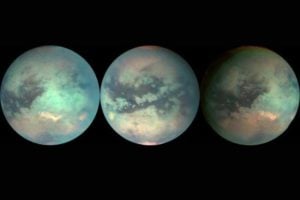
These three mosaics of Titan were composed with data from Cassini’s visual and infrared mapping spectrometer taken during the last three Titan flybys, on Oct. 28, 2005 (left), Dec. 26, 2005 (middle), and Jan. 15, 2006 (right). In a new study, researchers have shown how Titan’s distinct dunes, plains, and labyrinth terrains could be formed. (Image credit: NASA / JPL / University of Arizona)

Scientists model landscape formation on Titan, revealing an Earth-like alien world

Does free speech protect COVID-19 vaccine misinformation?

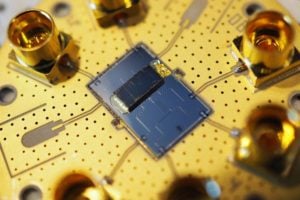
Angled-view photograph of the fully packaged device. The top (mechanical) chip is secured facedown to the bottom (qubit) chip by an adhesive polymer. (Image credit: Agnetta Cleland)

New hardware integrates mechanical devices into quantum tech

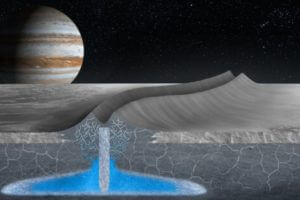
This artist’s conception shows how double ridges on the surface of Jupiter’s moon Europa may form over shallow, refreezing water pockets within the ice shell. This mechanism is based on the study of an analogous double ridge feature found on Earth’s Greenland Ice Sheet. (Image credit: Justice Blaine Wainwright)

Water pockets on Europa bodes well for search for extraterrestrial life

“Net-zero” doesn’t mean that corporations plan to stop emitting greenhouse gases altogether. | Tyler Comrie

Are big companies’ net-zero pledges a well-intentioned shell game?

Older posts
Newer posts
← Previous Page1 … Page7 Page8 Page9 … Page29 Next →
Substack subscription form sign up

Comments

  • Marco Messina on More Than a Third of Americans Have Lost Relationships Over Politics
  • Anon on Why Fructose Behaves Less Like a Calorie and More Like a Hormone
  • Mark Mellinger on Living Plastic Can Self-Destruct on Command
  • Marie Feret on The Silent Frequency That Makes Old Buildings Feel Haunted
  • Dax on The Silent Frequency That Makes Old Buildings Feel Haunted
© 2026 ScienceBlog.com | Follow our RSS / XML feed