
Skip to content
ScienceBlog.com
  • Featured Blogs
    • EU Horizon Blog
    • ESA Tracker
    • Experimental Frontiers
    • Josh Mitteldorf’s Aging Matters
    • Dr. Lu Zhang’s Gondwanaland
    • NeuroEdge
    • SciChi
    • The Poetry of Science
    • Wild Science
  • Topics
    • Brain & Behavior
    • Earth, Energy & Environment
    • Health
    • Life & Non-humans
    • Physics & Mathematics
    • Social Sciences
    • Space
    • Technology
  • Our Substack
  • Follow Us!
    • Bluesky
    • Threads
    • FaceBook
    • Google News
    • Twitter/X
  • Contribute/Contact

University of Chicago

One of the world’s great intellectual destinations, the University of Chicago empowers scholars and students to ask tough questions, cross disciplinary boundaries, and challenge conventional thinking to enrich human life around the globe.
Plastic fork. Pixabay

Nudging food delivery customers to skip the fork drastically cuts plastic waste

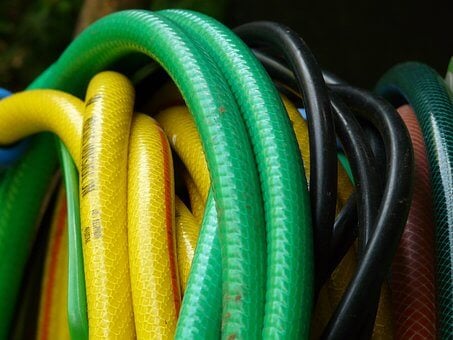
Garden hoses of various sizes

Vasectomies on the rise in the U.S.

Woman sipping a glass of wine. Pixabay.

Ability to ‘Handle Your Alcohol’ More Complex Than Thought

A University of Chicago study found links at the atomic level between photosynthesis and exciton condensates—a strange state of physics that allows energy to flow frictionlessly through a material. The finding is scientifically intriguing and may suggest new ways to think about designing electronics, the authors said.

Scientists find link between photosynthesis and ‘fifth state of matter’

Family asleep

Too little sleep could make vaccination less effective

The human Microbiome, genetic material of all the microbes that live on and inside the human body.

Differences in gut microbiome linked to risk of death in COVID-19 patients

Surprise finding suggests ‘water worlds’ are more common than we thought

In a new study, two University of Chicago astrophysicists laid out a method for how to use pairs of colliding black holes (shown as an artist’s rendition above) to measure how fast our universe is expanding. Illustration credit: Simulating eXtreme Spacetimes (SXS) Project

Black hole collisions could help us measure how fast the universe is expanding

criminal breaking into a home

New study shows welfare prevents crime, quite dramatically

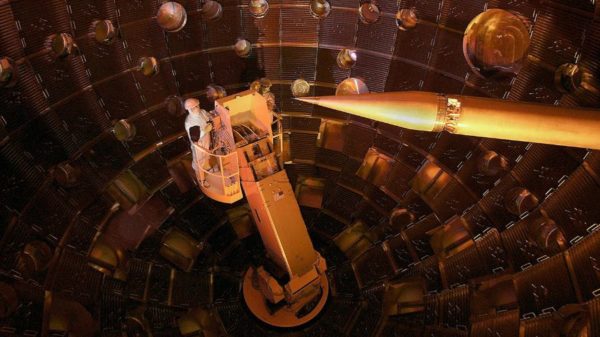
A technician works at the National Ignition Facility. Scientists used the array of 196 lasers to create conditions similar to the hot gas inside gigantic galaxy clusters.

196 lasers help scientists recreate the conditions inside gigantic galaxy clusters

Fermilab and partners achieve sustained, high-fidelity quantum teleportation

‘Groupie’ galaxies orbiting Milky Way tell us about dark matter, how galaxy formed

Ordinary glass wows

Life and death through the eyes of elk bones

Older posts
Newer posts
← Previous Page1 Page2 Page3 Page4 Next →
Substack subscription form sign up

Comments

  • Foo on A New Theory Says DMT Entities Might Be Real, and Proposes How to Test It
  • John E on A New Theory Says DMT Entities Might Be Real, and Proposes How to Test It
  • Fully Whelmed on A New Theory Says DMT Entities Might Be Real, and Proposes How to Test It
  • Tom on The Serotonin Circuit That Makes Tinnitus Louder
  • Josh Mitteldorf on Red States and Blue States Are Becoming the Same Unhappy Country
© 2026 ScienceBlog.com | Follow our RSS / XML feed