

In the busy circuitry of the brain, neurons have long taken the spotlight—but a new study shows that non-neural cells called astrocytes are quietly essential for keeping the show running.
By regulating the balance of a neurotransmitter known as GABA, astrocytes in the mouse visual cortex help groups of neurons work together to process visual information, according to new research from MIT’s Picower Institute for Learning and Memory.
Astrocytes Fine-Tune Neural Harmony via GABA Transport
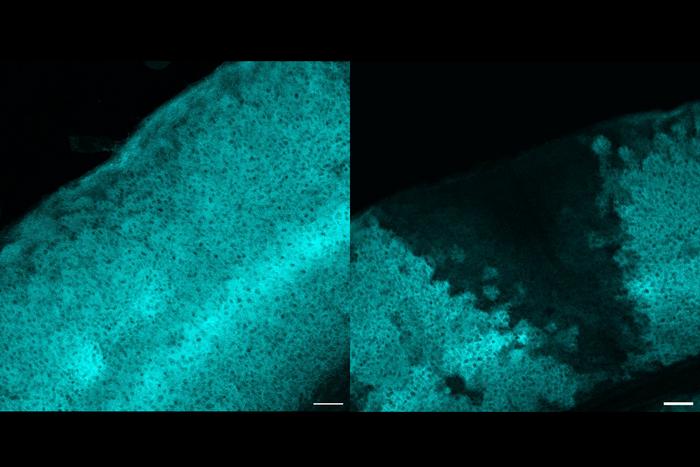
Researchers knocked out a protein called GABA transporter 3 (Gat3) in astrocytes of the visual cortex using a specially engineered CRISPR/Cas9 system. Gat3 normally helps astrocytes mop up extra GABA, a neurotransmitter that inhibits neuronal activity. Without it, neurons were bathed in excess GABA. Though each neuron still responded to visual stimuli, their collective coordination—essential for processing complex images—broke down.
“Even if the changes at the level of a single neuron representing a visual stimulus do not change significantly,” noted senior author Mriganka Sur, “that could add up at the population level to a measurable, significant change.”
How the Study Was Done
Graduate student Jiho Park used a novel multiplexed CRISPR method, dubbed MRCUTS, to knock out Gat3 in the visual cortex. The team then used two-photon calcium imaging to monitor neuron activity while mice watched visual stimuli. Surprisingly, although individual neurons retained their tuning to visual features like line orientation, overall responsiveness and reliability dropped.
What Changed—and What Didn’t
- Neurons fired less reliably and less often
- Orientation tuning remained intact
- Pairs of neurons still communicated directly
- Groups of neurons became less synchronized
- Information encoding across populations was significantly impaired
Subtle Noise, Big Impact
Using a statistical model, the researchers found that when Gat3 was missing, one neuron’s activity became less predictive of its neighbors’. A machine-learning decoder that usually improves its accuracy by sampling more neurons failed to do so in the Gat3-deficient brain. This suggests that while single neurons were functional, their group “chorus” was out of tune.
Beyond the Visual Cortex
The findings may help explain clinical observations in other brain areas where Gat3 is dysregulated. For example, too little Gat3 in the thalamus increases seizure risk, while too much in the striatum is linked to repetitive behaviors. As Park put it, “Our study might help tie that back to some of the behavioral phenotypes people have been seeing.”
A Tool for Future Research
The MRCUTS system allowed the researchers to use just a single virus to deliver multiple gene edits—an efficient method with potential for future astrocyte-specific manipulations in adult animals without developmental confounds.
By shifting attention to astrocytes and their subtle regulatory roles, this study adds new depth to our understanding of how brains make sense of the world—not neuron by neuron, but as tightly coordinated ensembles.
Journal: eLife
DOI: 10.7554/eLife.107298.1