
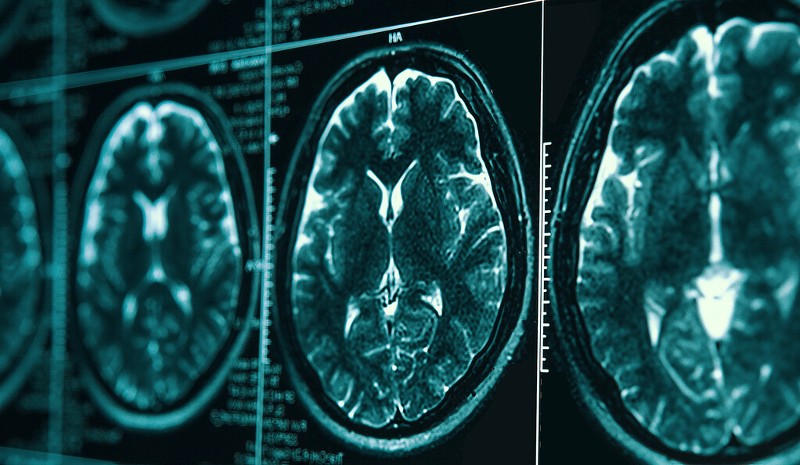
Neuroimaging technology has been shown to hold great promise in helping clinicians link specific symptoms of mental health disorders to abnormal patterns of brain activity. But a new Yale-led study shows there are still kinks to be ironed out before doctors can translate images of the brain to psychiatric disorders such as post-traumatic stress disorder (PTSD).
Their findings are published Jan. 11 in the American Journal of Psychiatry.
Several years ago, The National Institutes of Mental Health launched a multi-billion-dollar research effort to locate biomarkers of brain activity that point to the biological roots of a host of mental health diseases, which today are typically identified by clinical evaluation of a constellation of often overlapping symptoms reported by patients.
“The idea is to forget classification of disease by symptoms and find underlying biological causes,” said Yale’s Ilan Harpaz-Rotem, professor of psychiatry and psychology and senior author of the study.
For the new study, the Yale-led team attempted to replicate the findings of an earlier nationwide neuroimaging study, in which Emory and Harvard scientists linked clusters of brain activity to a variety of outcomes among patients who had arrived at U.S. emergency departments following traumatic events. Specifically, when researchers measured patients’ brain activity during the performance of simple tasks — including ones that probe responses to threats and rewards — they detected a cluster of brain activity that showed high reactivity to both threat and reward signals and seemed to predict more severe symptoms of PTSD later on.
However, when Yale researchers analyzed similar neuroimaging data collected from recent trauma survivors in Israel, they were not able to replicate these findings. While they did identify the different clusters of brain activity observed in the earlier study, they found no association with prospective PTSD symptoms.
“That is not to say one set of data is right and the other is wrong, just that there is a lot of fundamental work that needs to be done to develop reliable models that could generalize across different studies,” said Yale’s Ziv Ben-Zion, a postdoctoral associate at Yale School of Medicine and the corresponding author of the study.
In fact, Yale researchers are currently working with the investigators of the original Emory-Harvard study to merge datasets “to search for common underlying patterns of brain activity associated with different responses to trauma,” Ben-Zion said.
“It took about 100 years to come up with current classifications of mental illness, but we’ve only been exploring refining psychiatric diagnoses using biomarkers for the last 10 years,” said Harpaz-Rotem. “We still have a long way to go.”
ScienceBlog.com has no paywalls, no sponsored content, and no agenda beyond getting the science right. Every story here is written to inform, not to impress an advertiser or push a point of view.
Good science journalism takes time — reading the papers, checking the claims, finding researchers who can put findings in context. We do that work because we think it matters.
If you find this site useful, consider supporting it with a donation. Even a few dollars a month helps keep the coverage independent and free for everyone.