
Dairy cows that are fed flaxseed produce more nutritious milk, according to a new study by Oregon State University.
Their milk contained more omega-3 fatty acids and less saturated fat, the study found. Diets high in saturated fat can increase cholesterol and cause heart disease, while those rich in omega-3 and other polyunsaturated fatty acids may reduce the risk of heart disease, studies have shown. Traditional cattle feed mixtures of corn, grains, alfalfa hay and grass silage result in dairy products with low concentrations of omega-3 and other polyunsaturated fats, according to Gerd Bobe, the lead scientist on the study, which has been published online in the Journal of Dairy Science.
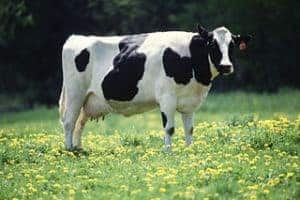 Ten pregnant cows at OSU’s dairy were fed different amounts of flaxseed – up to seven percent of their daily diet. Researchers attempted to pinpoint the amount of flaxseed that would maximize the amount of omega-3 in milk and dairy products without negatively affecting their production and texture.
“We were looking for a sweet spot,” said Bobe, an expert in human and animal nutrition. “Too much of a good thing can be bad, especially when trying to maintain consistency with dairy products.”
Collaborators in OSU’s food science and technology department assisted in turning milk into butter and fresh cheese, which were then tested for texture and nutritional composition.
The study found that feeding cows up to six pounds of extruded flaxseed improved the fat profile without negatively affecting the production and texture of the milk and other dairy products. Extrusion presses raw ground flaxseed into pellets with heat.
At six pounds per day, saturated fatty acids in whole milk fat dropped 18 percent, poly-unsaturated fatty acids increased 82 percent, and omega-3 levels rose 70 percent compared to feeding no flaxseed. Similar improvements were observed in butter and cheese.
Still, saturated fat accounted for more than half of the fatty acids in the dairy products while the increase in polyunsaturated fats compromised no more than nearly nine percent of the total.
Researchers also noted that the refrigerated butter was softer and less adhesive thanks to fewer saturated fatty acids. Also, the cows produced the same amount of milk while eating flaxseed.
Although flaxseed costs more than traditional cattle feeds, Bobe hopes that it still could be an affordable feed supplement for cows because products enriched with omega-3 can sell for a premium at the grocery store.
“Many consumers already show a willingness to pay extra for value-added foods, like omega-3 enriched milk,” he said.
One thing is for sure, he said: Dairy farmers will have no trouble convincing cows to eat flaxseed.
“They loved it. They ate it like candy,” he said.
ScienceBlog.com has no paywalls, no sponsored content, and no agenda beyond getting the science right. Every story here is written to inform, not to impress an advertiser or push a point of view.
Good science journalism takes time — reading the papers, checking the claims, finding researchers who can put findings in context. We do that work because we think it matters.
If you find this site useful, consider supporting it with a donation. Even a few dollars a month helps keep the coverage independent and free for everyone.
An exptrapolation of the fact hens fed flaxseed produce high Omerga eggs.
Of course cows on natural grass are best.