
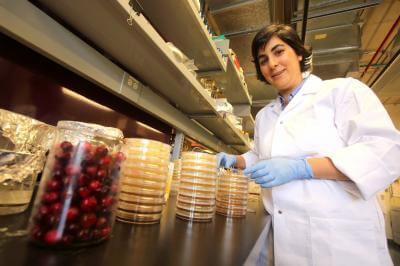
Drinking two glasses of cranberry juice a day can lead to significant heart health benefits, according to a study led by Janet Novotny, an Agricultural Research Service (ARS) physiologist at the Beltsville Human Nutrition Research Center in Beltsville, Maryland.
Novotny gave 56 people either low-calorie cranberry juice or a similar-tasting placebo twice a day for 8 weeks and found that the juice lowered several risk factors for cardiovascular disease (CVD), diabetes and stroke. The 30 women and 26 men were given 8-ounce servings at breakfast and dinner in a double-blind study in which they ate only foods provided as part of the study.
The cranberry juice was sweetened with sucralose and had the same juice content (27 percent) and nutrients as most sugar-sweetened cranberry juice available in stores. The placebo was a flavor-matched, calorie-matched, artificially colored beverage. The research was funded byOcean Spray Cranberries Inc. Ocean Spray provided the juice, but was not involved in conducting the study or analyzing the results.
After 8 weeks, volunteers given the juice had lower levels of 5 of 22 indicators of cardiometabolic risk in their blood, compared with volunteers given the placebo. The differences could be considered “a notable result,” Novotny says. Cardiometabolic risk is the combined risk of cardiovascular disease (CVD), diabetes and stroke, which together causes more deaths in the developed world than anything else. CVD alone causes 930,000 deaths in the United States each year. Risks of developing CVD, diabetes and stroke can be modified with diet and exercise.
Previous studies have shown that cranberries are rich in the types of polyphenols associated with a reduced risk of heart disease, diabetes and stroke. But Novotny’s study is the first to show that cranberries confer such health benefits in a controlled-diet, double-blind clinical trial, which is considered the gold standard in health and medical research.
Read more about this research in the May 2016 issue of AgResearch.
ARS is the U.S. Department of Agriculture’s chief intramural scientific research agency.
ScienceBlog.com has no paywalls, no sponsored content, and no agenda beyond getting the science right. Every story here is written to inform, not to impress an advertiser or push a point of view.
Good science journalism takes time — reading the papers, checking the claims, finding researchers who can put findings in context. We do that work because we think it matters.
If you find this site useful, consider supporting it with a donation. Even a few dollars a month helps keep the coverage independent and free for everyone.