
Stem cells are the body’s mechanics, repairing damaged tissues and organs. Because these cells are able to grow into any type of cell in the body, scientists believe they hold the key to groundbreaking new therapies. To help further this research, scientists from the University of Victoria have found a new way to culture cells in 3D— a significant step forward for regenerative medicine.
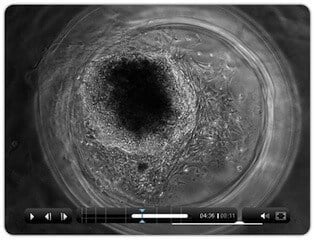
“Cells in your body grow and divide in a 3D environment, especially when you think of stem cells, which differentiate to become all the different types of cells in your body,” said paper-author Dr. Stephanie Willreth. “Yet, a lot of work is still being done in a 2D environment.”
Essentially, since your body is three-dimensional, it makes sense that stem cells do their best repair work in 3D as well. By growing these cells in 3D, researchers are better able to see how these cells behave in conditions that more closely resemble those in the body.
Though Dr. Willreth’s lab specifically looks at repairing the spinal cord, she believes growing stem cells in 3D will be important for researchers in other fields as well, so she chose to publish her research in the Journal of Visualized Experiments.
“As the study of stem cells advances, it is necessary to create a culture system that more accurately represents the one cells grow in naturally,” said JoVE Associate Editor, Meghan Berryman.
JoVE is the first and only peer reviewed, PubMed-indexed journal to publish all of its content in both text and video format. Dr. Willreth thought her method would be easier for other scientists to learn if she had a video.
The article will be published in JoVE on March 2 and can be viewed here: http://www.jove.com/video/3641/preparation-of-3d-fibrin-scaffolds-for-stem-cell-culture-applications#
About The Journal of Visualized Experiments:
The Journal of Visualized Experiments (JoVE) is the first and only Pubmed and Medline indexed academic journal devoted to publishing research in the biological sciences in video format. Using an international network of videographers, JoVE films and edits videos of researchers performing new experimental techniques at top universities, allowing students and scientists to learn them much more quickly. As of January 2012 JoVE has released 59 monthly issues including over 1500 video-protocols on experimental approaches in developmental biology, neuroscience, microbiology and other fields.
URL: www.JoVE.com
Contact:
Katherine Scott
Science Communications
The Journal of Visualized Experiments
p. 617.945.9051
e. [email protected]
ScienceBlog.com has no paywalls, no sponsored content, and no agenda beyond getting the science right. Every story here is written to inform, not to impress an advertiser or push a point of view.
Good science journalism takes time — reading the papers, checking the claims, finding researchers who can put findings in context. We do that work because we think it matters.
If you find this site useful, consider supporting it with a donation. Even a few dollars a month helps keep the coverage independent and free for everyone.