

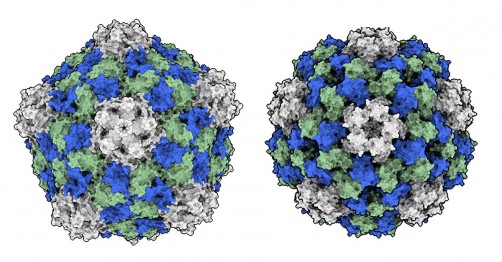
A virus once best known for infecting black-eyed peas is now a surprising contender in the fight against cancer.
Researchers at the University of California San Diego have uncovered how the cowpea mosaic virus (CPMV) reprograms human immune cells to attack tumors—without ever infecting them. Unlike other plant viruses, CPMV triggers a potent immune response, drawing in white blood cells and activating long-term anti-tumor memory. The new study, published in Cell Biomaterials, sheds light on why CPMV stands out and could accelerate its path to human clinical trials as a low-cost, plant-grown immunotherapy.
How a Plant Virus Becomes an Immune Coach
CPMV isn’t a virus that infects people. In fact, it doesn’t even target mammalian cells. Yet when scientists inject it directly into tumors, something remarkable happens: immune cells flood the site, recognize the tumor as a threat, and start clearing it. Even more impressive, this response often spreads throughout the body, attacking distant, untreated tumors in a systemic wave of defense.
“What we found most exciting is that although human immune cells are not infected by CPMV, they respond to it and are reprogrammed towards an activated state,” said first author Anthony Omole, a PhD student in chemical and nano engineering. “This ultimately trains them to detect and eradicate cancerous cells.”
What Makes CPMV So Different From Other Plant Viruses?
To answer that question, the UC San Diego team compared CPMV with its close cousin, the cowpea chlorotic mottle virus (CCMV), which shares a similar size and shape but has no anti-cancer effects. Both viruses enter human immune cells at similar rates. But the similarities stop there.
- CPMV activates type I, II, and III interferons—powerful immune proteins with known anti-cancer effects
- CCMV, by contrast, stimulates interleukins that generate inflammation but not tumor clearance
- CPMV’s RNA persists longer inside cells and reaches the endolysosome, where it activates Toll-like receptor 7 (TLR7), a key trigger of antiviral and anti-tumor immunity
- CPMV appears to enter through specific receptors like SR-A1, which further influence how it’s processed
“This work gives us insight into how CPMV works so well,” said Omole. The virus essentially acts as a “foreign invader” the immune system recognizes—just not in the harmful way we usually associate with viruses.
Training the Immune System for Long-Term Memory
In detailed experiments using human blood cells, CPMV spurred the production of interferons and chemokines like IP-10, which recruit cancer-killing CD8+ T cells. Single-cell RNA sequencing revealed that CPMV exposure shifted immune cell behavior at the genetic level, particularly among monocytes and dendritic cells. The virus even altered expression of long non-coding RNAs, suggesting deeper epigenetic rewiring that could lead to trained immunity.
Unlike conventional cancer therapies that target tumor cells directly, CPMV seems to coach the immune system to act smarter and faster. The effects were strong enough to prevent tumor growth in some animal models even weeks after exposure, hinting at durable protection.
Manufactured by Plants, Powered by the Sun
Another major advantage of CPMV is how it’s made. The virus can be grown in black-eyed pea plants using standard agricultural methods. That means sunlight, soil, and water—not bioreactors or gene editing—can produce a potent cancer-fighting agent.
“It can be grown in plants using sunlight, soil and water,” Omole emphasized, a contrast to the complex and expensive manufacturing required for many immunotherapies and biologic drugs.
Toward the Clinic
While the study focuses on lab and preclinical models, the researchers are working to advance CPMV toward clinical trials. Key next steps involve ensuring the most effective and safest version of the virus is selected for human testing.
“The present study provides important insights into the mechanism of action of CPMV,” said senior author Nicole Steinmetz, Chancellor’s Endowed Chair at UC San Diego. “We are diligently working toward the next steps to ensure that the most potent lead candidate is selected to achieve anti-tumor efficacy and safety.”
With its unique immune effects and affordable production, CPMV could represent a new frontier in cancer immunotherapy—one born not in a lab, but in the leaves of a humble legume.
Journal and Funding
Published in: Cell Biomaterials, Volume 1, Issue 6
DOI: 10.1016/j.cellbio.2025.06.005
Funding: National Institutes of Health (R01 CA224605, R01 CA253615, R01 CA274640), American Cancer Society, F.M. Kirby Foundation, Mission Boost Grant, Sloan Foundation, and others